

.jpg)
Three pillars of infrastructure
According to the Department of Industry and Trade, Da Nang has focused on three main infrastructure pillars directly serving export activities: logistics and seaports; high-tech industrial infrastructure; and digital infrastructure. Of these, logistics and seaport infrastructure is the core priority, aiming to transform Da Nang into a major maritime economic center of the country, in accordance with Resolution No. 43-NQ/TW of the Politburo on building and developing Da Nang city until 2030, with a vision to 2045.
Da Nang's port system plays a key role in the development of the maritime economy and logistics in the Central region. The Lien Chieu deep-water port is planned as an international transshipment port capable of receiving vessels up to 18,000 TEU (a unit measuring container and port capacity). Meanwhile, Tien Sa port is playing a crucial role as an international trade hub, while Chu Lai port (Tam Hiep port area) is being expanded and upgraded to accommodate vessels with a total deadweight tonnage of up to 50,000 tons. Ky Ha seaport and Chu Lai airport are also being expanded, aiming to become regional logistics and aviation centers.
Alongside this, various logistics centers and warehouses have been invested in the city, including: the U&I Logistics Center (316 billion VND), the Con Ong Distribution Center (100 billion VND) in the Da Nang High-Tech Park, and the Transimex Da Nang Center in the Hoa Cam Industrial Park… Recently, Viettel Post Corporation commenced construction of a logistics center project in the Lien Chieu Industrial Park. The project, built on an area of 8.6 hectares with a total investment of over 722 billion VND, comprises three warehouse blocks with a total area of nearly 40,000 m2; implemented on a modern technology platform, with data and speed as core values.
High-tech industrial infrastructure aims to attract high-quality investment, creating export products with high added value, instead of just rough processing. In particular, the Da Nang High-Tech Park is a multi-functional national high-tech park, attracting projects and creating key export products, such as aerospace components (Universal Alloy Corporation Vietnam Co., Ltd., KP Aerospace Vietnam Co., Ltd.), microchips, precision mechanics, new materials, etc.
Simultaneously, industrial zones such as Hoa Khanh and Lien Chieu are being restructured and upgraded with smart, green infrastructure, shifting their model to attract supporting industries, high technology, and incorporating research and development (R&D) centers. This will create new products and technological solutions, forming the foundation for breakthrough export products.
Digital infrastructure is identified as the "backbone" for the operation of the digital economy and ensures the smooth flow of both people and goods. Da Nang, which already has an advantage in information technology, is striving for digital transformation to make administrative procedures increasingly convenient: providing high-speed and stable internet connections for businesses; coordinating with customs authorities to digitize customs procedures, etc.
Integrated investment
The Resolution of the First Congress of the Da Nang City Party Committee (2025-2030 term) and the task of "Strategic solutions to enhance Da Nang's role in double-digit growth" of the City People's Committee identify the following goals: building Da Nang into a major commercial center with a synchronous and modern infrastructure and distribution system; a logistics and multimodal transport center; and a goods distribution center for the Central and Central Highlands regions and the whole country. The goal is for the logistics sector to account for approximately 15% of the city's GRDP (gross domestic product).
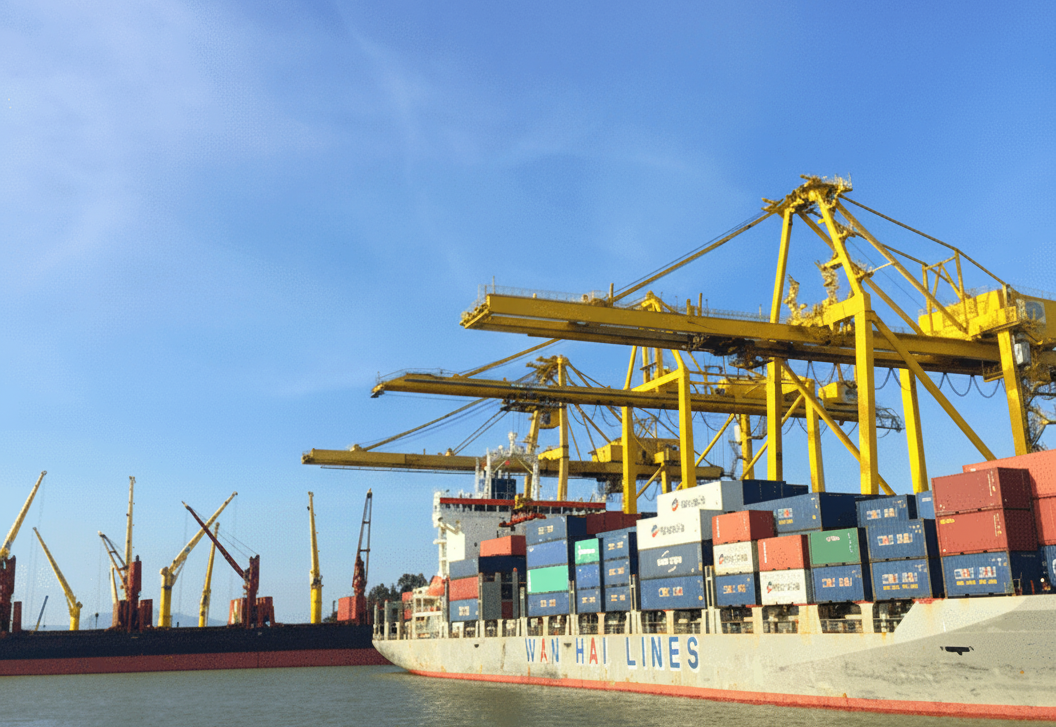
According to Ms. Le Thi Kim Phuong, Director of the Department of Industry and Trade of Da Nang City, the industry and trade sector aims for an average annual increase of 8-9% in export turnover during the 2025-2030 period. To achieve this goal, infrastructure development is a crucial solution. The city's orientation is to develop free trade zones, duty-free zones, and industrial parks linked to the airport system (Da Nang International Airport, Chu Lai Airport), and the seaport system (Lien Chieu, Tien Sa, Ky Ha, Tam Hiep - Tam Hoa); developing Chu Lai Port in conjunction with a container logistics center and a logistics center in the Nam Giang International Border Gate Economic Zone, thereby connecting goods to the Central and Southern Laos region and Northeast Thailand.
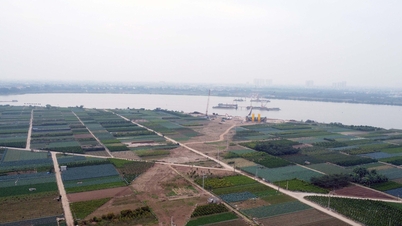
In particular, the formation of the Da Nang Free Trade Zone, linked with Lien Chieu Port, presents a "golden" opportunity. The free trade zone creates a superior institutional framework, attracting investment in high-tech manufacturing, processing, and logistics services, thereby generating high value-added export goods and contributing to the city's double-digit economic growth target for 2025-2030. Lien Chieu Port, on the other hand, is an international transshipment port oriented towards green and smart development. In terms of road access, the port is connected to the national transport system by 4km; and directly to the national railway system by only 1.5km.
“The city has fully invested in a shared infrastructure system connecting to the Lien Chieu port gate and continues to invest in completing the infrastructure connecting the port to the functional zones of the Free Trade Zone. Da Nang possesses many favorable conditions for developing warehouses, becoming a transit point for raw materials serving production activities, thereby developing commodity exchanges in the future. This not only facilitates commodity trade but also contributes to providing resources for large projects in the city and the region in various fields,” Ms. Phuong said.
Source: https://baodanang.vn/chien-strateg-tu-dau-tu-ha-tang-3310113.html






































































Comment (0)