

Sustainable business, green business and Environmental - Social Governance (ESG) practices are currently priorities for large enterprises in the world and in Vietnam. Aiming for the national common goal of net zero emissions by 2050, SeABank proactively implements environmental protection and emission reduction measures in line with ESG criteria and Green Banking orientation.
Accordingly, the Bank identified 3 carbon emission scopes to monitor, measure and control/reduce; paying special attention to direct emission sources (scope 1) and indirect emissions from energy consumption (scope 2). SeABank has implemented a series of carbon reduction initiatives in scope 1 and 2, focusing on the following goals: optimizing energy use and pollution control, digitalizing and optimizing operations, and spreading the spirit of environmental protection.
Optimizing the use of resources and energy
With the goal of optimizing energy efficiency, SeABank headquarters apply smart building management systems to support monitoring and automatic adjustment of air conditioning, lighting, security and energy systems in an optimal way. SeABank headquarters at BRG Tower (198 Tran Quang Khai, Hoan Kiem Ward, Hanoi ) is certified as a green building according to the international EDGE standard - requiring a minimum reduction of 20% in the use of energy, water and sustainable materials.
SeABank office building at 16 Lang Ha, Giang Vo Ward, Hanoi City meets LEED Silver standard - a popular international standard for green buildings with many requirements on carbon reduction, resource reuse and efficiency optimization. The Bank is currently implementing solutions to optimize efficiency and reduce carbon emissions, aiming to obtain Green Building certification with 4 major projects of strategic partners.
|
SeABank optimizes resource use and saves energy at its headquarters. |
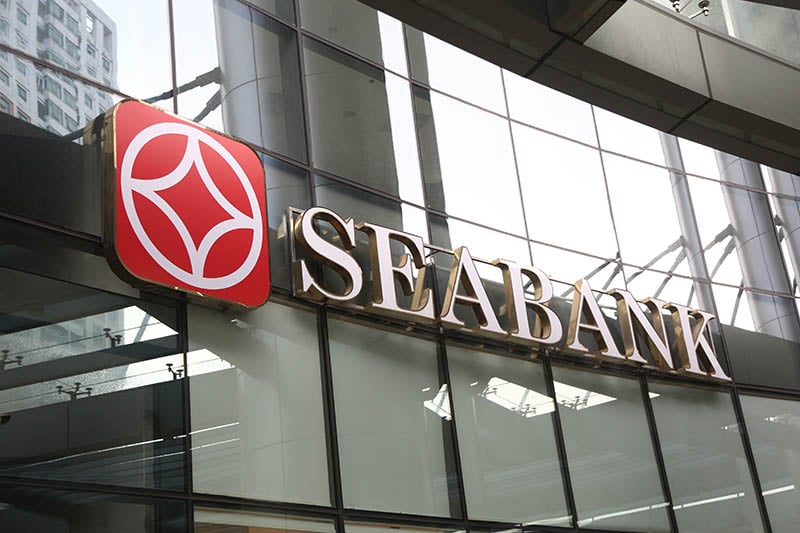
Electricity and water resources at SeABank headquarters are managed according to standards to avoid waste and detect loss incidents early. In 2024, the average water consumption is 19 liters/person/day, 1.6 times lower than the prescribed standard. For energy resources, SeABank builds consumption standards according to the weather characteristics of each region, over 95% of headquarters meet the target in 2024.
Pollution control is implemented by the Bank for all wastewater and waste. Accordingly, at the licensed discharge offices managed by SeABank, wastewater is monitored periodically every 3 months according to QCVN 14:2008/BTNMT. In 2024, the discharge parameters will not exceed the allowable limits. SeABank also ensures standards for waste containers; collection and treatment processes are carried out in accordance with regulations by licensed service providers.
The Bank prioritizes the use of environmentally friendly materials and equipment, internally purchases equipment with 4-5 star energy labels from the Ministry of Industry and Trade , and ensures periodic maintenance checks to optimize performance. During the repair and opening of new headquarters, 100% of the Bank's lighting system was converted to LED lights, 100% of air conditioners were converted to inverter lines using environmentally friendly R32 and R410A gas. At the same time, SeABank prioritizes the purchase and use of recyclable and reusable items, replacing water bottles, plastic bottles, and disposable paper cups in the office with glass bottles, cups, and water filters.
Digital transformation goes hand in hand with green transformation
In the green transformation process, the comprehensive digitalization strategy "Digital Convergence" is an important support to help SeABank optimize performance, reduce dependence on physical resources in transaction and operational activities, thereby reducing carbon emissions compared to traditional banking activities.
|
SeABank continuously improves SeAMobile application, digitizing banking products and services. |
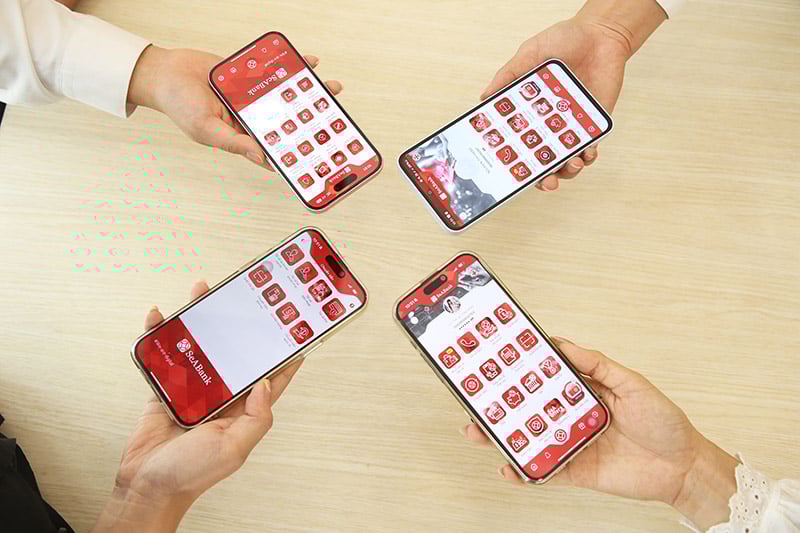
SeABank continuously upgrades the SeAMobile/SeANet digital banking application with more than 130 features and utilities such as: eKYC to open a payment account remotely; issue cards online; open and close savings books online; register for loans online; buy lottery tickets, airline tickets, event tickets, insurance online... Along with digitizing transactions, SeABank switches to using electronic invoices and documents in counter transactions. These efforts help the Bank reduce the amount of paper used and reduce paper waste, limit carbon emissions from printing, transporting cash, customers moving to the counter...
In November 2024, SeABank successfully upgraded the T24 Core Banking software to the latest R22 version in the Vietnamese market to support flexible and secure business needs. This is a big step forward to optimize performance, save resources, reduce resource consumption, and reduce carbon emissions.
In order to reduce the need for printing and manual operations, SeABank focuses on automating processes through many technological systems such as: SeAPayment customer payment management system; SeAOffice electronic office, SeAPurchase shopping software, SeATeller transaction counter support software... Thanks to comprehensive digital transformation, the amount of paper consumed at SeABank Headquarters in 2024 will decrease by 1.45% compared to 2023, energy consumption and emissions are maintained while the scale and personnel continuously expand.
Unity "for the environment"
Implementing a sustainable development strategy, with the goal of protecting the environment and reducing carbon emissions, SeABank takes many measures to raise awareness and environmental actions of each individual, aiming to create big changes from small actions.
|
The trash-for-gifts program is organized by SeABank to spread green habits. |
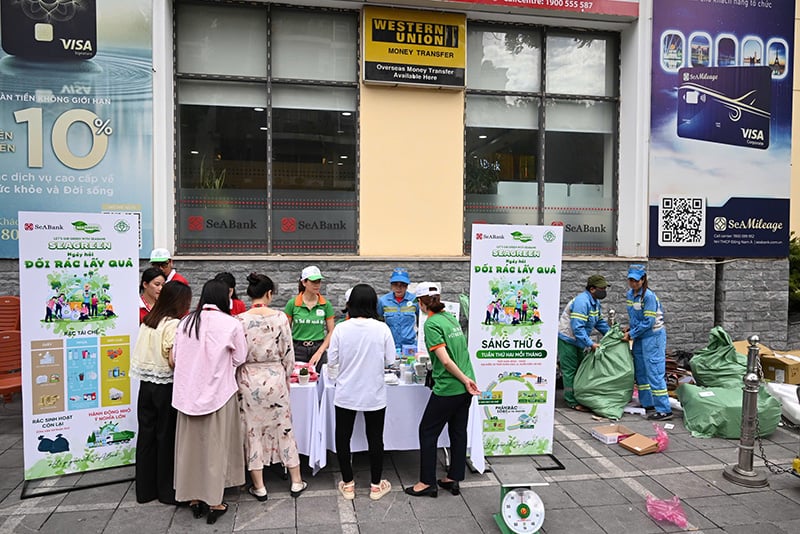
Accordingly, SeABank actively creates green habits internally and spreads them to relevant parties through many meaningful programs of the SeAGreen Fund - an internal fund established in 2019 to achieve environmental goals. Typical annual programs to raise environmental awareness such as: the movement to use public transport and environmentally friendly vehicles "Green the road to SeABank"; the coastal cleaning program "Ocean Cleanup"; the SeAHero series of activities in "Citizens' Week" with activities of exchanging trash for gifts, giving and planting trees/trash cans... have received the response of employees throughout the system and have spread to the community, contributing to environmental protection and building a green community.
In particular, the annual SeABank Run for the Future is organized to call for support for the environmental activities of the SeAGreen Foundation. Thanks to that, in 2024, the Foundation cooperated with BRG Group and Nhan Dan Newspaper to plant 68,000 trees, worth a total of 1 billion VND, to cover nearly 20 hectares of forest, join hands to overcome the consequences of storm No. 3 and restore livelihoods for people in Lao Cai province. Since 2010, SeABank has donated and planted nearly 360,000 trees in many provinces and cities across the country such as Ha Tinh, Thanh Hoa, Dak Lak, Lao Cai, Long An... to cover bare hills, restore and preserve ecology, and support local forestry economic development.
SeABank's efforts in green transformation of operations and environmental activities have initially proven effective when SeABank's total Scope 1 emissions in 2024 remained at 624 tCO2 equivalent, while the Bank's Scope 2 emissions in 2024 decreased by 11.4% compared to 2023, reaching 4,853 tCO2 equivalent. This demonstrates SeABank's strong commitment to reducing carbon emissions, affirming its pioneering role in the direction of Green Banking, making practical contributions to building a green community and a sustainable future.
Source: https://baodautu.vn/seabank-xanh-hoa-van-hanh-nang-cao-y-thuc-bao-ve-moi-truong-vi-muc-tieu-net-zero-d434024.html


![[Photo] Action for the Community tells stories of enduring journeys – both intimate and great, yet quiet and determined](https://vphoto.vietnam.vn/thumb/1200x675/vietnam/resource/IMAGE/2025/11/15/1763179022035_ai-dai-dieu-5828-jpg.webp)

































































Comment (0)