

Following Ho Chi Minh City's announcement of plans to develop 11 TOD (Transit-Oriented Development) sites along the metro line, experts and local authorities believe this presents an opportunity to create satellite urban areas.
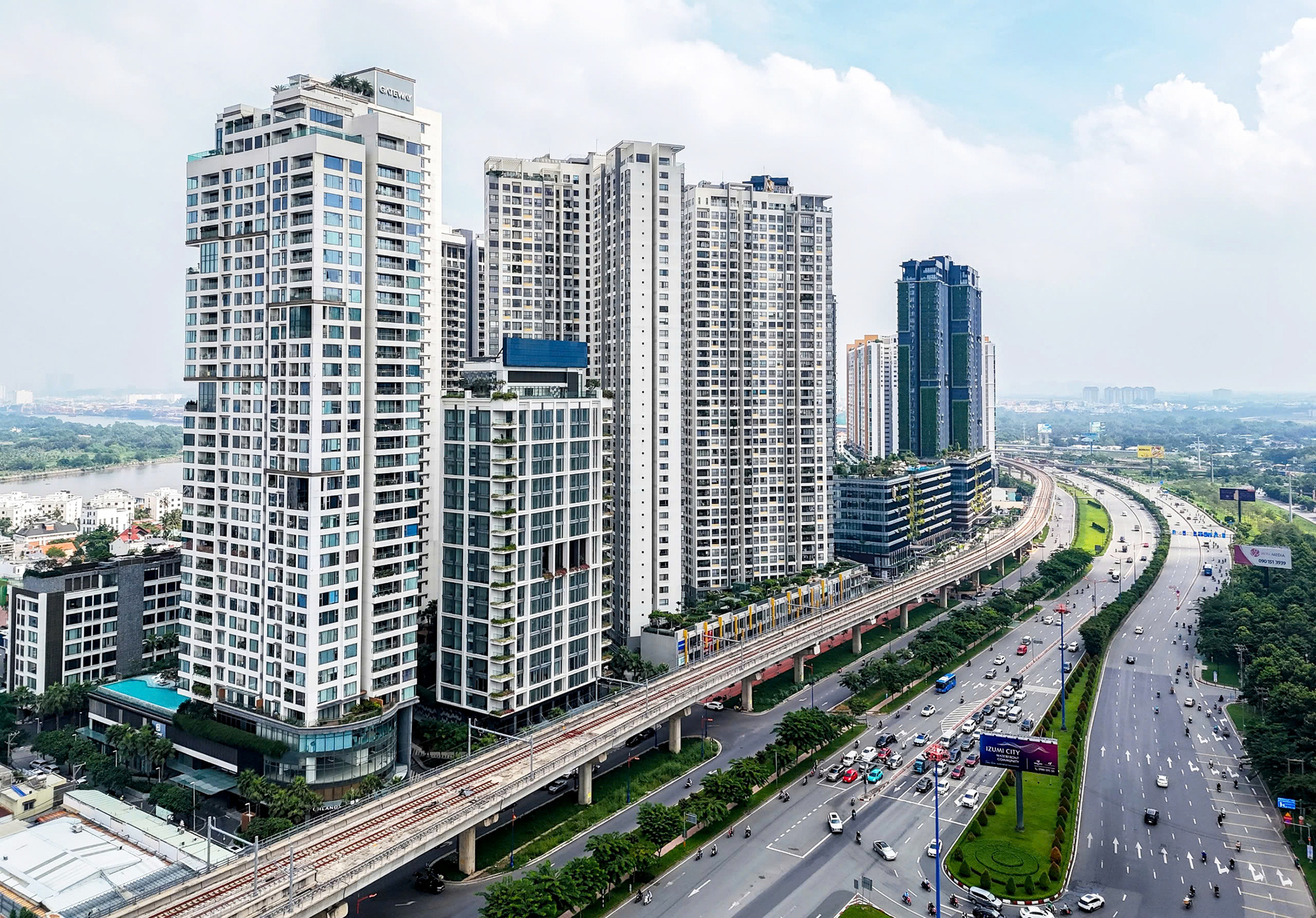
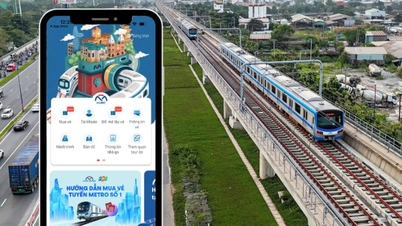
Ho Chi Minh City is implementing the TOD (Transit-Oriented Development) program along the metro line and ring road according to Resolution 98. In particular, the area along Metro Line 1 has favorable conditions for development. - Photo: CHAU TUAN
The potential and attractiveness for investors was affirmed by experts and local authorities when discussing the plan recently announced by Ho Chi Minh City with us.
Mr. HOANG TUNG (Chairman of the People's Committee of Thu Duc City):
Many attractive investment opportunities from TOD
In Thu Duc City, there are planned 10 large-scale public transport lines (metro/light rail; connecting to the general network of Ho Chi Minh City), with approximately 110 stations (15 double stations - intersections of two or more public transport lines).
The areas designated for TOD (Transit-Oriented Development) are within a 400m radius around single stations and an 800m radius around double stations.
During the period 2025-2030, Thu Duc City will focus on developing TOD (Transit-Oriented Development) along Metro Line 1, Ring Road 2, Ring Road 3, and Pham Van Dong Street.
In particular, development will focus around the stations of Metro Line 1, which is expected to begin commercial operation in December 2024. Initially, the operation of Metro Line 1 will bring a fresh and modern image to Thu Duc City.
The Thao Dien and An Phu stations will become immediately functional as they are located near large-scale high-rise and commercial complexes.
Other station areas will develop into high-density mixed-use urban complexes, including apartment buildings, commercial and service areas, offices connected to the station, and public spaces, parks, and public squares.
The application of the TOD (Transit-Oriented Development) model in Thu Duc City will facilitate synchronized and sustainable development, improve the quality of life for residents, and create many attractive business and investment opportunities.
Mr. David Jackson (General Director of Avison Young Vietnam):
TOD contributes to the creation of satellite urban clusters.
The TOD model aims to create dynamic and livable cities by concentrating jobs, housing, services, and amenities along urban rail (MRT) or bus rapid transit (BRT) routes.
TOD (Transit-Oriented Development) projects, whether developed or redeveloped, are planned as multi-functional spaces, combining housing, commercial areas (offices, retail), and entertainment venues to attract residents, workers, shoppers, and visitors alike.
On the one hand, TOD encourages people to use public transportation, increasing demand, which can then attract investors to infrastructure projects.
On the other hand, through the TOD model, real estate developers can estimate the population size, traffic flow, customer numbers, and development potential of the area.
An example of an effective TOD (Transit-Oriented Development) model near Vietnam is Singapore, which has integrated urban transport development with spatial design and planning, creating a cluster of satellite cities surrounding a central core, with a railway network connecting these urban areas to industrial zones and the city center.
For example, the Vancouver Metro (Canada) is a case in point, where large-scale, integrated TOD projects, when combined sufficiently, can create a "self-contained city," a city within a city.
The government and real estate developers have redeveloped the land into high-density, self-contained complexes comprising housing, retail, offices, and public spaces, connected to public transportation hubs.
As a result, Metro Vancouver has the capacity to provide housing for millions of new residents each year.
As one of the sustainable urban development solutions, the TOD model is being applied in Hanoi and Ho Chi Minh City, prioritizing the construction of urban railway lines to ensure transportation needs are met and traffic congestion is addressed.
To realize the above-mentioned goals, a comprehensive plan and implementation are needed, along with thorough revenue forecasts and long-term commitments to attract the participation of real estate developers, infrastructure investors, technology providers, operators, and others.
Proper TOD development requires a clear vision and long-term planning, a high level of coordination among stakeholders, and consistency throughout all implementation steps.
In particular, integrating the TOD model into real estate development projects can create sustainable communities, balancing the interests of people, the environment, and the economy .
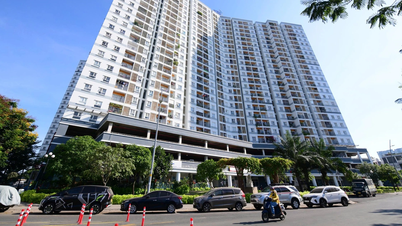
The leader of one of Ho Chi Minh City's first Green TOD projects stated that the project's location and connectivity will create significant advantages for residents within the project area in terms of commuting to and from Metro Station No. 1.
This creates a double benefit in encouraging increased use of green public transportation such as trains, and reducing the use of private vehicles (motorcycles, cars) to alleviate traffic congestion and reduce emissions.
And it also significantly increases the number of passengers traveling on the subway, helping the subway industry recover its investment quickly and saving people a lot of time.
Besides supplying a large number of apartments to meet real demand, Green TOD projects in this area will contribute to creating a modern lifestyle for young residents of the city, as well as helping to enhance commercial and service activities at the train station, generate more budget revenue, attract international tourism, and strengthen connections with universities and cultural and sports centers along the route.
Source: https://tuoitre.vn/co-hoi-phat-trien-do-thi-ve-tinh-20241108080433278.htm





















































































Comment (0)