

Along the tranquil beaches of Jeju, many people line up not just to admire the scenery, but for one sole purpose: to buy bagels at the famous branch of the London Bagel Museum on this Korean island.
The London Bagel Museum is the name of a popular café in Seoul, South Korea. This café is well-known for its classic ambiance, tiled decor, and delicious bagel sandwiches.
According to SCMP, the banh mi craze isn't limited to Jeju. The brand also has branches in popular Seoul areas like Anguk, Jamsil, Yeouido, and many others, consistently attracting long queues wherever it's located.
The name of the restaurant itself combines the founder's favorite words, evoking both nostalgia and a sense of solemnity.
It's not just the London Bagel Museum; long lines of people buying bagels are a common sight all over South Korea.
From Jeju Island in the south to the hipster streets of Seongsu-dong, Seoul, and the city of Daejeon, bakeries have become familiar destinations, much like cafes or art galleries.
At Randy's Donuts, the Los Angeles-based donut brand offers its signature ring-shaped donuts, topped with a black sesame glaze and a bright orange glaze inspired by Jeju tangerines, always delighting customers.
Once considered a classic American brand, it now has a distinctly Korean character with unique flavors found only in Jeju.
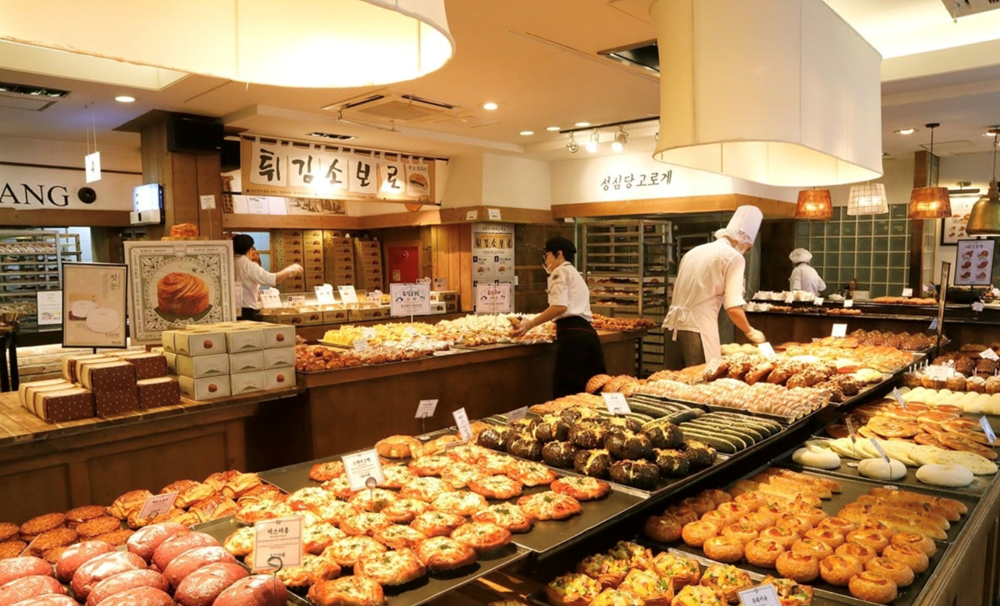
Or two hours' drive south of the capital, the city of Daejeon also offers a story through bread.
At Sungsimdang, a beloved bakery established in 1956, it is widely known for inventing the fried soboro-ppang – a crispy fried bun topped with streusel, with a soft interior and a traditional sweet red bean paste filling.
Other signature dishes include garlic chive bread and myeongnan (cod roe) baguette, along with a growing list of classic and innovative dishes.
For decades, the telltale sign of a visitor returning from Daejeon was a shopping bag from Sungsimdang, filled with the shop's signature fried dumplings as souvenirs.
Although rice is an indispensable part of the traditional Korean diet, today's younger generation views bread not just as food, but as a symbol of taste, trends, and lifestyle.
Queueing up to buy bread is considered a modern habit in this country. The phrase ppangji sullye, meaning "bread pilgrimage" in Korean, has entered the everyday language of many locals.
It serves as both a cultural symbol and a driving force for tourism.
The love for bread reflects a general culinary trend across South Korea, where bakeries are both cultural icons and drivers of tourism.
According to data from navigation service Tmap Mobility, four out of the ten most searched-for restaurants during South Korea's 2024 summer travel season are bakeries.
Behind these figures lies a new cultural economy shaped by aesthetics and emotions.
In South Korea, bread is now both a refined pleasure and a symbol of patience, a source of nourishment for the fast-paced lifestyle of the country's people.
Each bite of the cake offers not only flavor but also a sense of pause. This is something many find increasingly rare in modern Korean society.
Notably, the bread craze in South Korea isn't just for the younger generation. As Western culinary culture has gradually integrated into Korean lifestyles over the past decades, many older generations—now in their 50s and 60s—have also incorporated bread into their daily diets.
“I think Koreans’ love for bread partly stems from its light, almost snack-like feel, compared to traditional rice-based meals. Bread is easy to eat and convenient, fitting the fast-paced lifestyle of our society,” shared Ms. Choi, a Korean housewife in her 50s.
And as bread became increasingly popular in the Korean diet, the term "Korean bread" also evoked a unique feeling for many foreign tourists.
Foreign visitors describe Korean bread as softer and often much sweeter than European bread.
Red bean croissants, sweet garlic bread, and cream-filled donuts have become iconic symbols of Korean cuisine.
Source: https://baovanhoa.vn/du-lich/con-sot-banh-mi-tro-thanh-xu-huong-moi-o-han-quoc-176308.html



















































































Comment (0)