

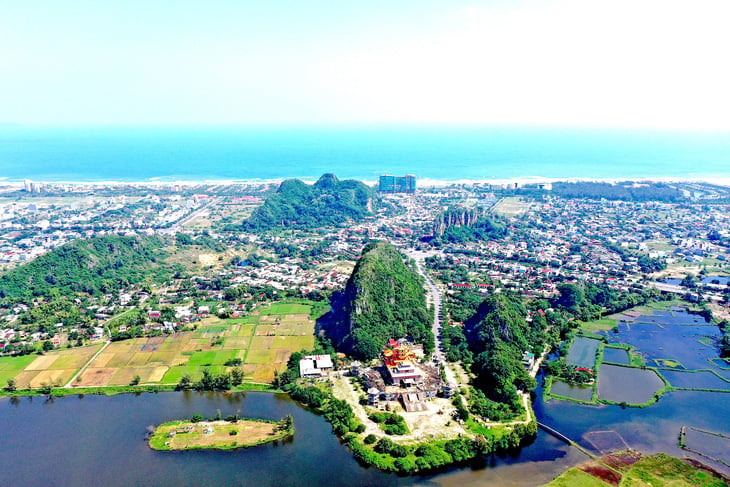
Non Nuoc Mountain, also known as Ngu Hanh Son, is a landmark known to almost every resident of Quang Nam province, and it is used to name the administrative unit of Ngu Hanh Son district - Photo: TRUONG TRUNG
With the country about to reorganize and merge administrative units, many readers are interested in knowing how our ancestors used to name villages and communes.
Villages and communes play a very significant role in the cultural life of the Vietnamese people. The names of villages and communes are not just dikes or rice paddies; they are cherished memories for each person, as the poet Lam Thi My Da once wrote: "In each of our hearts, we cherish a village name / In each dream, we remember a village name."
Village names also reflect the pioneering efforts of our ancestors, economic activities, and historical changes.
How many ways are there to name villages and communes?
A history PhD from Da Nang University of Education said that there were many ways that people in the past commonly used to name villages and communes.
The most common approach is to use ancient place names, ancient lands, large villages, or famous ancient villages within the boundaries of those wards or communes to select new names…
One might notice a common naming convention for communes and wards in the past was to use one letter from the district name for the communes below.
For example, in Duy Xuyen district, while the initial character was consistently Xuyen, the communes would choose an additional character with a beautiful/elegant meaning (a beautiful character), or a character from the name of a large, famous village in the commune, or one that bears the unique mark of that commune, to create names like Xuyen Tho, Xuyen Phuoc, Xuyen Long, Xuyen Tan, etc.
However, since then, and continuing to this day, the communes have adopted the word "Duy" as their first letter: Duy Hai, Duy Nghia, Duy Thu, Duy Tan…
Similarly, in Hoa Vang district, Da Nang, the word "Hoa" is used to name the communes: Hoa Phu, Hoa Chau, Hoa Tho, Hoa Phong, Hoa An…
This doctor argues that this method creates consistency with administrative place names below the district level, avoiding duplication, making them easier to remember and also easier to gain consensus from the community below. This is especially important in cases where the local community disagrees and cannot reach a consensus.
For example, Son Tra district could use either "Tra" or "Son"; Thanh Khe district could use "Thanh"; Lien Chieu district could use "Lien"; Cam Le district could use "Cam"... as the first letter, then choose another letter to form the name of the subordinate ward below.
Another method that many places use to name streets is to add directions (East - West - South - North - Center - Upper) to the district name to create ward names (as is currently the case in Thanh Khe district, which has two wards: Thanh Khe Dong and Thanh Khe Tay).
In some places, numbers are added (adding a number) after the main identifying part at the district level to create administrative place names at the ward level (for example, the current method in Hai Chau district, Da Nang, has two wards: Hai Chau 1 and Hai Chau 2).
The method of combining the names of new communes/wards by selecting and combining two words from 2-3 old communes/wards in a way that is convenient, pleasant, and meaningful is quite common (for example, the ward planned to be established in Hai Chau district, Da Nang is Nam Binh Phuoc ).
Alternatively, they could revert to the old name, the name that existed during a previous historical period (such as the proposed ward being Ha Tam Xuan ward in Thanh Khe district, Da Nang)...
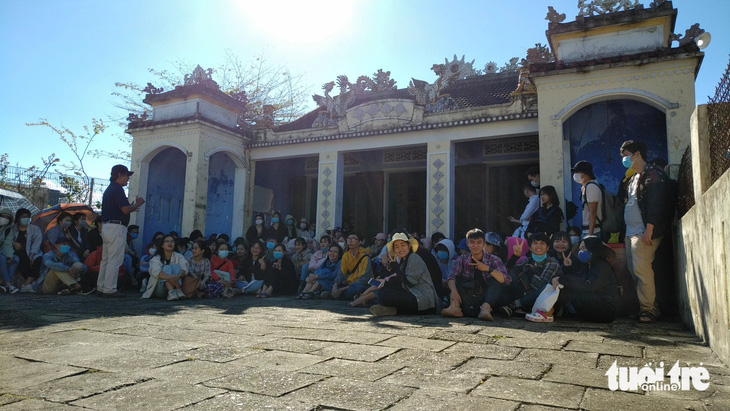
Students from Da Nang University of Education chat with elderly people in front of a shrine in the ancient village of Nam O, Lien Chieu district, Da Nang - Photo: TRAN TUAN
Sometimes it's random, sometimes it's influenced by many factors.
Meanwhile, studies on village names in Vietnam show that the way villages are named is closely related to the customs, traditions, lifestyles, beliefs, and preferences of the entire community. The naming of villages can sometimes be random, and sometimes influenced by many factors.
In many cases, wards and communes are named after the main villages in the region. These villages, in turn, are named after characteristic craft villages, influential clans, or those with the largest population in the area.
Additionally, in some localities, many wards and communes are named after local historical figures, or are assigned numbers…
In recent days, many readers of Tuoi Tre Online have commented that when naming administrative units after the merger of wards and communes, it is necessary to avoid changing too many of the words that our ancestors used, as it could easily lead to a loss of cultural identity.
Most opinions suggest that, in the current phase, the naming of new administrative units should be done in a way that ensures cost-effectiveness and avoids causing paperwork complications for citizens.
Many readers have suggested that if the old names of communes and wards already adequately encompass the entire area, consideration should be given to retaining them to avoid paperwork complications for residents.
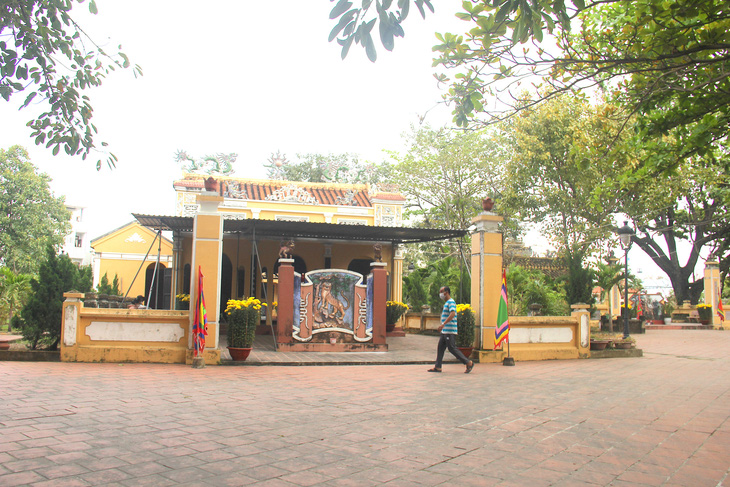
The place name Khue Trung originates from the ancient village of Hoa Khue in Da Nang. It is now used as the name of the administrative unit Khue Trung ward, Cam Le district, Da Nang. The photo shows a corner of the Khue Trung historical and cultural relic site. - Photo: TRUONG TRUNG
Source
![[Image] The tenacious fighting spirit of Vietnamese women's football](/_next/image?url=https%3A%2F%2Fvphoto.vietnam.vn%2Fthumb%2F1200x675%2Fvietnam%2Fresource%2FIMAGE%2F2025%2F12%2F17%2F1765990260956_ndo_br_4224760955870434771-copy-jpg.webp&w=3840&q=75)
![[Image] Leaked images ahead of the 2025 Community Action Awards gala.](/_next/image?url=https%3A%2F%2Fvphoto.vietnam.vn%2Fthumb%2F1200x675%2Fvietnam%2Fresource%2FIMAGE%2F2025%2F12%2F16%2F1765882828720_ndo_br_thiet-ke-chua-co-ten-45-png.webp&w=3840&q=75)
![[Live] 2025 Community Action Awards Gala](/_next/image?url=https%3A%2F%2Fvphoto.vietnam.vn%2Fthumb%2F1200x675%2Fvietnam%2Fresource%2FIMAGE%2F2025%2F12%2F16%2F1765899631650_ndo_tr_z7334013144784-9f9fe10a6d63584c85aff40f2957c250-jpg.webp&w=3840&q=75)
![[Photo] Prime Minister Pham Minh Chinh receives Lao Minister of Education and Sports Thongsalith Mangnormek](/_next/image?url=https%3A%2F%2Fvphoto.vietnam.vn%2Fthumb%2F1200x675%2Fvietnam%2Fresource%2FIMAGE%2F2025%2F12%2F16%2F1765876834721_dsc-7519-jpg.webp&w=3840&q=75)

![[Photo] Prime Minister Pham Minh Chinh receives the Governor of Tochigi Province (Japan)](/_next/image?url=https%3A%2F%2Fvphoto.vietnam.vn%2Fthumb%2F1200x675%2Fvietnam%2Fresource%2FIMAGE%2F2025%2F12%2F16%2F1765892133176_dsc-8082-6425-jpg.webp&w=3840&q=75)







![[Video] Exhibition space "Great Poet Nguyen Du - Remembered for a Thousand Years"](https://vphoto.vietnam.vn/thumb/402x226/vietnam/resource/IMAGE/2025/12/17/1765983645796_khong-gian-trung-bay-dai-thi-hao-nguyen-du-ngan-nam-nho-mai-3610-jpg.webp)
















































![[Live] Closing Ceremony and Award Presentation for the "Impressive Vietnam Tourism" Video/Clip Creation Contest 2025](https://vphoto.vietnam.vn/thumb/402x226/vietnam/resource/IMAGE/2025/12/17/1765974650260_z7273498850699-00d2fd6b0972cb39494cfa2559bf85ac-1765959338756946072104-627-0-1338-1138-crop-1765959347256801551121.jpeg)
















Comment (0)