

Spring – the season of festivals and also the peak season, the first "signal" of the year for the tourism industry nationwide in general, and Thanh Hoa province in particular.
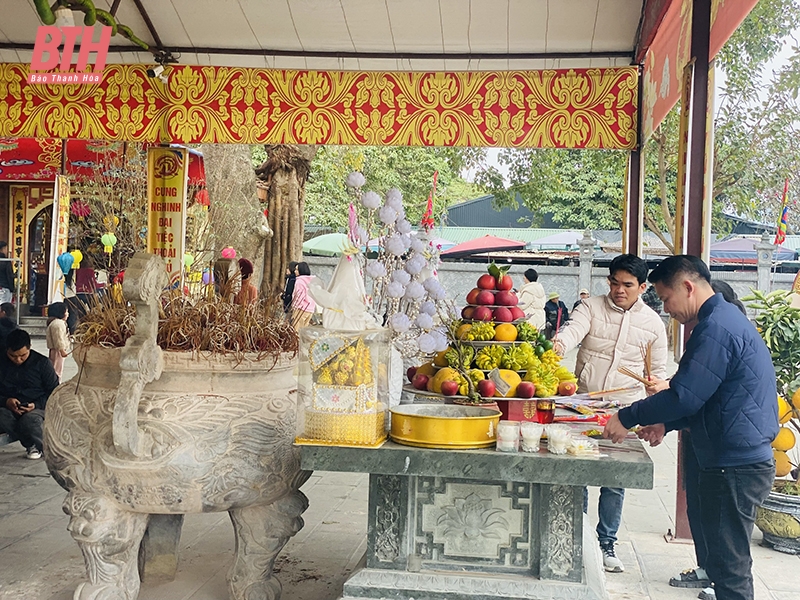
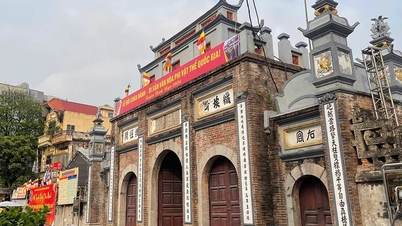
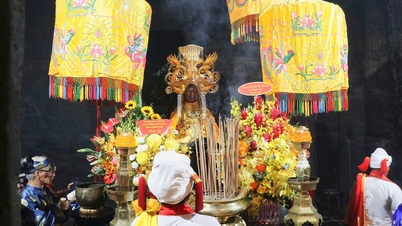
Offering incense and prayers at Co Bo Temple (Ha Son commune, Ha Trung district).
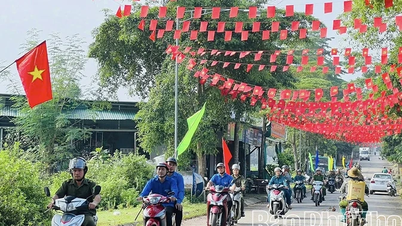
Following our spring journey of "from the mountains to the sea," we chose typical spiritual and scenic tourist destinations in Thanh Hoa province, immersing ourselves in the festive atmosphere. The array of historical sites, scenic spots, and diverse cultural events and festivals are enough to impress even the most discerning visitors, captivating them with the beauty, rich history, and layers of cultural essence of Thanh Hoa. The graceful spring beckons people to attend the festivals, their hearts filled with shared joy. In this spirit, the crowds flocking to historical sites and scenic spots to admire the scenery, offer incense, and enjoy the festivals paint a vibrant and impressive picture of Thanh Hoa's tourism.
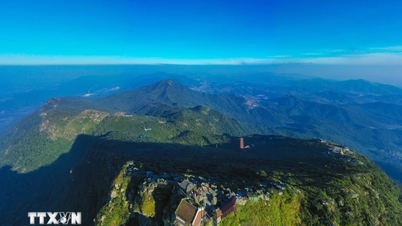
The Cua Dat historical and cultural site (Thuong Xuan district) is not only famous for its beautiful and picturesque natural scenery but also for its unique cultural and spiritual activities. From here, visitors can gaze out at the surrounding area, seeing mountains over 1,000m above sea level, covered in mist year-round, such as Pu Rinh, Pu Gio, and Pu Ta Leo, and admire the sacred temples hidden amidst the lush green forest. Do Minh Hien (Quan Lao town, Yen Dinh district) excitedly recounted: "After researching, I learned that this place has beautiful natural scenery and many attractive cultural activities and festivals, so my friends and I planned a spring trip here, starting our journey of 'going from the mountains to the sea'."
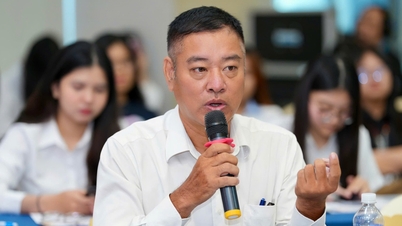
Mr. Do Doan Bay, Director of the Culture, Information, Sports and Tourism Center of Thuong Xuan district, shared: “Through festival activities, we have promoted the beauty of Thuong Xuan's land and people to a large number of tourists from inside and outside the province, thereby boosting tourism and making a practical contribution to the socio -economic development of the locality.”
In the current context, cultural tourism, including festival tourism, is one of the product lines that is receiving attention and emphasis. In many localities across the country, effectively exploiting cultural heritage, including traditional festivals, is both a goal and a solution for tourism development.
Following this general trend, along with beach tourism, cultural and spiritual tourism in Thanh Hoa province is increasingly demonstrating its value. According to statistics, in the first two months of 2025, Thanh Hoa province welcomed nearly 1.7 million tourists; total revenue from tourism activities is estimated at 1,642 billion VND.
Some traditional festivals are gradually becoming tourism products for visitors to learn about, explore, and experience, such as: Lam Kinh Festival, Le Hoan Festival (Tho Xuan), Ba Trieu Temple Festival (Hau Loc); Doc Cuoc Temple Blessing Festival (Sam Son City), Nua Temple - Am Tien Festival (Trieu Son), Phu Na Festival (Nhu Thanh), Cua Dat Temple Festival (Thuong Xuan), Dong Co Temple Festival (Yen Dinh), Cau Ngu Festival (Hau Loc), Tran Hung Dao Temple Festival (Ha Trung), Nine-Room Temple Buffalo Offering Festival (Nhu Xuan), Nang Han Festival (Thuong Xuan), Muong Xia Festival (Quan Son), Muong Ca Da Festival (Quan Hoa)...
The achievements in preserving and promoting traditional cultural values in general, and festivals in particular, in conjunction with tourism development in Thanh Hoa province over the past period are commendable. However, these results are still not truly commensurate with the potential and advantages of a land with more than 1,535 historical and cultural relics and scenic spots that have been classified and inventoried; hundreds of festivals, rituals, and folk performances from all regions that have been preserved; and dozens of heritage items that have been identified and named in the National Intangible Cultural Heritage list.
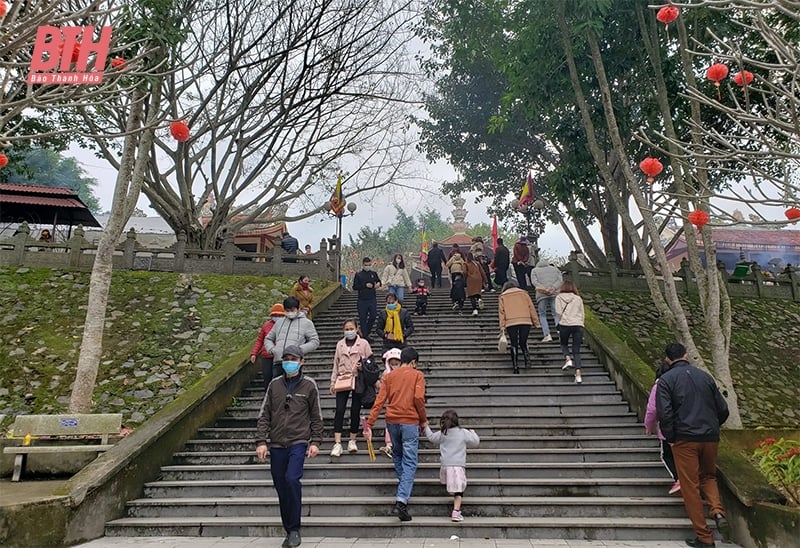
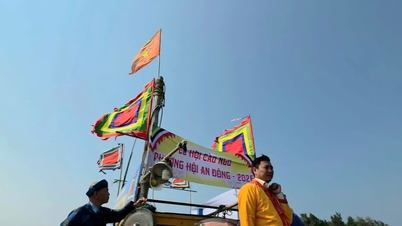
Tourists celebrate the Lunar New Year and attend festivals at the Cua Dat Historical and Cultural Relic and Scenic Area (Thuong Xuan).
To transform festivals into attractive tourism products and a driving force for tourism development, Thanh Hoa province needs to continue strengthening and innovating its management, organization, communication, and promotion of festivals. It should establish a close, regular, and synchronized coordination mechanism between all levels and sectors; manage and organize festivals in accordance with their scale, content, and nature; and establish specific regulations outlining the responsibilities of local authorities in festival management and organization.
In the vibrant and diverse tapestry of festivals, Thanh Hoa province needs to effectively and comprehensively exploit its cultural and historical values, highlighting their beauty, novelty, and uniqueness; diversifying tourism products from its rich festival heritage to attract a wider range of tourists. Simultaneously, the province should promote the application of digital transformation in the dissemination and promotion of cultural and spiritual aspects of festival activities; and educate the public on practicing cultural values during festivals, considering this a crucial task for both organizers and participants.
Integrating the implementation of civilized lifestyles in festivals into the content of the "National Unity for Building a Culturally Rich Life" movement, building culturally rich families and residential areas... Continuing to rectify and take measures to address violations and definitively resolve existing problems in the management and organization of festivals in the coming years in localities, preventing acts of overcrowding, disguised gambling, begging, money exchange services with profit margins, violent toys...; illegal circulation and trading of cultural products; preventing individuals from exploiting and attracting large crowds at festivals to propagate and promote activities with signs of superstition, contrary to good customs and traditions, and violating regulations on implementing civilized lifestyles during festivals.
In the midst of contemporary life, traditional festivals are not simply a "bridge" between the past and the present, between the real and the mystical and sacred. More than that, festivals are seen as a "therapy," a "pillar" of spirituality, guiding people towards the values of truth, goodness, and beauty. Therefore, traditional festivals always possess a unique appeal and attractiveness, thus creating a role and position that is not easily challenged or replaced. Localities that know how to seize opportunities, develop and elevate the value of festivals will create a powerful resource to boost tourism. It is a "game" of determination, courage, intelligence, and culture...
Dang Khoa
Source: https://baothanhhoa.vn/trong-dong-chay-le-hoi-dau-nam-bai-3-de-du-lich-le-hoi-de-trung-vang-243035.htm





















































Comment (0)