


 Although agriculture in Ca Mau still faces many challenges, it is gradually integrating with national and global trends. In recent years, achievements in science and technology have been applied to agricultural production, giving rise to many production models that not only bring economic efficiency but also protect the environment, moving towards green growth and a circular economy.
Many modern aquaculture models
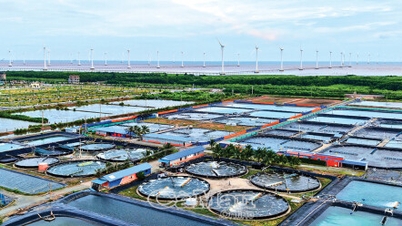
Aquaculture is a strength of the province, with approximately 280,000 hectares of shrimp farming area, accounting for 40% of the country's total shrimp farming area. Ca Mau shrimp is establishing itself with many effective and sustainable farming models. Of this, over 86,000 hectares are dedicated to shrimp-rice, shrimp-mangrove, and shrimp-crab-fish farming; and nearly 186,000 hectares are for improved extensive shrimp farming. From a province with no super-intensive shrimp farming in 2012, the area of intensive and super-intensive shrimp farming has now reached over 6,484 hectares.
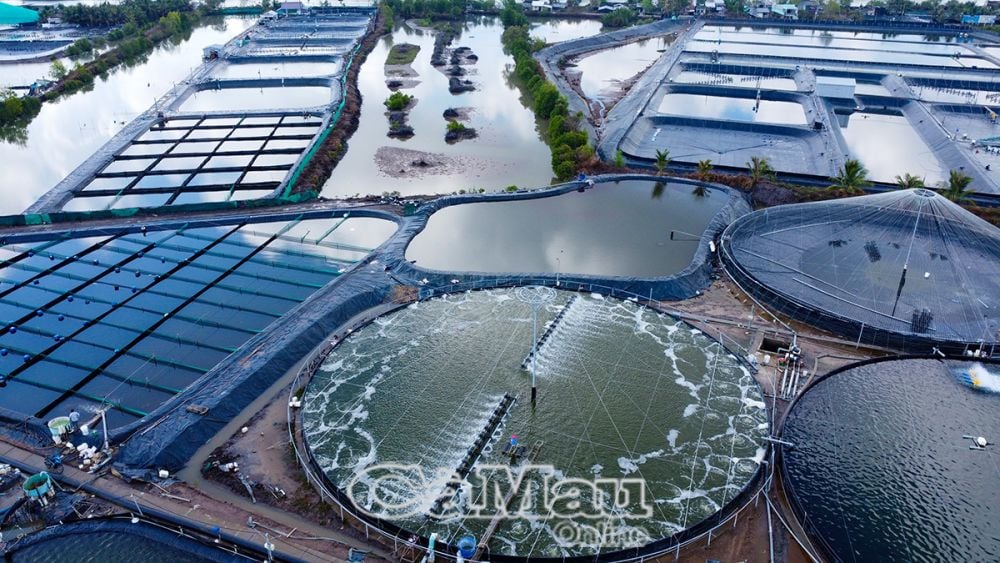
The recirculating super-intensive shrimp farming model with minimal water exchange not only yields high economic efficiency but also protects the environment and adapts to climate change.
Assessing the development of the shrimp industry in recent years, Mr. Chau Cong Bang, Deputy Director of the Department of Agriculture and Environment, noted that in recent years, the development of shrimp farming in the province has seen rapid changes in structure and the application of technology in production, leading to a significant increase in productivity and output. For many years, Ca Mau province has led the country in terms of area, production, and export value. This is a remarkable achievement that Ca Mau shrimp has attained in recent years, through many modern production models.
While considered a highly productive and economically efficient farming method, super-intensive shrimp farming also carries many risks due to high costs, heavy dependence on weather and seasonality, and difficulty in controlling diseases during the farming process. To overcome these challenges, many models applying new technologies towards a circular economy and adapting to climate change have emerged and been implemented in recent years.
The three-stage, recirculating, super-intensive whiteleg shrimp farming model with minimal water changes and biosecurity is one such example. After a period of implementation at five households in Cai Nuoc and Dam Doi districts and Ca Mau city, the model has proven effective, opening up a new option for super-intensive shrimp farmers in the province amidst increasingly extreme climate change.
As one of the households participating in the model, Mr. Huynh Thai Nguyen, from Rau Dua B hamlet, Hung My commune, Cai Nuoc district, said that the farming process is currently yielding high economic efficiency. In some farming seasons, after only 90 days of stocking, the shrimp reach 34-35 shrimp per kilogram, with profits sometimes exceeding 500 million VND per pond (1,200 m2) per season.
To achieve Net Zero CO2 emissions – the standard for shrimp exports by 2050 – the province has developed many new intensive and super-intensive shrimp farming models that are circular, environmentally friendly, and adaptable to climate change, such as: super-intensive whiteleg shrimp farming in a recirculating system combined with multiple species; super-intensive whiteleg shrimp farming with minimal water exchange using Growmax technology... Among these, the most notable is the farming model using RAS-IMTA technology (a method that utilizes shrimp waste as food for other animals in the same pond).
The RAS-IMTA model was developed through a collaboration between SAEN Aquaculture Science and Environment Company Limited, the Fisheries Research Institute 2, the Department of Science and Technology of Ca Mau province, and local farmers. After a period of trial production, the effectiveness of the RAS-IMTA model has been proven through parameters such as low feed conversion ratio, high shrimp growth rate, fewer shrimp diseases, and reduced water changes; achieving sustainable indicators and moving towards a circular economy, a new trend for integration into the global market by 2050.
Towards high-quality rice
Regarding the development of the rice industry, although lacking a competitive advantage in terms of production volume, Ca Mau, with its favorable natural conditions, has chosen to develop in the direction of high quality. Based on this orientation, many rice production models in the province have undergone positive changes, with rapid shifts in variety structure. Currently, high-quality rice varieties account for 75% of the rice cultivated in the province, specialty fragrant varieties account for 20%, and the remaining 5% are rice varieties used for processing.
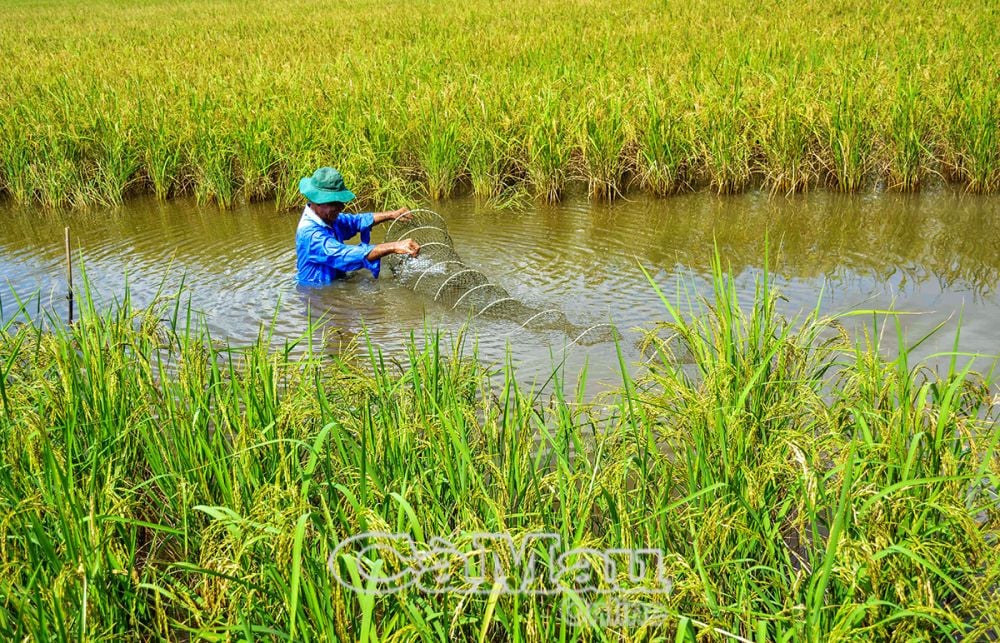
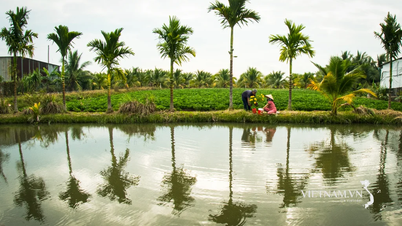
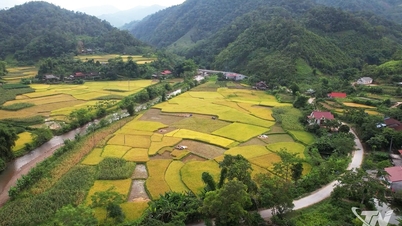
Rice-shrimp farming model. Photo: VAN DUM
In particular, many rice production models applying advanced technical processes are effective, environmentally friendly, and adaptable to climate change. A typical example is the rice-prawn farming model, adhering to VietGAP, GlobalGAP, and organic standards both domestically and internationally in the northern Ca Mau region. With approximately 37,000 hectares of rice-prawn farming, this model is opening up a path towards high economic efficiency and sustainable development.
According to Mr. Nguyen Tran Thuc, Head of the Department of Crop Production and Plant Protection, over the past period, there have been 50 models of rice production of various types, focusing on safe rice, organic rice, ecological rice, rice-shrimp farming, rice-fish farming, and colored rice... Of which, 400 hectares are producing rice meeting Vietnamese organic standards, 330 hectares meeting USDA, EU, and JAS standards, 1,248 hectares meeting VietGAP and GlobalGAP standards, and 3,000 hectares of ecological rice; the planned high-quality rice growing area covers 25,000 hectares, the fragrant specialty rice growing area covers 10,000 hectares, and the rice processing area covers 5,000 hectares. Many rice production models have been replicated, not only bringing economic benefits but also making a significant contribution to environmental protection.
With an annual rice cultivation area of over 24,000 hectares and a production of over 110,000 tons/year, including specialized rice-farming, rice-shrimp, and rice-fish farming areas, U Minh district is focusing on developing high-quality rice production models that are environmentally friendly and adaptable to climate change.
Mr. Le Hong Thinh, Vice Chairman of the People's Committee of U Minh District, said that in recent times, the district has implemented and expanded many advanced rice production models, such as: "1 must, 5 reductions", "3 reductions, 3 increases", rice-fish rotation, rice-shrimp rotation, bringing high economic efficiency. Currently, the district is continuing to strengthen training in advanced farming techniques, promoting the application of digital technology in production management and traceability.
Ca Mau, located at the southernmost tip of Vietnam, possesses a unique geographical position and distinctive ecosystem that provides the province with numerous advantages in aquaculture, marine economy, ecotourism, and significant potential for rice production, especially high-quality rice with a rice-shrimp farming model. To capitalize on these advantages, the province has registered with the Ministry of Agriculture and Environment to develop 23,000 hectares of high-quality, low-emission rice linked to green growth by 2030 and will continue to expand this model throughout the province, contributing to a GRDP growth of 8% or more by 2025. Accordingly, the province is inviting investors and businesses to build a sustainable rice value chain, from production to processing and export, targeting markets in the United States, Japan, the EU, and other potential markets.
Regarding the content of inviting businesses and investment in building the rice value chain, Vice Chairman of the Provincial People's Committee Le Van Su affirmed that the province is committed to creating all favorable conditions and directing relevant departments and levels to best perform their assigned responsibilities and tasks, to accompany the people, businesses, and investors in the process of investment and cooperation in the province.
Nguyen Phu
Source: https://baocamau.vn/de-loi-the-thanh-gia-tri-thuc-a38586.html











































Comment (0)