

Jung Geun-sik, Director of the Seoul Metropolitan Office of Education (South Korea), has proposed a roadmap to abolish the university entrance exam (Suneung) by 2040, along with a comprehensive reform of the South Korean university admissions system, in order to reduce exam pressure and adapt to the context of a declining population.
He argued that the current admissions system, which places a heavy emphasis on university entrance exam scores, is no longer suitable for the educational and societal challenges.

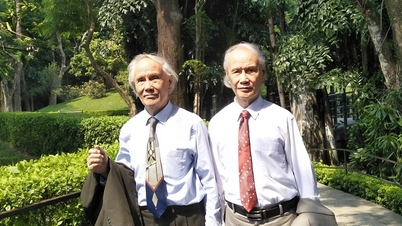
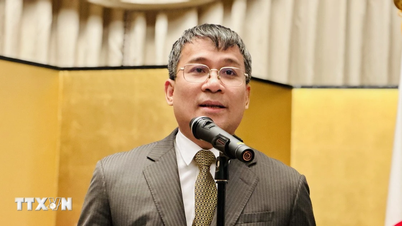
Jung Geun-sik, Director of the Seoul Metropolitan Education Office (South Korea) (Photo: Yonhap).
The university entrance exam in South Korea lasts eight hours and is considered extremely stressful. On exam day, the stock market opens later than usual. Extra buses and subway trains are added to ensure test-takers don't arrive late. Even flights are temporarily suspended to avoid noise pollution.
According to Jung, excessive competition for grades, high tuition costs, and a ranking-driven educational environment are undermining the quality of students' learning.
"This model no longer guarantees a future for the younger generation," he emphasized.
Therefore, the admissions process needs to be implemented in three phases, starting with the 2028 admissions period.
In the short term, the Seoul Metropolitan Office of Education proposed abolishing the ranking-based grading system and switching to a fixed grading scale for career-oriented and interdisciplinary elective courses. This approach aims to help students choose subjects that match their abilities and interests, rather than simply choosing subjects that are easy to get high grades in.
At the same time, Seoul's education leaders proposed abolishing the recommendation for regional universities to base their admissions on university entrance exam scores for 30-40% of students; instead, they suggested expanding a regionally balanced admissions policy and tightening early admission requirements for students from specialized schools.
In the medium term, applicable to students entering university from 2033 onwards, the proposal suggests expanding the grading system to include all high school subjects and sections of the university entrance exam, while increasing the number of short-answer questions and essays.
Starting in 2033, Seoul's education leaders are proposing to expand the grading system to include all high school subjects. University admissions will rely more heavily on academic records, evaluating students' efforts and progress throughout their high school years.
The university entrance exam now serves only as a reference, with a simpler assessment format, including essay questions and writing assignments to test critical thinking skills, instead of just multiple-choice questions.
In the final phase, by 2040, Seoul's education sector proposes completely abolishing the university entrance exam, as the number of students of school age is projected to decline sharply. Admissions will shift to a comprehensive assessment of students' abilities, academic performance, and development throughout their high school years.
In addition, some specialized types of schools will be reorganized to reduce disparities between schools and to better suit the reality of a declining student population.
This proposal is currently only a recommendation and will be submitted to the National Education Commission of South Korea for consideration. A final decision on whether or not to abolish the university entrance exam is expected to be made in 2026, after consultations with various ministries, departments, and experts.
Source: https://dantri.com.vn/giao-duc/de-xuat-bai-bo-ky-thi-dai-hoc-o-han-quoc-de-giam-ap-luc-thi-cu-20251216072755702.htm

![[Live] 2025 Community Action Awards Gala](/_next/image?url=https%3A%2F%2Fvphoto.vietnam.vn%2Fthumb%2F1200x675%2Fvietnam%2Fresource%2FIMAGE%2F2025%2F12%2F16%2F1765899631650_ndo_tr_z7334013144784-9f9fe10a6d63584c85aff40f2957c250-jpg.webp&w=3840&q=75)
![[Image] Leaked images ahead of the 2025 Community Action Awards gala.](/_next/image?url=https%3A%2F%2Fvphoto.vietnam.vn%2Fthumb%2F1200x675%2Fvietnam%2Fresource%2FIMAGE%2F2025%2F12%2F16%2F1765882828720_ndo_br_thiet-ke-chua-co-ten-45-png.webp&w=3840&q=75)
![[Photo] Prime Minister Pham Minh Chinh receives the Governor of Tochigi Province (Japan)](/_next/image?url=https%3A%2F%2Fvphoto.vietnam.vn%2Fthumb%2F1200x675%2Fvietnam%2Fresource%2FIMAGE%2F2025%2F12%2F16%2F1765892133176_dsc-8082-6425-jpg.webp&w=3840&q=75)

![[Photo] Prime Minister Pham Minh Chinh receives Lao Minister of Education and Sports Thongsalith Mangnormek](/_next/image?url=https%3A%2F%2Fvphoto.vietnam.vn%2Fthumb%2F1200x675%2Fvietnam%2Fresource%2FIMAGE%2F2025%2F12%2F16%2F1765876834721_dsc-7519-jpg.webp&w=3840&q=75)







































![[Photo] Prime Minister Pham Minh Chinh attends the Vietnam Economic Forum 2025](https://vphoto.vietnam.vn/thumb/402x226/vietnam/resource/IMAGE/2025/12/16/1765893035503_ndo_br_dsc-8043-jpg.webp)

























Comment (0)