

The Data Bill stipulates that data exchanges, licensed and operated by the Ministry of Public Security in accordance with regulations, are places for storing, managing, trading, exchanging, leasing, buying, selling, and providing data-related services, under supervision and with security guarantees.
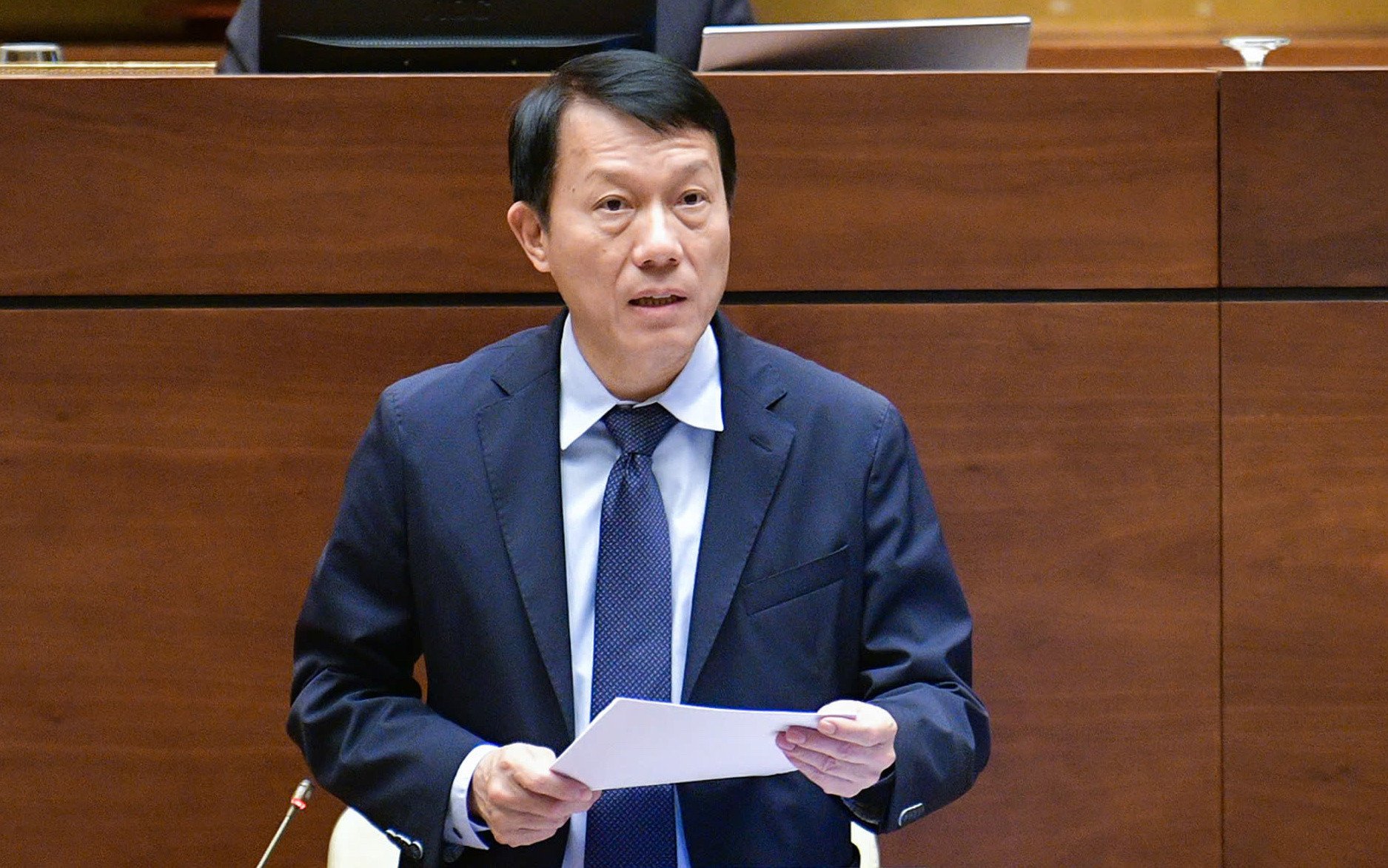
On the afternoon of October 22nd, Minister of Public Security Luong Tam Quang, acting on behalf of the Prime Minister, presented the draft Law on Data.
A national data development fund needs to be established.
One of the notable aspects of the bill, according to Minister Luong Tam Quang, is the provision regarding the national data development fund.
Accordingly, Article 29 clearly stipulates that the National Data Development Fund is a non-budgetary state financial fund, established at the central level to mobilize social resources to support the construction, development, exploitation, application, and management of national data.
This fund prioritizes providing financial support to businesses that apply artificial intelligence, cloud computing, semiconductor technology, and other technologies in data processing.
The fund is also used to promote the application of data for digital transformation in rural, mountainous, and economically and socially disadvantaged areas; and to support the development, application, and processing of data by ministries, sectors, and localities.
The fund is non-profit; expenditures must not overlap with the state budget… The government will specify in detail the priority activities for which funds are to be disbursed, as well as the establishment, management, and use of the fund.
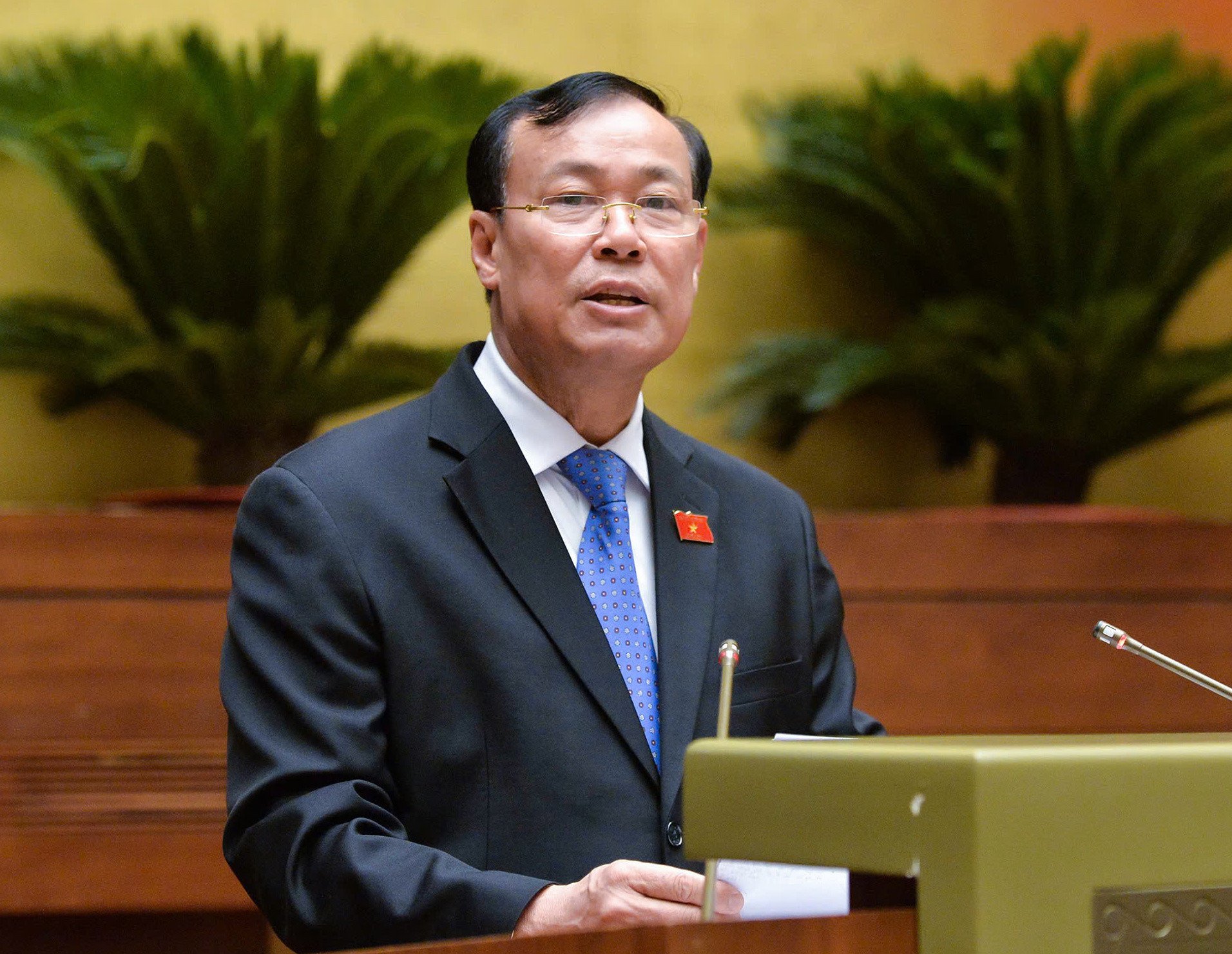
Reviewing this matter, the Chairman of the National Defense and Security Committee, Le Tan Toi, stated that the Committee basically agrees with the regulations on the fund as presented in the Government's proposal.
However, there are suggestions to clarify the financial sources that form the fund; to clearly define which activities are funded from the state budget and which are funded from the fund, ensuring transparency.
There were suggestions to clarify the legal and practical basis for establishing the fund; and to consider expenditure items to ensure compliance with the law on state budget and other relevant laws.
A pilot program for a data exchange platform should be implemented.
Another point emphasized by Minister Luong Tam Quang was the regulation concerning data exchange platforms.
Article 53 of the bill stipulates that data exchanges perform the functions of trading, exchanging, buying, selling, and providing data-related products and services in a suitable, accurate, and legal manner to entities requesting the services.
Before executing a transaction, the exchange must verify and assess whether the transaction meets the eligibility requirements and ensure the security and safety of using the data product.
The bill also states that data exchanges, licensed and operated by the Ministry of Public Security in accordance with regulations, are places for storing, managing, trading, exchanging, leasing, buying, selling, and providing data-related services, under supervision, ensuring security and compliance with regulations.
Data products being traded must meet requirements such as not impacting national security, defense, or cryptography; not infringing on state secrets, public interests, or the legitimate rights and interests of agencies, organizations, and individuals.
Operating regulations must ensure several aspects, including information confidentiality, fraud prevention, risk management, complaint and dispute handling, and personal data protection.
The bill also specifies data that is not permitted to be traded, such as: data that is harmful to the military, national defense, national security, public order, and social safety; data that is not consented to by the data subject; and data that is strictly prohibited by law.
The government will regulate in detail the contents related to the data exchange platform and issue policies to support it.
The reviewing body generally agreed with the regulations on data exchanges in the draft law. In addition, some suggested that, as this is a new and specialized field, a pilot program for data exchanges could be considered.
Therefore, for the time being, it is not necessary to include overly detailed regulations in this law; instead, the Government should be tasked with organizing pilot implementations and reporting to the National Assembly.
The Data Bill, comprising 7 chapters and 67 articles, will be discussed by delegates in committees on October 24th; discussed in the plenary session on November 8th; and is expected to be voted on and passed on November 30th.

Transparency in cross-border data exchange is crucial to combating money laundering.

Across the country, more than 1,500 voice biometric data points and over 260 DNA samples have been collected.

Digitizing 13 million pages of documents from 1,300 audits, creating big data.
Source: https://vietnamnet.vn/de-xuat-giao-bo-cong-an-cap-phep-thanh-lap-san-giao-dich-du-lieu-2334402.html


![[Image] Leaked images ahead of the 2025 Community Action Awards gala.](/_next/image?url=https%3A%2F%2Fvphoto.vietnam.vn%2Fthumb%2F1200x675%2Fvietnam%2Fresource%2FIMAGE%2F2025%2F12%2F16%2F1765882828720_ndo_br_thiet-ke-chua-co-ten-45-png.webp&w=3840&q=75)

![[Photo] Prime Minister Pham Minh Chinh receives Lao Minister of Education and Sports Thongsalith Mangnormek](/_next/image?url=https%3A%2F%2Fvphoto.vietnam.vn%2Fthumb%2F1200x675%2Fvietnam%2Fresource%2FIMAGE%2F2025%2F12%2F16%2F1765876834721_dsc-7519-jpg.webp&w=3840&q=75)





























































































Comment (0)