

Term risk for the banking system
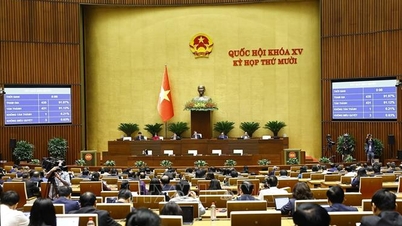
A thematic forum in the field of finance and banking, with the theme: "Mobilizing and effectively utilizing financial resources for economic growth targets in the period 2026-2030," was held on the morning of December 16th at the Government Office .
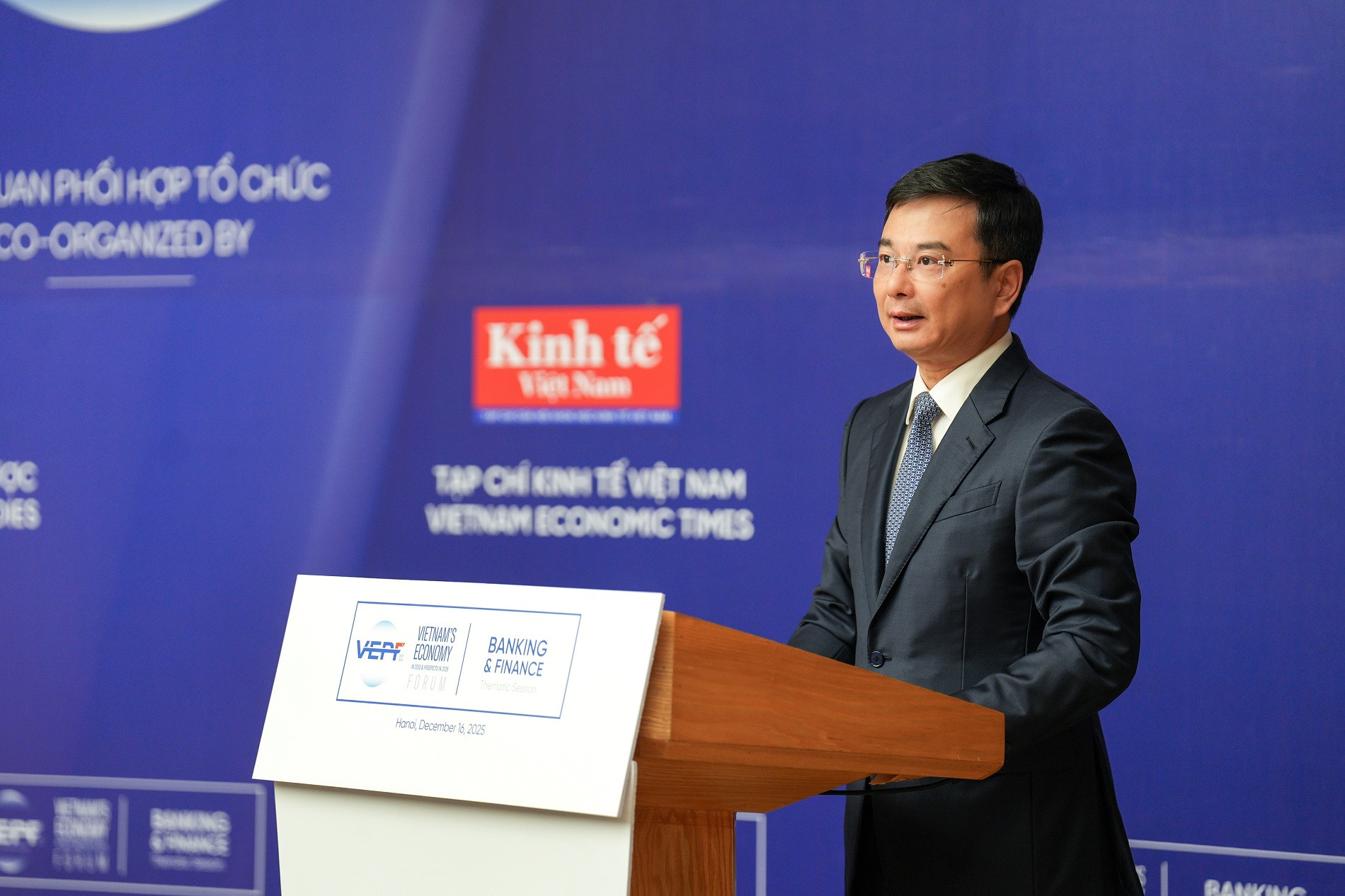
According to Deputy Governor of the State Bank of Vietnam (SBV) Pham Thanh Ha, in order to achieve double-digit growth targets in the 2026-2030 period, aiming towards the group of upper-middle-income countries by 2030 and high-income countries by 2045, the urgent requirement is for Vietnam to achieve high, continuous, stable, and sustainable economic growth in the coming period.
"One of the crucial challenges for achieving high growth targets is ensuring sufficient capital for the economy, while also using it effectively to promote a growth model based on science and innovation," said Mr. Pham Thanh Ha.
According to Ms. Ha Thu Giang, Director of the Department of Credit for Economic Sectors, State Bank of Vietnam, by November 27, 2025, outstanding credit reached over 18.2 million billion VND, an increase of 16.56% compared to the end of 2024 and nearly double compared to the beginning of the previous period.
The credit structure has shifted in line with the structure of economic sectors. Credit is directed towards priority areas, with some sectors accounting for a large proportion, such as agriculture and rural areas (approximately 23%) and small and medium-sized enterprises (SMEs) (19%) of total outstanding loans. Notably, credit to high-tech enterprises and supporting industries has experienced high growth rates, averaging 17.51% and 19.91% respectively in the recent period.
At the same time, along with other sources of capital, bank credit has provided essential financing for the implementation of many key projects and works.
However, Ms. Ha Thu Giang argued that the pressure to supply capital to the banking system remains very high in the context of an unbalanced financial market. The economy's capital needs are increasing, while raising capital from the corporate bond market and the stock market still faces many difficulties and has not fully played its role as the main channel for supplying medium- and long-term capital.
"The demand for medium and long-term capital for key national projects and works is enormous, putting pressure on credit institutions to supply capital for project implementation, as well as posing maturity risk because the main source of funding for lending is primarily short-term deposits, accounting for 80% of the total deposits of credit institutions," said Ms. Ha Thu Giang.
To alleviate pressure on the banking system in providing capital support to the economy, experts recommend opening up channels for raising capital through the stock market.
Efficient use of capital is even more important than raising capital.
From a financial and budgetary management perspective, Deputy Minister of Finance Do Thanh Trung emphasized that mobilizing sufficient capital is a major task, but allocating it correctly, using it efficiently and transparently to create high added value is even more important.
"Besides mobilizing sufficient capital, the issue of allocating resources appropriately and using them transparently and efficiently to create high added value should be prioritized," the Deputy Minister emphasized.
Sharing the same view, economist Dr. Can Van Luc believes that in the coming period, Vietnam needs rapid, sustainable, and inclusive growth across all three pillars: economy, society, and environment; shifting significantly from reliance heavily on capital and labor to greater reliance on science and technology, innovation, institutional reform, and productivity.
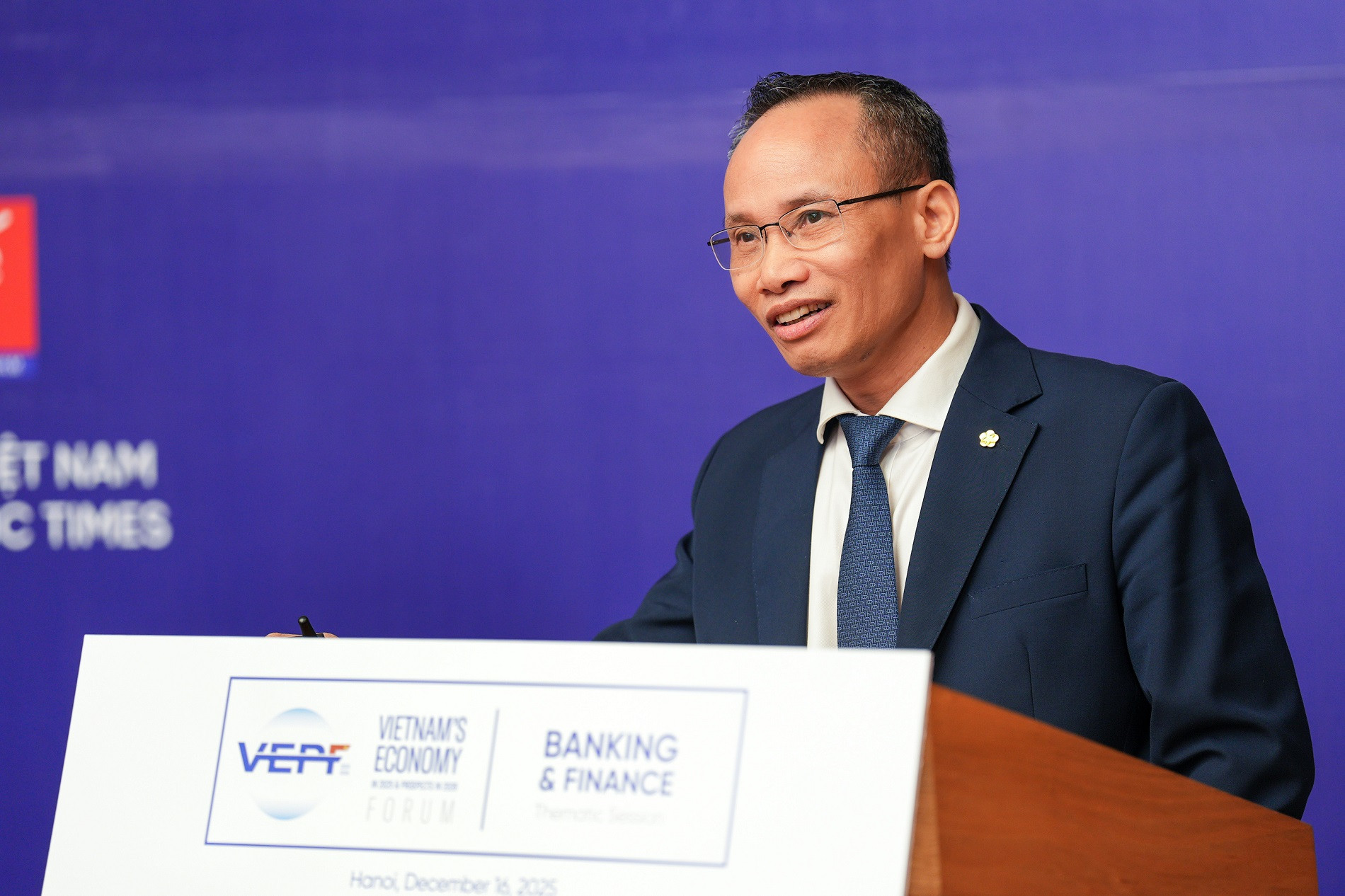
According to Dr. Can Van Luc, Vietnam needs to simultaneously improve all three aspects: resource mobilization, allocation, and utilization. The focus should be on perfecting the financial market institutions, strengthening financial safety supervision; promoting digital transformation, Fintech, cashless payments, and digital assets; and fostering green, sustainable, and inclusive finance.
According to Mr. Bui Hoang Hai, Vice Chairman of the State Securities Commission, the Vietnamese stock market will continue to expand in size in 2025, affirming its role as an important component of the financial market and a foundation supporting economic development.
The average trading value in the stock market during the first 11 months of 2025 reached nearly 29.5 trillion VND/session (approximately 1.17 billion USD/session), an increase of 38.5% compared to the average of the previous year.
The average transaction value on the listed bond market and the privately issued corporate bond market in the first 11 months reached nearly VND 15 trillion/session and over VND 5,400 billion/session respectively, representing increases of 27.4% and 26.44% compared to the previous year's average.
By the end of October 2025, the Vietnamese stock market will have over 11 million accounts, with domestic individual investors accounting for an overwhelming proportion (99.38%) and executing up to 85% of the total transaction value.
However, according to experts, the current market activity is still mainly concentrated in the secondary market, through the buying and selling of shares. The key is to create incentives for businesses to raise capital directly from the stock market through the issuance of shares and corporate bonds, thereby reducing the burden on the banking system.
Source: https://vietnamnet.vn/muon-tang-truong-hai-con-so-khong-the-chi-trong-vao-von-ngan-hang-2473115.html
![[Photo] Prime Minister Pham Minh Chinh receives Lao Minister of Education and Sports Thongsalith Mangnormek](/_next/image?url=https%3A%2F%2Fvphoto.vietnam.vn%2Fthumb%2F1200x675%2Fvietnam%2Fresource%2FIMAGE%2F2025%2F12%2F16%2F1765876834721_dsc-7519-jpg.webp&w=3840&q=75)
![[Photo] Prime Minister Pham Minh Chinh receives the Governor of Tochigi Province (Japan)](/_next/image?url=https%3A%2F%2Fvphoto.vietnam.vn%2Fthumb%2F1200x675%2Fvietnam%2Fresource%2FIMAGE%2F2025%2F12%2F16%2F1765892133176_dsc-8082-6425-jpg.webp&w=3840&q=75)
![[Live] 2025 Community Action Awards Gala](/_next/image?url=https%3A%2F%2Fvphoto.vietnam.vn%2Fthumb%2F1200x675%2Fvietnam%2Fresource%2FIMAGE%2F2025%2F12%2F16%2F1765899631650_ndo_tr_z7334013144784-9f9fe10a6d63584c85aff40f2957c250-jpg.webp&w=3840&q=75)


![[Image] Leaked images ahead of the 2025 Community Action Awards gala.](/_next/image?url=https%3A%2F%2Fvphoto.vietnam.vn%2Fthumb%2F1200x675%2Fvietnam%2Fresource%2FIMAGE%2F2025%2F12%2F16%2F1765882828720_ndo_br_thiet-ke-chua-co-ten-45-png.webp&w=3840&q=75)




















































![[Photo] Prime Minister Pham Minh Chinh attends the Vietnam Economic Forum 2025](https://vphoto.vietnam.vn/thumb/402x226/vietnam/resource/IMAGE/2025/12/16/1765893035503_ndo_br_dsc-8043-jpg.webp)





























Comment (0)