

The leaf trumpet – a simple yet unique musical instrument of the Hmong people – is likened to the song of a nightingale. The sound of the leaf trumpet expresses people's feelings and emotions towards nature, between people, and reveals the feelings of love between couples…

To learn about this unique musical instrument, we traveled upstream along the Da River to Tham Hon village, Ta Bu commune. As soon as we arrived at the village entrance, we heard the cheerful, melodious sounds of "pi po." Welcoming us, Mr. Song A Tenh, Party Secretary and Head of Tham Hon village, warmly explained: "Tham Hon has 38 households, 100% of whom are Mong ethnic people. The sounds we're hearing are the leaf trumpets that the women in the village are practicing for a cultural and artistic exchange on September 2nd. Every woman in the village knows how to play the leaf trumpet; it's been passed down from generation to generation and is an integral part of the daily life of the Mong people."
Seeing a group of women enthusiastically practicing playing leaf flutes on the porch, we asked them about it, and everyone eagerly guided us on how to choose leaves and create the "pi po" sounds, which then became melodies according to songs… Ms. Ho Thi Denh, head of the women's association in Tham Hon village, shared: “When I was little, I went to the fields with my mother, and during breaks, I saw her playing leaf flutes to communicate with people far away, and I could also hear the sound of the leaf flutes echoing back. Then my mother taught me how to choose leaves and practice playing along with songs. After only a few practice sessions, I could play songs. Now I'm passing it on to my children and the younger generation. At the same time, I'm promoting and encouraging women in the village to teach their children to play leaf flutes to preserve the culture of our ethnic group.”

Guiding me on choosing leaves and how to play, Ms. Dếnh added: "The leaves used to make the leaf trumpet must have a wide, smooth, and glossy surface, without serrations. They should be thin, smooth, and hairless, like the leaves of longan, mango, guava, wild ginger, and banana trees... because these types of leaves can withstand the force of the air and are tough enough not to tear easily. When playing the leaf trumpet, hold both ends of the leaf with your hands and place the leaf horizontally between your lips. Gently roll the edges of the leaf to fit your upper and lower lips, and at the same time, use your tongue to push air through the gap between your lips into the leaf to create a high-pitched sound."
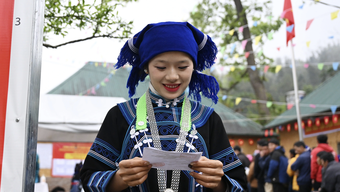
Placing the leaf to her lips, Ms. Dếnh and the other women in the performing arts group gently sang the cheerful, clear melody of the song "The Hmong People Thank the Party." The simplicity and uniqueness of this natural musical instrument create a distinctive feature of the Hmong people, captivating and enchanting listeners. On festive occasions such as weddings, harvest festivals, housewarming parties, and New Year celebrations, the clear, soaring sound of the leaf trumpet rises like a harmonious blend of human and mountain music, expressing the feelings of people towards nature and life.

Today, modern life offers many electronic musical instruments and vibrant modern music, but the Mong ethnic people in Tham Hon village still preserve, protect, and promote the leaf horn musical instrument along with the unique cultural features of their ethnic group, contributing to the preservation of the unique cultural characteristics of the Mong people for generations to come.
Lam Giang
Source
![[Photo] The General Secretary works with the Executive Committee of the Hai Phong City Party Committee.](https://vphoto.vietnam.vn/thumb/1200x675/vietnam/resource/IMAGE/2026/03/16/1773629925474_vna-potal-tong-bi-thu-lam-viec-voi-ban-chap-hanh-dang-bo-thanh-pho-hai-phong-8644445-332-jpg.webp)


















































































Comment (0)