

Following the victory of the historic Ho Chi Minh Campaign, our country officially entered a new chapter in history, an era of independence, freedom, and territorial integrity. However, in the early years after liberation, due to various reasons, the country's economy was underdeveloped, and domestic resources were not utilized and developed effectively, leading to many negative consequences.
In 1986, the Sixth National Congress of the Communist Party of Vietnam brought a refreshing breeze to the country, officially recognizing a multi-sector economy for the first time. This is considered the first building block for the increasingly diversified and multilateral economic development of the nation.
Thanks to this, from merely existing and "stagnating" within the centralized, bureaucratic, and subsidized system, facing discrimination not only in social consciousness but also in state mechanisms and policies, the private economy has risen strongly during the reform period, contributing increasingly to the state budget, creating jobs for society, developing existing potential and advantages in each locality as well as nationwide, making an important contribution to socio-economic development, strengthening national defense and security, and affirming its role as an important driving force in international integration.

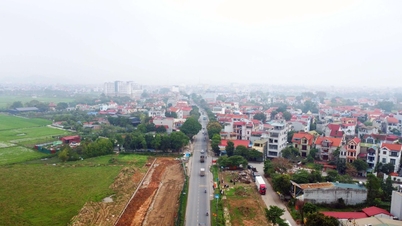
The private sector has played a particularly important role in Vinh Phuc's economy since the province's re-establishment (1997) to the present day. Thanks to this, Vinh Phuc has risen from a poor, purely agricultural province to a developed, prosperous industrial province, one of the leading provinces in the country.
According to General Secretary To Lam , with the right vision and policies in a socialist-oriented market economy, developing the private economy is a vital choice to boost material production, create social transformation, provide a "breakthrough" in technological level, vocational training, increase capital absorption capacity, promote labor productivity, and build the material and technical foundation for socialism.
To develop the private economy, the most important and core issue is to continue perfecting the socialist-oriented market economy system, with groundbreaking changes in thinking, awareness, and action, creating the fundamental characteristics of a socialist-oriented market economy with state management under the leadership of the Party, compared to the previous socialist-oriented market economy with state management.
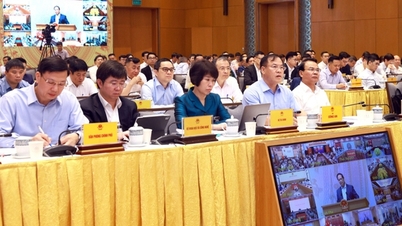
Recently, the Politburo issued Resolution 68 (dated May 4, 2025) on the development of the private economy, which clearly outlines unprecedented goals, viewpoints, tasks, and breakthrough solutions. In particular, it shapes the Party's new perspective on the development of the private economy within a socialist-oriented market economy under state management and Party leadership; strongly promoting the development of the private economy, considering it a new driving force for economic development in the coming period.
To effectively accomplish this task, the Party leader emphasized: It is necessary to decisively and effectively implement measures to quickly put the Party's Resolution into practice. Specifically, during the 9th session of the 15th National Assembly, the National Assembly will discuss and issue a Resolution on the development of the private economy with specific, feasible, and effective preferential mechanisms and policies.
Promoting and fostering a strong shift in administrative thinking from control to partnership, viewing businesses as entities to be "served" rather than "managed," and ensuring the principle of "actions matching words" is consistent throughout the entire political system. The government should promptly issue a directive requiring ministries, sectors, and localities to shift all administrative processes to post-inspection, except for certain specific areas. (This alone has saved a significant amount of wasted time and resources, preventing the waste of enormous funds).
Next, it is crucial to urgently institutionalize the Party's viewpoints into law and ensure strict implementation throughout the entire political system, businesses, and among the people. In particular, it is essential to establish a fair competition system, clearly identifying behaviors that negatively impact market access and discriminatory practices against the private sector.
Creating mechanisms to promote investment and provide financial support requires financial institutions to establish credit rating systems suitable for the private sector and provide financial assistance.
Encourage the development of science and technology, with private enterprises taking the lead in major national projects and establishing national research and innovation infrastructure.
Establishing a system to protect the rights and interests of market participants, clearly distinguishing between economic disputes and criminal offenses, and strictly prohibiting abuses of law in market management…
It can be said that, with the clear regulations in Resolution 68 of the Politburo and the specific direction of General Secretary To Lam, the private economy is facing an unparalleled opportunity to break through and soar with the country into a new era.
Private businesses not only avoid being suppressed or hindered, but are also protected by law and supported by the State in terms of capital, technology, and policies. What greater motivation could there be?
Source: http://baovinhphuc.com.vn/Multimedia/Images/Id/128157/Dong-luc-moi-cho-ky-nguyen-moi














































































Comment (0)