

A light-emitting diode (LED) is a light source that emits light when an electric current is applied to it.
LED technology has become an indispensable part of modern life, from giant TV screens to everyday light bulbs. Users are even familiar with newer technologies like OLED and QLED.
Breaking down barriers
Compared to incandescent and compact fluorescent lamps with the same brightness, an LED bulb uses only 1/10 and 1/2 the electricity, respectively, and has a lifespan many times longer.
Despite its widespread use, this particular material comes with a fatal flaw: it doesn't allow electricity to flow through it. However, new research from the Cavendish Laboratory at the University of Cambridge has changed all that.
Specifically, scientists have found a way to force these insulating particles to conduct electricity and emit light, opening a new chapter for optoelectronic technology.
The focus of this discovery is on insulating lanthanide nanoparticles (LnNPs). These particles contain rare earth elements such as neodymium and ytterbium. Their remarkable characteristic is their ability to emit extremely bright light when subjected to excitation.
 |
Scientists have found a way to force LEDs to conduct electricity and emit light, opening a new chapter for optoelectronic technology. Photo: Camila Prieto. |
However, they are insulators. Previously, scientists had failed to make them conduct electricity. Previous attempts required extremely high temperatures or extremely high voltages to bring the electrical charge into contact with the lanthanide ions inside.
Because of this barrier, LnNPs have previously had limited applications, mainly in deep tissue imaging that does not rely on electrical energy.
To overcome this insulating "wall," the research team at Cambridge chose a different approach. Instead of trying to puncture it with heat or pressure, they opted for a more subtle approach: hybridization.
Specifically, the scientists used an organic dye called 9-ACA. These dye molecules were used to replace the insulating layer on the surface of the LnNPs.
Replacing this outer layer allows for a special charging technique. Scientists inject electrons into this new organic layer. This process creates excitons—an excited state of electrons. From here, energy is transferred to the lanthanide ions inside, causing them to glow.
This study also points out that the biggest hurdle in previous experiments has been the energy gap of LnNPs.
By replacing the insulating layer with an organic material, the Cambridge University research team has bridged this gap, allowing electrical energy to efficiently trigger luminescence.
A major breakthrough for the future of biomedical technology.
The results of this hybridization process are truly impressive. The new LEDs (also known as LnLEDs) produce near-infrared (NIR) light with near-perfect purity.
In fact, in tests, this hybrid LED outperformed most existing organic NIR LEDs on the market. Furthermore, it excelled in both spectral narrowness (color purity) and energy efficiency.
This discovery goes beyond mere laboratory theory and opens up countless practical applications, especially in the fields of medicine and biomedical technology.
Currently, to look deep inside the body, doctors often have to use X-rays or MRI. Other optical methods that use visible light are blocked by the skin and blood.
Meanwhile, NIR light falls within the "biological window" because it can penetrate skin and soft tissue more easily than regular light.
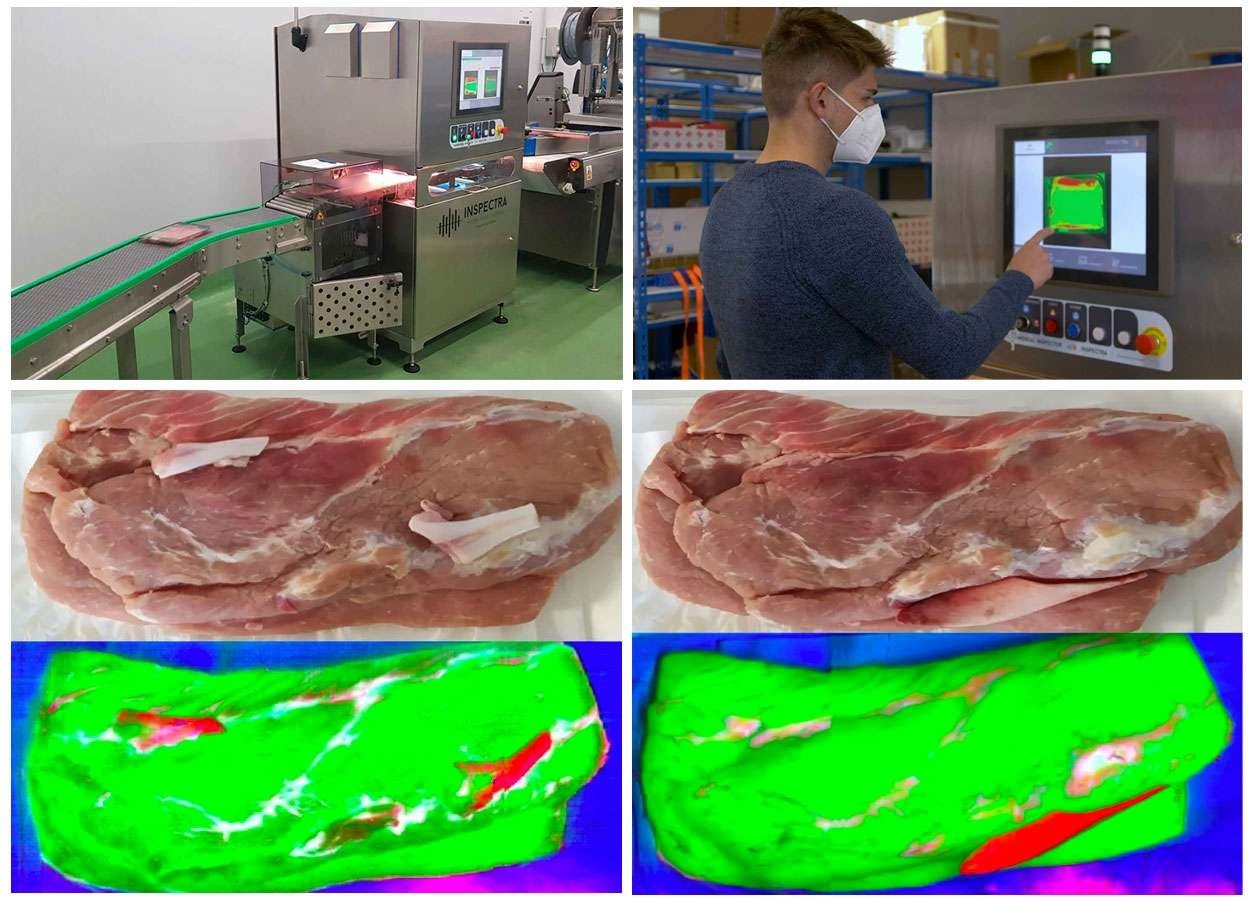 |
New LED technology produces near-infrared (NIR) light with near-perfect purity. This opens new avenues for medicine, as internal organs or blood vessels located deep beneath the skin can be accurately monitored using only skin patches containing LnLEDs. Photo: Specim. |
However, current organic luminescent materials often bleed after a short period of exposure, disrupting long-term monitoring.
Thanks to the stability of rare earth elements, LnLEDs technology promises to completely overcome this problem, enabling the creation of fade-resistant medical imaging devices, allowing for clearer observation of body tissues than ever before.
Doctors can use skin patches containing LnLEDs to continuously monitor the condition of internal organs or blood vessels located deep beneath the skin for days without invasive procedures.
Furthermore, the combination of organic and inorganic materials also creates more flexible and durable devices. More importantly, the research team stated that this method can be easily applied to other types of insulating materials, paving the way for a range of new experiments and inventions.
Source: https://znews.vn/dot-pha-cong-nghe-nay-co-the-thay-doi-moi-thu-post1616610.html







































































































Comment (0)