

The Ho Chi Minh City - Can Tho high-speed railway project is currently in the pre-feasibility study phase and is expected to be divided into two stages. Stage 1 is expected to be submitted to the National Assembly for investment approval in 2025.
On February 28th, a delegation from the National Assembly's Committee on Science , Technology and Environment, led by Mr. Ta Dinh Thi, Vice Chairman of the Committee, conducted a field survey of the Ho Chi Minh City - Can Tho railway line and worked with the People's Committee of Can Tho city to support the review of the draft Law on Railways (amended).
A special mechanism is needed for railway construction.
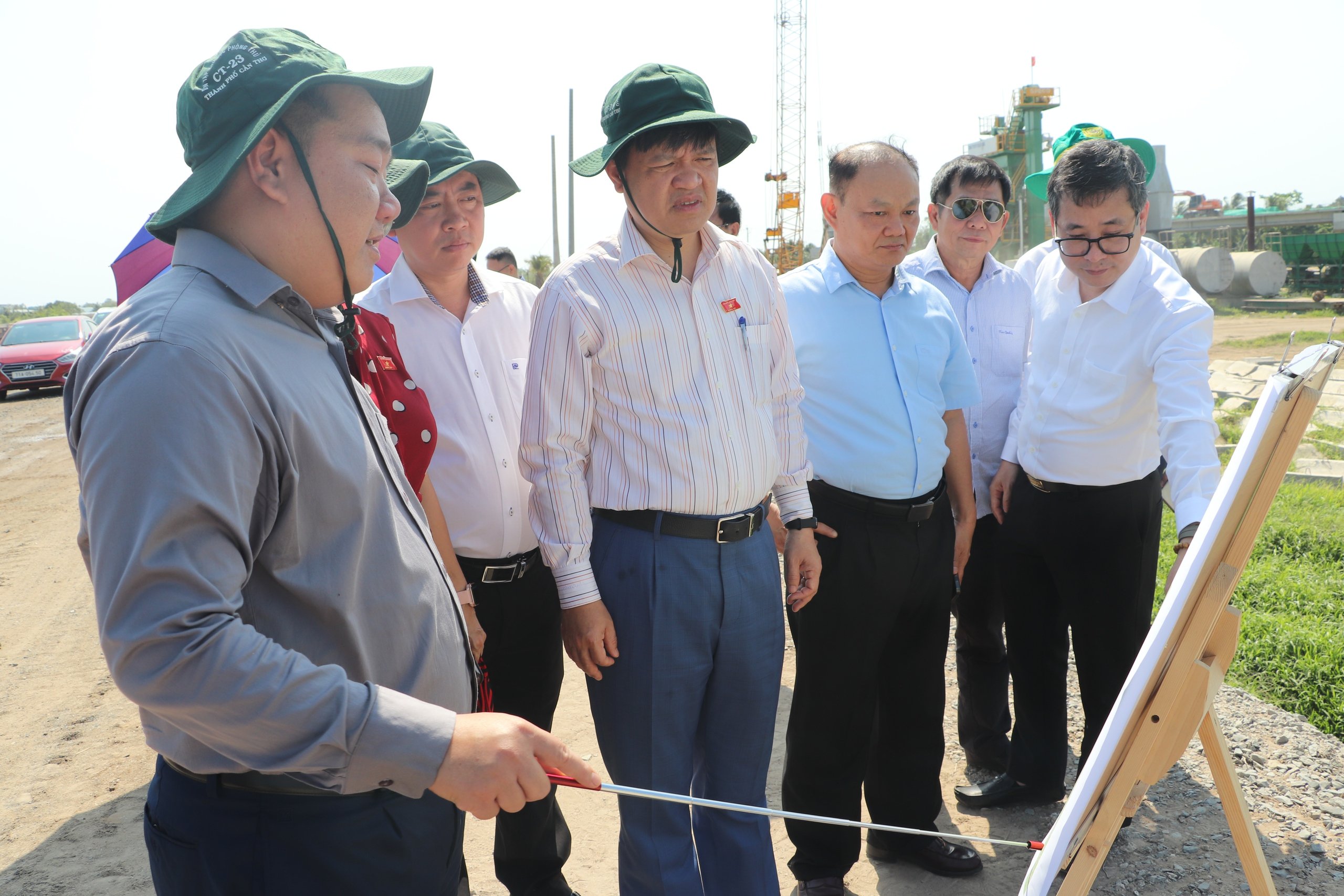
A delegation from the National Assembly 's Committee on Science, Technology and Environment, led by Mr. Ta Dinh Thi, Vice Chairman of the Committee (third from the right), inspects a site within the planned Ho Chi Minh City - Can Tho railway station.
At the meeting, Mr. Pham Van Dong, Deputy Director of the Department of Transport of Can Tho city, said that according to the Railway Network Planning for the period 2021 - 2030, with a vision to 2050, the Ho Chi Minh City - Can Tho railway line is more than 175km long.
In Can Tho, the project spans over 7km in length, located in Phu Thu ward (Cai Rang district). The station itself covers an area of over 60 hectares and is situated parallel to the northern side of the western ring road of Can Tho city (the section from Vo Nguyen Giap road to the IC4 intersection of National Highway 1), more than 2km from the IC2 intersection of the Can Tho - Ca Mau expressway.
This location offers convenient access to the city's national highway system and major transportation arteries such as: the Chau Doc - Can Tho - Soc Trang expressway, the Can Tho - Ca Mau expressway, National Highways 1A, 91, 91B, Nam Song Hau, and the Western Ring Road of Can Tho City.
The land use plan for the planned TOD (Transit-Oriented Development) project includes approximately 150 hectares in the area adjacent to the station to the north and 1,000 hectares in the area surrounding the station to the south.
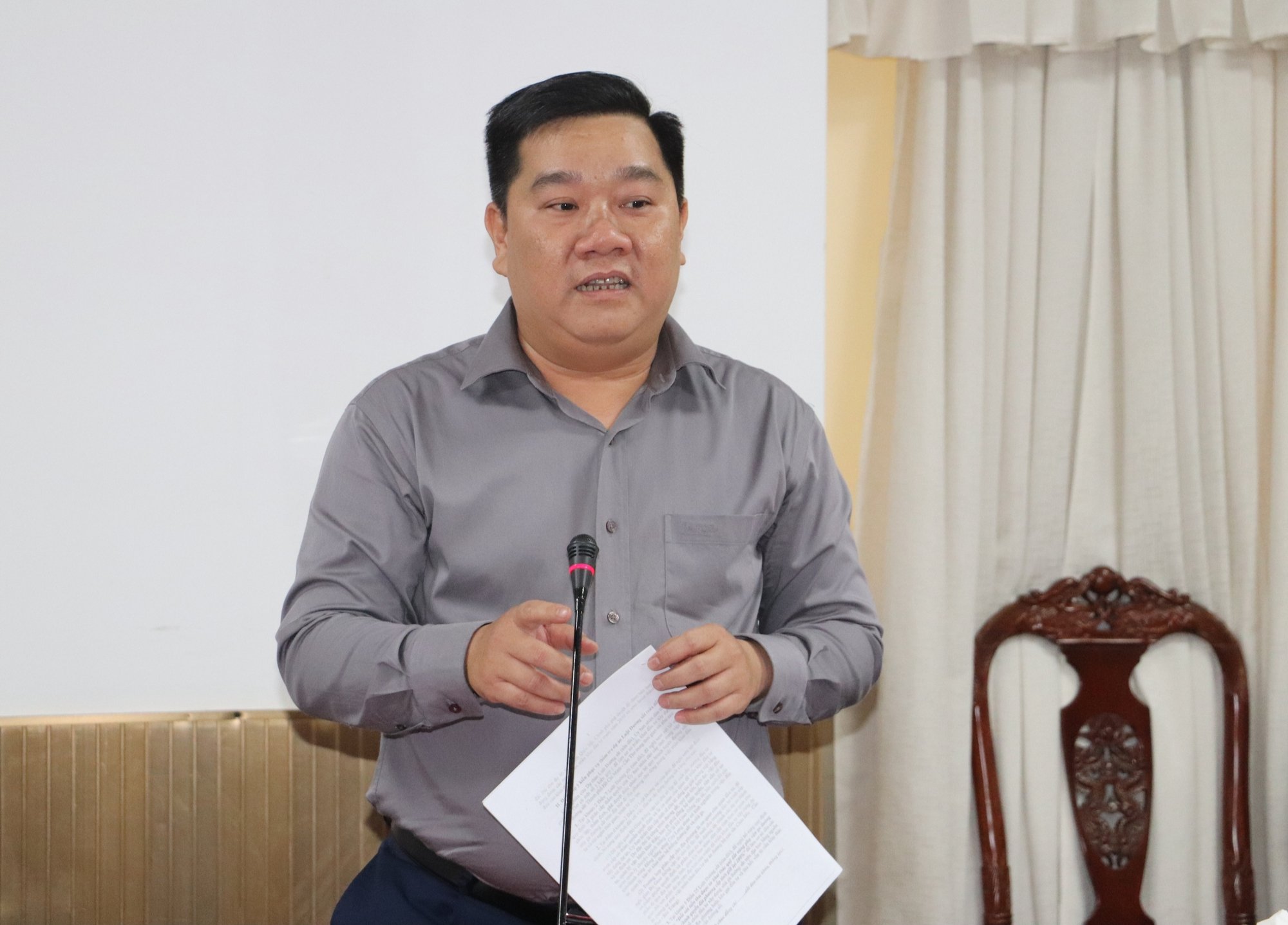
Mr. Pham Van Dong, Deputy Director of the Department of Transport of Can Tho City, spoke at the working session.
According to the Deputy Director of the Can Tho City Department of Transport, the project is large-scale and modern, requiring advanced technology and engineering. Meanwhile, the locality lacks experience in management, investment, operation, and maintenance.
Therefore, the Deputy Director of the Can Tho City Department of Transport proposed that the Ministry of Transport take the lead in developing a proposal for the investment policy of the Ho Chi Minh City - Can Tho railway line project. The Can Tho City People's Committee will carry out land clearance and resettlement work.
Regarding the amended Railway Law, Clause 5 of Article 25 stipulates that provincial-level authorities retain 50% of the revenue generated from the exploitation of land in the vicinity of regional railway stations. Can Tho proposes an amendment to allow them to retain 100%.
Mr. Nguyen Ngoc He, Vice Chairman of the People's Committee of Can Tho City, proposed that the Ministry of Transport continue to lead and prepare a pre-feasibility study report for the Ho Chi Minh City - Can Tho railway project to propose investment options, forms, and specific mechanisms and policies for the project.
Subsequently, the provinces through which the project passes will be assigned as the managing agency for the portion of the project within their territory to implement investment and construction, similar to the implementation of the Chau Doc - Can Tho - Soc Trang expressway project.
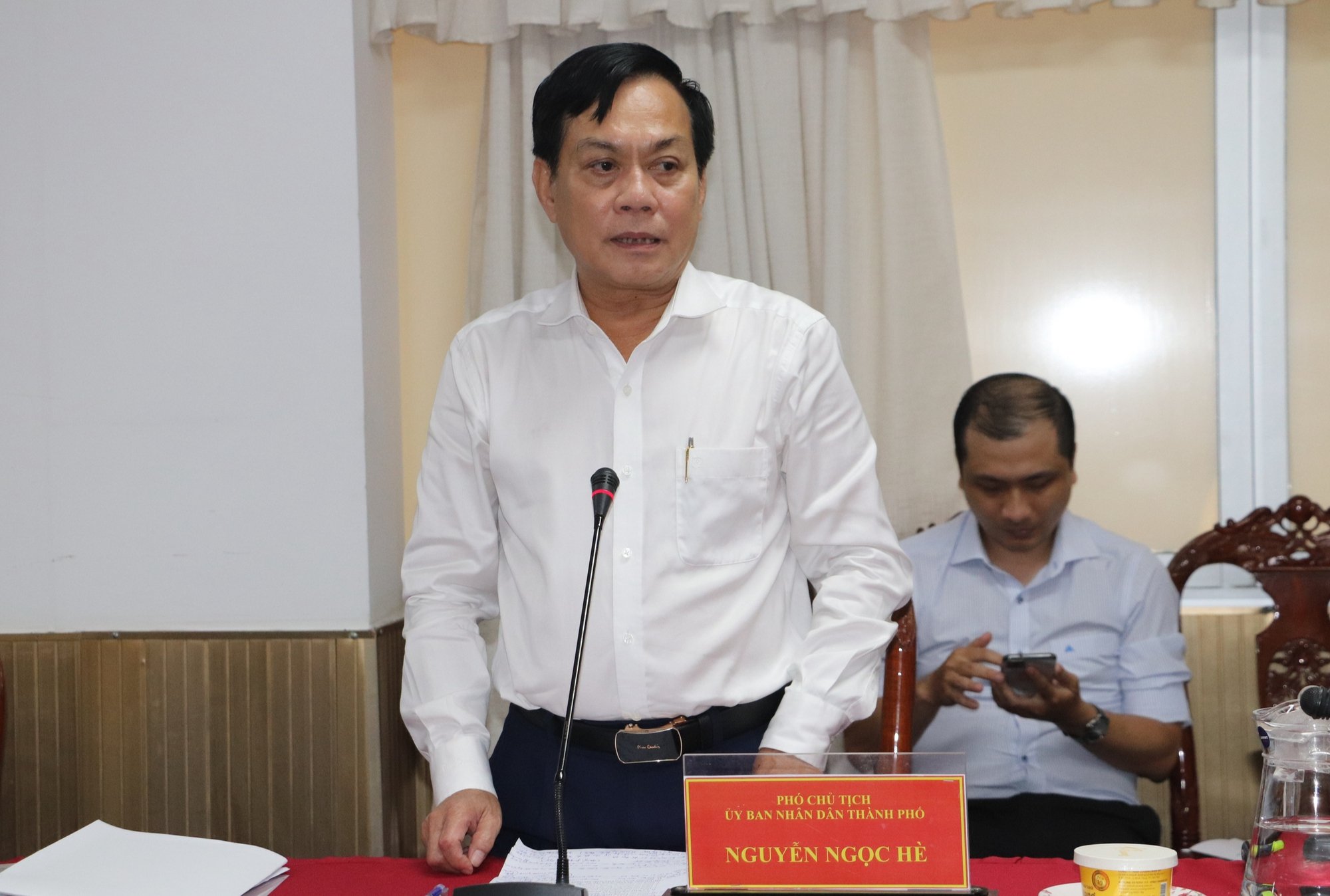
Mr. Nguyen Ngoc He, Vice Chairman of the People's Committee of Can Tho City, delivered a speech.
Urgent need to invest in the railway line.
Speaking at the meeting, Mr. Tran Van Khai, a full-time National Assembly representative and member of the Committee on Science, Technology and Environment, emphasized that transportation in the Mekong Delta, primarily relying on roads and waterways, has failed to meet demand and has become the biggest bottleneck hindering the region's development.
For this region to take off, investing in a railway line connecting Can Tho and Ho Chi Minh City to the national network is crucial. This is because railways offer significant and tangible benefits, enabling high-volume, high-speed, and safe transportation. The railway will open up new development opportunities for the region.
Mr. Khai suggested that the locality supplement and clarify the specific mechanisms for key projects passing through the area; propose a legal framework or support for the implementation of the three urban railway lines connecting to the central station that the locality has planned. At the same time, he proposed clearly defining the roles of the central and local governments when the Ministry of Transport takes the lead in implementing the project or dividing the project into component projects and assigning them to local authorities for implementation....
To enhance the role of localities in railway implementation, Mr. Khai suggested that Can Tho proactively coordinate with inter-provincial agencies, establish a working group with the Ministry of Transport and the provinces through which the line passes to unify investment plans; continue to update and protect the planning, ensuring that the 60-hectare land area of Can Tho station and the line corridor are not encroached upon.
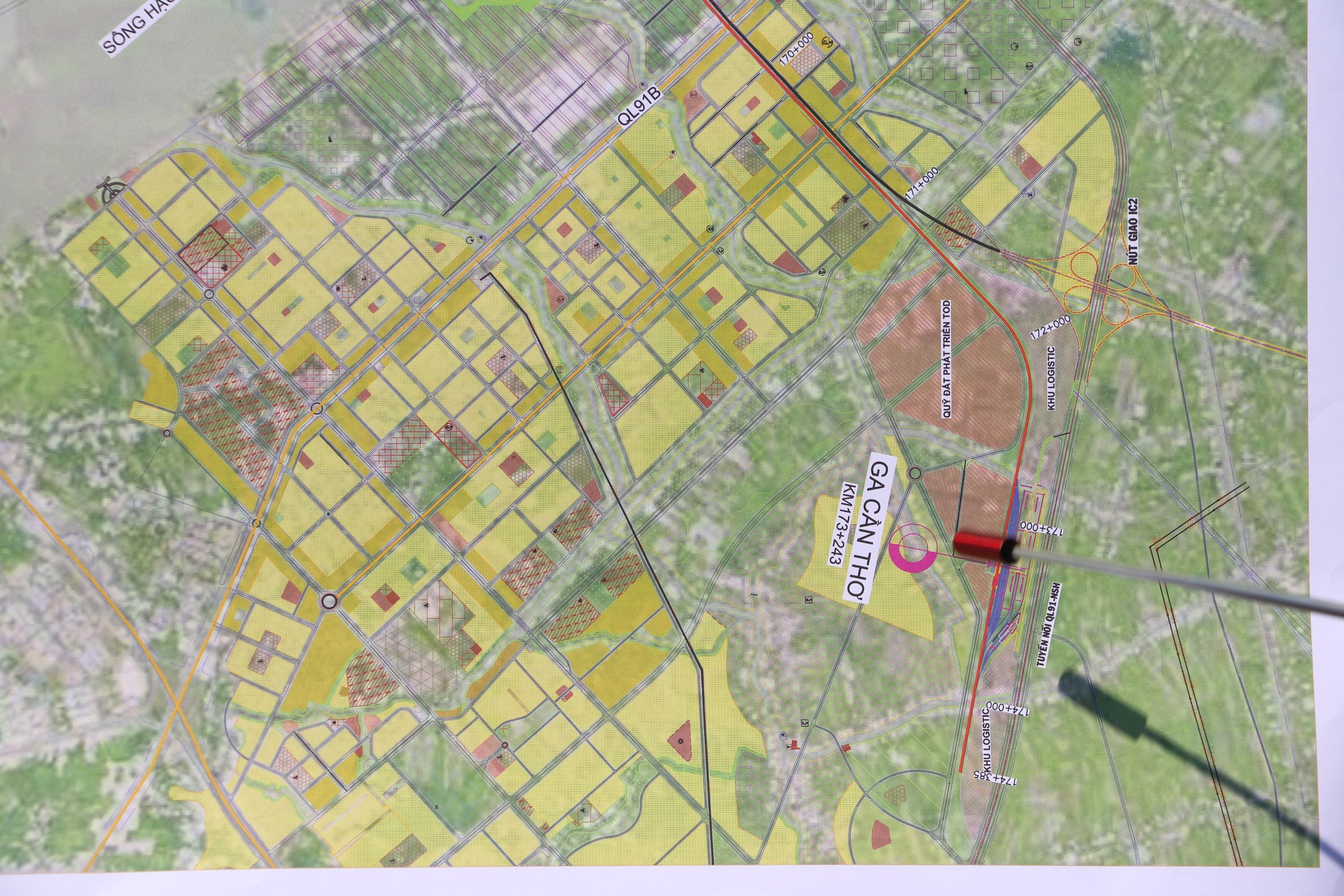
The Mekong Delta region needs a railway line.
Simultaneously, prepare resources and budget for land clearance, resettlement, and connecting infrastructure (roads to the station, bus terminals) to be ready when the project commences. From there, develop connecting transportation, invest in shuttle bus routes from the station to the city center, and build public parking lots around the station.
In particular, it is necessary to improve management capacity and establish a railway management unit (under the Department of Transport) to learn from the experience of managing and operating urban and national railways.
According to Mr. Duong Hong Anh, Deputy Director of the Vietnam Railway Department (Ministry of Transport), the amended Railway Law focuses on five important, groundbreaking innovations to create a legal framework for railway development.
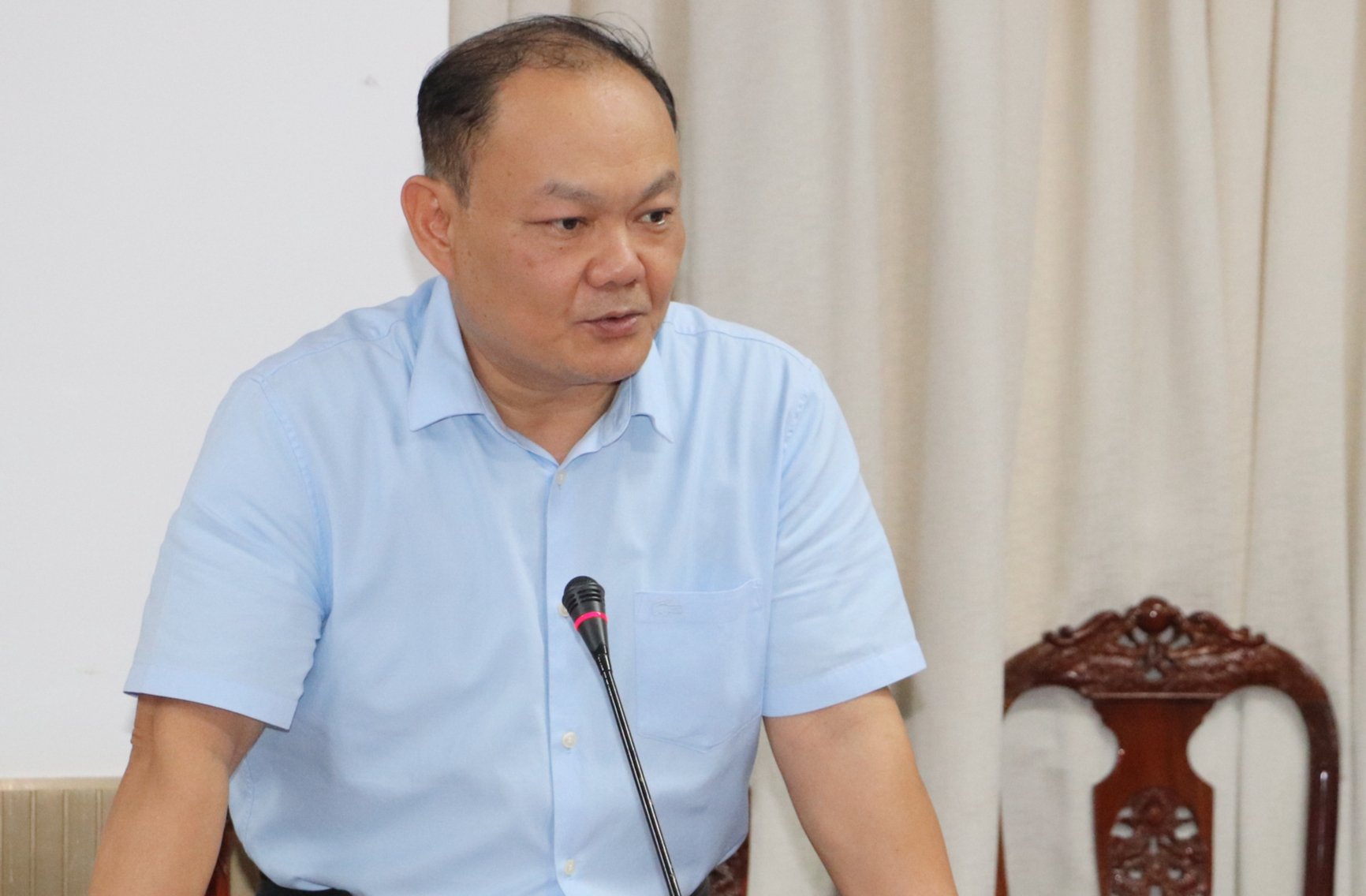
Mr. Duong Hong Anh, Deputy Director of the Vietnam Railway Department, Ministry of Transport, spoke at the working session.
Regarding the Ho Chi Minh City - Can Tho high-speed railway, it is currently in the pre-feasibility study phase and is expected to be divided into two stages.
Phase 1 is expected to be submitted to the National Assembly for investment approval in 2025. After being approved by the National Assembly, the project will commence before 2030.
"At this time, the application of the amended Railway Law is very timely for the implementation of investment, construction, and operation of new railway projects," the Deputy Director of the Vietnam Railway Authority emphasized.
Mr. Ta Dinh Thi, Vice Chairman of the Committee on Science, Technology and Environment, suggested that Can Tho coordinate with the Ministry of Transport, specifically the Vietnam Railway Authority, to organize a workshop to gather opinions from departments, agencies, and experts on the draft pre-feasibility study report for the high-speed railway project. Based on the compiled opinions, a report should be submitted to the Committee on Science, Technology and Environment as soon as possible.
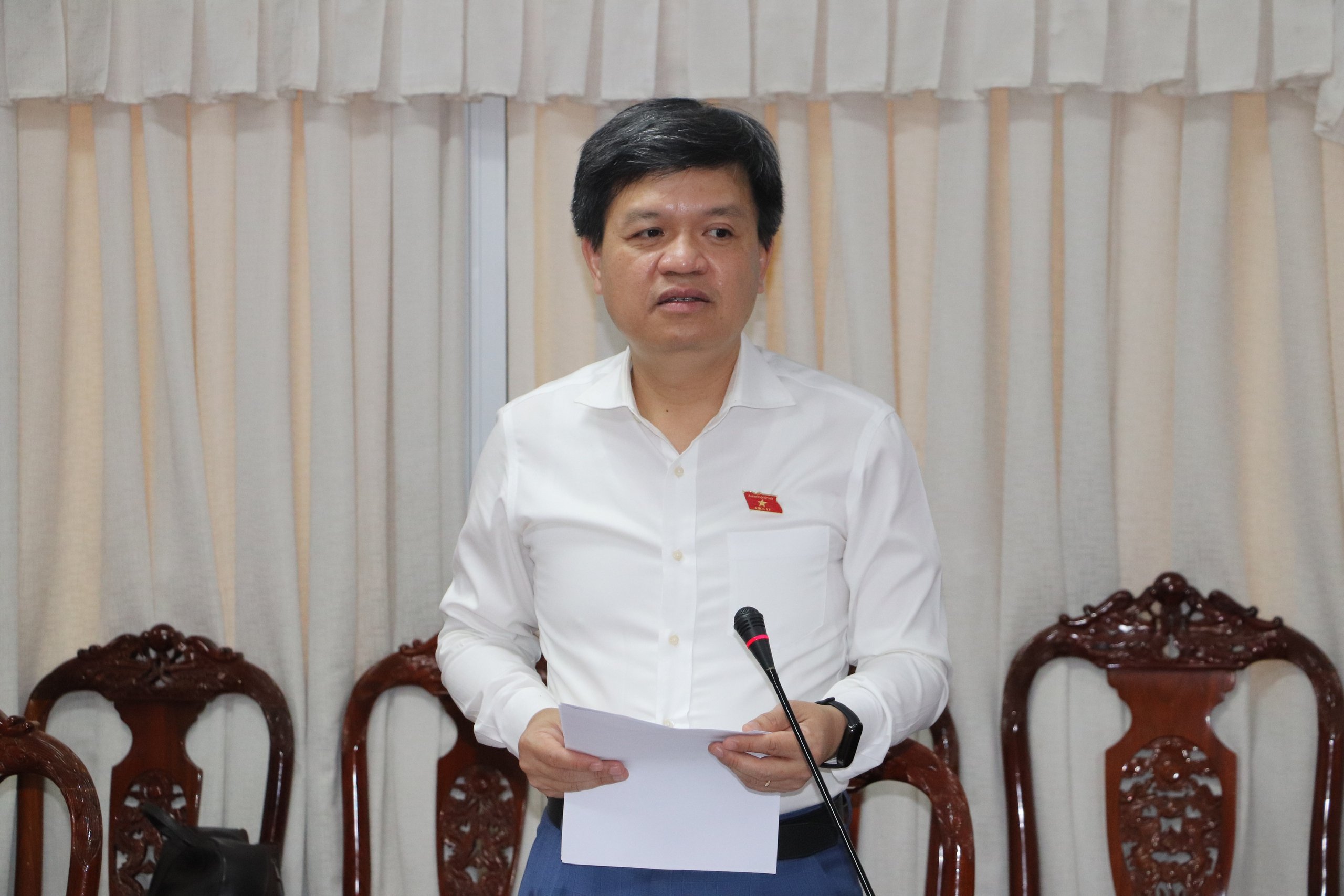
Mr. Ta Dinh Thi, Deputy Chairman of the Committee on Science, Technology and Environment, suggested that Can Tho should soon finalize its comments on the draft amended Railway Law.
Specifically for Can Tho City, the Deputy Chairman of the Committee on Science, Technology and Environment suggested that the city should proactively and diligently implement the assigned tasks, contributing to accelerating the progress of the railway project.
Regarding the draft Law on Railways (amended), Mr. Ta Dinh Thi suggested that Can Tho continue to refine its contributions and submit a report to the Committee on Science, Technology and Environment before March 10th for compilation and completion to serve the review process of the draft Law in the coming time.
The railway line connecting Can Tho and Ho Chi Minh City has 13 stations. The project starts at An Binh Station (Binh Duong province), passing through the provinces and cities of Binh Duong, Ho Chi Minh City, Long An, Tien Giang, Vinh Long, and ending in Can Tho city (the final station).
The total investment for the project is approximately VND 205,085 billion (approximately USD 8.57 billion).
Source: https://www.baogiaothong.vn/du-kien-trinh-quoc-hoi-du-an-duong-sat-tphcm-can-tho-trong-nam-2025-192250228130534749.htm
![[Photo] Prime Minister Pham Minh Chinh receives Lao Minister of Education and Sports Thongsalith Mangnormek](/_next/image?url=https%3A%2F%2Fvphoto.vietnam.vn%2Fthumb%2F1200x675%2Fvietnam%2Fresource%2FIMAGE%2F2025%2F12%2F16%2F1765876834721_dsc-7519-jpg.webp&w=3840&q=75)


![[Live] 2025 Community Action Awards Gala](/_next/image?url=https%3A%2F%2Fvphoto.vietnam.vn%2Fthumb%2F1200x675%2Fvietnam%2Fresource%2FIMAGE%2F2025%2F12%2F16%2F1765899631650_ndo_tr_z7334013144784-9f9fe10a6d63584c85aff40f2957c250-jpg.webp&w=3840&q=75)
![[Image] Leaked images ahead of the 2025 Community Action Awards gala.](/_next/image?url=https%3A%2F%2Fvphoto.vietnam.vn%2Fthumb%2F1200x675%2Fvietnam%2Fresource%2FIMAGE%2F2025%2F12%2F16%2F1765882828720_ndo_br_thiet-ke-chua-co-ten-45-png.webp&w=3840&q=75)
![[Photo] Prime Minister Pham Minh Chinh receives the Governor of Tochigi Province (Japan)](/_next/image?url=https%3A%2F%2Fvphoto.vietnam.vn%2Fthumb%2F1200x675%2Fvietnam%2Fresource%2FIMAGE%2F2025%2F12%2F16%2F1765892133176_dsc-8082-6425-jpg.webp&w=3840&q=75)







































![[Photo] Prime Minister Pham Minh Chinh attends the Vietnam Economic Forum 2025](https://vphoto.vietnam.vn/thumb/402x226/vietnam/resource/IMAGE/2025/12/16/1765893035503_ndo_br_dsc-8043-jpg.webp)
























Comment (0)