

In 2024, the Mekong Delta, one of the country's key tourism regions, actively developed its products, intensified its promotion efforts, and continued to achieve impressive results in terms of visitor numbers and revenue in the tourism and service industry.
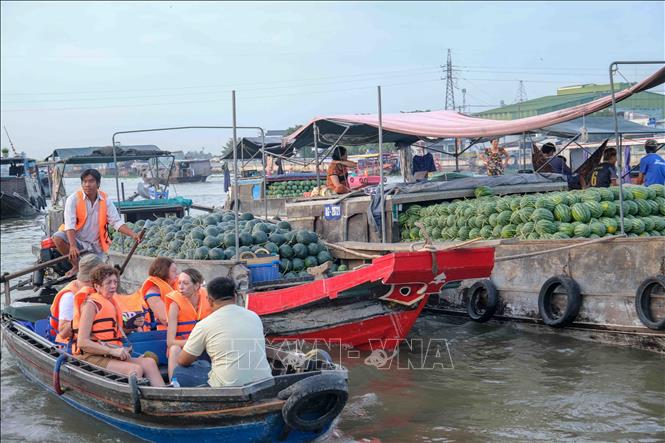
Foreign tourists visit Cai Rang floating market ( Can Tho ). Photo: Thanh Liem/TTXVN
Asserting its position
Localities with strengths in the Mekong Delta are developing diverse tourism products based on exploiting the strengths of the river and waterway ecosystem, natural landscapes, marine and island tourism resources, historical and cultural relics, and diverse traditional cultural values.
According to Nguyen Thuc Hien, Vice Chairman of the People's Committee of Can Tho City, in 2024, the number of visitors to the Mekong Delta reached over 52 million, with total tourism revenue for localities throughout the region estimated at over 62 trillion VND. Specifically for Can Tho City – the central urban area of the region – the estimated total number of visitors in 2024 is 6.3 million, with total tourism revenue estimated at 6,226 billion VND. With 640 accommodation establishments, 11,000 rooms, over 70 travel agencies, and more than 50 tourist attractions, Can Tho continues to affirm its tourism appeal with many eco-tourism destinations including orchards, floating markets, waterways, historical and cultural relics, and festivals…
Kien Giang province, with its diverse topography encompassing plains, forests, mountains, seas, and islands, numerous scenic spots, and the unique cultural identity of its ethnic communities, has made significant strides in attracting tourists. In 2024, Kien Giang's tourism sector welcomed over 9.8 million visitors, a 15.6% increase compared to the same period in 2023, with total tourism revenue exceeding 25,000 billion VND, nearly 44% higher than in 2023.
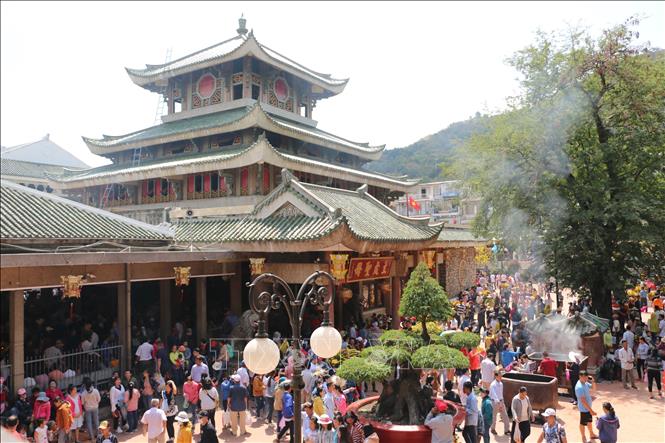
The Via Ba Chua Xu Nui Sam festival is deeply rooted in the culture of the people living in the southwestern riverine region of Vietnam. Photo: Cong Mao/TTXVN
Amidst the joy of the final days of 2024, as the Via Ba Chua Xu Nui Sam Festival in Chau Doc city was inscribed by UNESCO as an Intangible Cultural Heritage of Humanity, An Giang province acknowledges outstanding tourism development results associated with historical, cultural, spiritual, and ecotourism destinations.
In 2024, approximately 9 million tourists visited An Giang province. Among them, key tourist destinations such as the Mount Sam National Tourist Area, Mount Cam Tourist Area, President Ton Duc Thang Memorial Area, Tra Su Melaleuca Forest Ecotourism Area, Ba Chua Xu Temple at Mount Sam, Con En tourist site, Tuc Dup Hill tourist site, and Chau Phong Cham village continued to attract significant visitors.
In Ca Mau, the southernmost region of Vietnam, the tourism sector continues its positive development, with approximately 2.15 million visitors in 2024, and total tourism revenue estimated at 3,080 billion VND, an increase of nearly 6% compared to 2023.
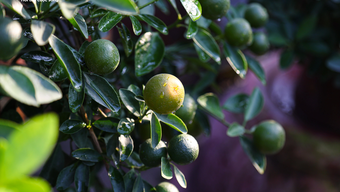
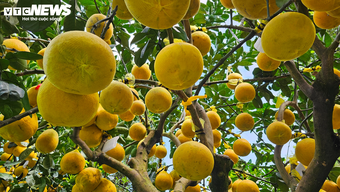
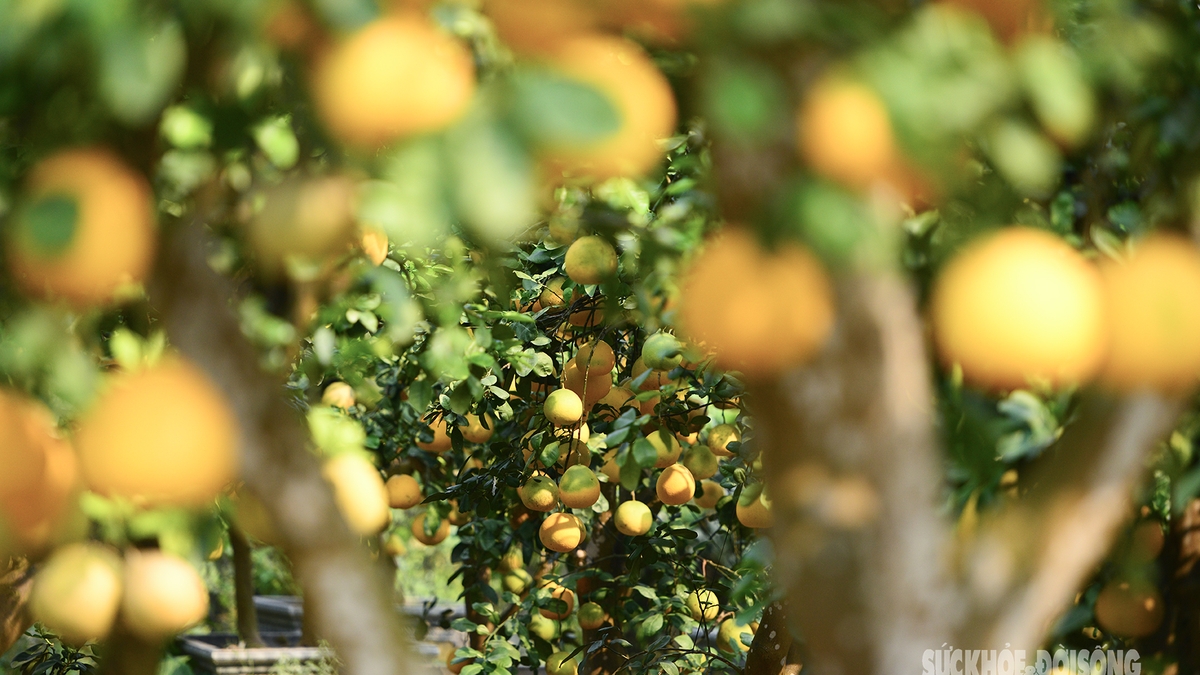
Meanwhile, with its strengths in ecotourism within the Dong Thap Muoi sub-region, featuring many specialized farming areas for local specialties such as Cao Lan mangoes, Chau Thanh longan, Lai Vung mandarin oranges, Sa Dec flowers, and Thap Muoi lotus, Dong Thap province attracted 4.2 million visitors, generating total revenue of approximately 2,000 billion VND.
Innovation and improvement
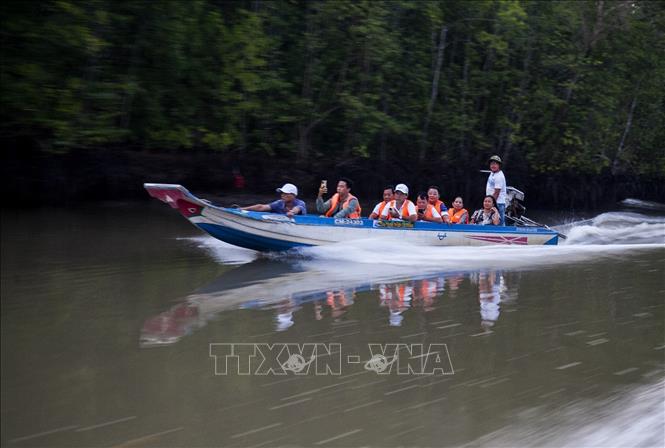
Tourists explore the mangrove forests of Ca Mau. Photo: Hong Dat/TTXVN
Building on the achievements, in 2025, the provinces and cities of the Mekong Delta will promptly propose solutions to elevate tourism by actively renewing products and enhancing visitor experiences by leveraging the strengths of the riverine ecosystem, natural landscapes, marine and island tourism resources, and historical and cultural relics. At the same time, localities in the region will strengthen linkages in exploiting tourism resources and taking advantage of infrastructure in clusters: An Giang – Dong Thap – Long An; Tien Giang – Ben Tre – Tra Vinh – Soc Trang; and Kien Giang – Ca Mau.
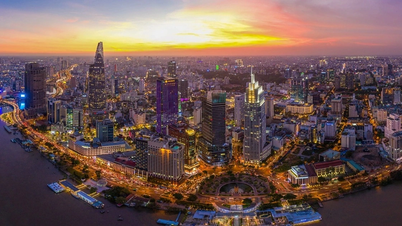
According to a representative of the Mekong Delta Tourism Association, provinces and cities in the region are strengthening cooperation and linkages with Ho Chi Minh City – the leading vibrant tourism market in the country, localities in the Southeast region, and Cambodia and Thailand along the southern coastal corridor (Ha Tien – Rach Gia – Ca Mau).
Ho Chi Minh City and other localities are strengthening the promotion of destinations with unique tourism products and experiences in each locality, especially the 50 attractive tourist destinations of Ho Chi Minh City and the Mekong Delta that were selected and announced in early December 2024.
According to Nguyen Thuc Hien, Vice Chairman of the People's Committee of Can Tho City, located in the center of the Mekong Delta region, the city has the advantage of a geographical location connecting Ho Chi Minh City to provinces in the region via road, waterway, and air with Can Tho International Airport.
In 2025, the province will continue to leverage this advantage, developing tourism in conjunction with strategies such as: unique ecological destinations, a cultural center of the Mekong Delta, conference and seminar tourism, and resort real estate tourism combined with business. Simultaneously, implementing the Plan for the network of cultural and sports facilities and the tourism system for the period 2021-2030, with a vision to 2045, Can Tho will complete many cultural and tourism infrastructure facilities to serve both residents and tourists.
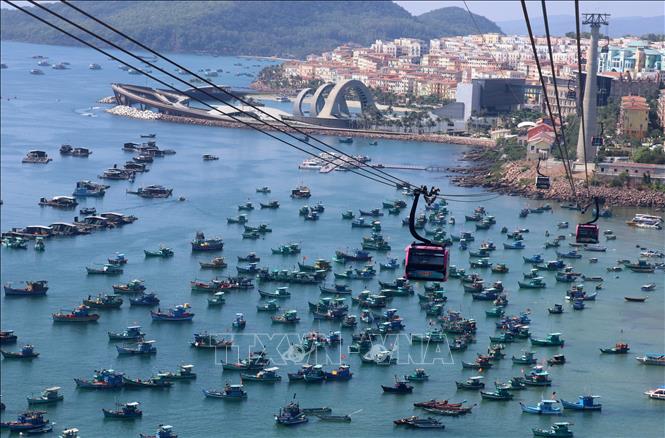
The Hon Thom cable car in Phu Quoc city (Kien Giang province) serves tourists. Photo: Le Huy Hai/TTXVN.
According to Bui Quoc Thai, Director of the Kien Giang Provincial Department of Tourism, Kien Giang aims to attract over 10.4 million tourists by 2025.
Kien Giang is focusing on innovation and tourism development, emphasizing unique products and creating breakthroughs. These include nature tourism associated with Phu Quoc National Park and Phu My Species and Habitat Conservation Area (Giang Thanh district); Ha Tien Ten Scenic Spots exploration tourism; community tourism; and cultural experience tourism of the "Southern forest land" associated with U Minh Thuong National Park.
At the same time, the province is adding more attractive tourism products such as: commercial tourism at the Ha Tien International Border Gate; cultural, historical, spiritual, and archaeological tourism related to the Oc Eo culture; urban tourism and luxury entertainment in Phu Quoc city; developing world-class MICE tourism; and agricultural tourism associated with the OCOP program and traditional craft villages in potential localities, contributing to the development of tourism in the region and the whole country.
According to the Department of Culture, Sports and Tourism of Dong Thap province, the province focuses on developing eco-tourism products, garden tourism, cultural tourism, agricultural tourism, rural tourism, resort tourism, and health care tourism, emphasizing enhancing experiences and gradually making tourism an important economic sector of the locality, making Dong Thap one of the freshwater ecological tourism centers of the Mekong Delta.
According to VNA

























































Comment (0)