

Vietnam is famous for its many delicious durian varieties, commonly grown in the Central Highlands, the Mekong Delta, the Southeast, and the South Central coastal region. However, enjoying durian in a coastal city in the Southeast, specifically in Long Phuoc commune, Ba Ria city, Ba Ria-Vung Tau province, is truly a pleasant surprise...
Secrets to having delicious durian
Following a recommendation from my cousin who lives and works in Vung Tau, we decided to go to Long Phuoc instead of Phuoc Hai fishing village in Phuoc Hai town, Dat Do district, as originally planned. After all, fishing villages are pretty much the same everywhere, and the seafood is also similar, but trying durian in a coastal province like Ba Ria-Vung Tau is definitely worth a try.
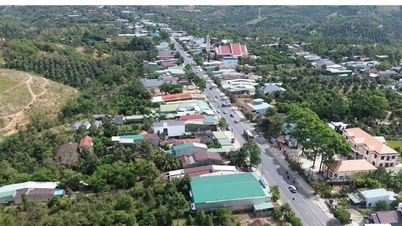
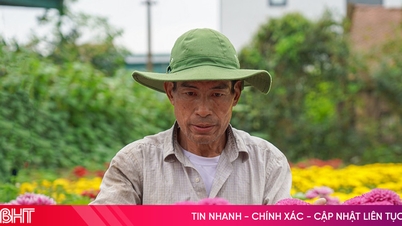
The distance from Vung Tau city to Long Phuoc is only about 20 km, and the roads are convenient. It didn't take long for us to find the durian orchard of Mr. Van Van Danh, also known as Mr. Tu Danh or Mr. Tu Durian, among many other durian orchards nearby, located on Road 110, Phuoc Huu Hamlet. We were greeted by Mr. Tu Danh's youngest son. Under the shady trees on the concrete road leading straight to the house with its red tiled roof, a tall, thin man was waiting on the steps to show us around the orchard.
However, as I opened the car door and stepped out, the intoxicating aroma of durian immediately awakened my sense of smell and brought back memories from six years ago, when I had enjoyed durian on my journey from Ho Chi Minh City to Ben Tre. The difference this time was that I was standing in the middle of a 1-hectare durian orchard, surrounded by countless varieties such as Thai durian, Ri6 durian, Cai Mon durian, Chin Hoa durian... The familiar, strong scent made me want to rush to the neatly arranged pile of fruit in front of the house and immediately taste a ripe, golden durian segment.
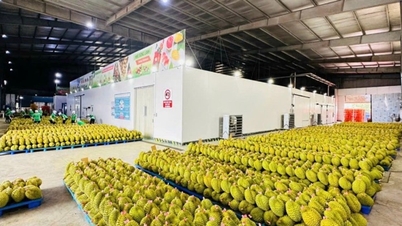
Around Mr. Tu Danh's house, durians are piled high everywhere. There's space for fallen durians, space for freshly picked ones that will be ready to eat in one or two days, and space for durians that traders have pre-ordered. According to the orchard owner, born in 1956, traders arrived early before us and collected all the fallen durians, while he also sold all the large ones intended for export, each weighing 1.8 kg or more, with no black spots or insect damage, and with round, green thorns.
Mr. Tu Danh chose a Thai durian weighing about 1.2 kg, gently peeled it with a specialized knife, and offered us individual segments. Although the fruit wasn't fully ripe—he said it would take another two to three days—the flesh was quite thick, a light yellow color, and had a rich, creamy, naturally sweet flavor that wasn't overly strong or fibrous. Mr. Tu Danh said that Thai durian trees only take four years to grow and yield fruit, are highly productive, and resistant to some pests and diseases. Besides this variety, on his 1-hectare plot, he also grows other durian varieties such as Ri6 and Cai Mon, yielding several tens of tons each year. His orchard has over 100 trees, some 18 years old, even 28 years old. Pointing to a large tree outside the gate, he added that a storm in 2006 had caused it to break, but he had replanted it. As for yield, the trees that produce the most yield 6 quintals of fruit, while most yield between 2 quintals and 3 quintals of fruit per tree.
Although he doesn't apply standardized farming practices like VietGAP, GlobalGAP, or USDA, Mr. Tu Danh still chooses to grow durian organically, partly because he believes that to sell durian at a high price and earn high profits, besides having a beautiful, green, and round appearance, the flesh inside must be yellow, powdery, naturally sweet, and not hard or burnt. To achieve these requirements, in addition to disease prevention and a proper watering regime, fruit development is also very important, especially fertilizing with potassium to support flesh growth...
Mr. Tu Danh enthusiastically recounted his experiences in durian cultivation, spanning more than half his life. He shared his knowledge of recognizing ripeness, when durians fall, and whether there's enough rain to plan fertilization effectively. I particularly remember him saying that in a durian orchard, you can tell if a durian is good by looking at its leaves. A healthy tree with leaves ensures good fruit quality because leaves are a source of stored nutrients to nourish the fruit. In other words, leaves convert sugar and starch into nutrients for the fruit. Only someone passionate about durian cultivation could have compiled such meticulous experience.
Tourism development potential
Compared to Vung Tau or Ba Ria-Vung Tau province in general, tourism in Ba Ria city is not as impressive, because many tourists are already too familiar with famous tourist destinations in Vung Tau such as the beaches surrounding the city, the statue of Jesus, Vung Tau lighthouse, Nghinh Phong cape, Bach Dinh, Hon Ba, Ho Tram, Robert Taylor Museum of Ancient Weapons...
In return, the average annual rainfall in Ba Ria is relatively low, the soil is good (basaltic red soil distributed in Hoa Long and Long Phuoc communes), and the temperature does not fluctuate too much, making it very suitable for planting and developing durian trees. Therefore, when visiting Ba Ria, besides some places to visit such as Thi Vai Mountain, Dinh Mountain, and especially the Long Phuoc tunnels, what impressed us most was our visit to Mr. Tu Danh's durian orchard. In fact, we weren't the only ones; about 45 minutes after we arrived, the small house amidst the vast durian orchard of the 69-year-old farmer was already bustling with the laughter and chatter of many visitors.
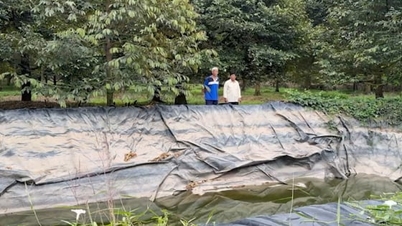
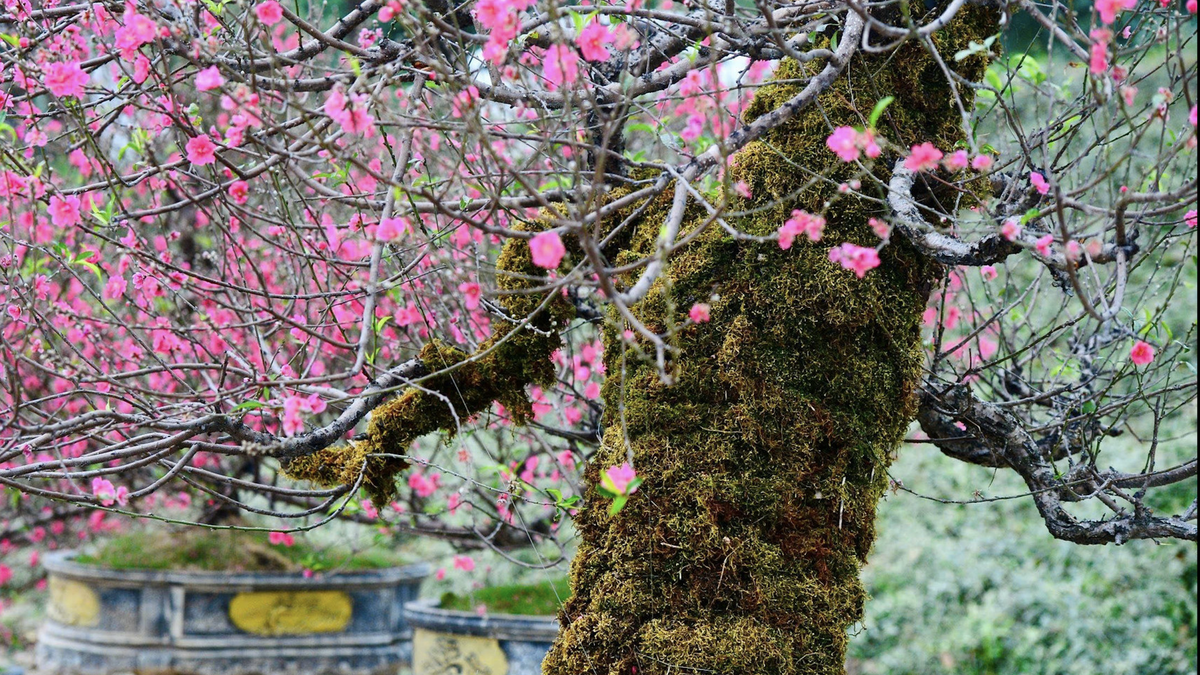
Mr. Tu Danh added that he regularly welcomes groups of visitors. They come here to enjoy durian in the orchard and buy it as gifts, especially on weekends. Word of mouth usually spreads, so unless you're a local, not many people know about this attractive type of tourism in Long Phuoc. Only by coming here can you truly understand the "king of fruits," hear the orchard owner recount his journey with durian cultivation, and learn about the complete process of caring for the trees. These stories sometimes take place around a small table in front of the house, sometimes under the canopy of a 28-year-old tree, and most wonderfully, in the middle of the orchard, like a forest of ancient trees. The durian trees in Mr. Tu Danh's orchard resemble giant bonsai trees because they are beautifully shaped and curved.
He was the first to conceive the idea of creating bonsai-style trees, after deciding to abandon his once very successful livestock farming and switch to establishing an orchard in 1996. Having loved durian trees since childhood, he quickly realized that durian is a tropical tree that prefers sunlight. Therefore, in addition to planting trees at appropriate distances to allow them to receive plenty of sunlight, he thought it necessary to distribute the sunlight by shaping the canopy and dividing the branches. Longer-lived branches would produce more fruit and have a better aroma and flavor. Thanks to this, for over 30 years, he has cared for and pruned his durian orchard into a giant bonsai garden, creating a significant difference between his orchard and those of other households, from the tree shapes to the yield and quality of the fruit. It has also become a familiar destination for many farmers in the surrounding area to visit and learn from his experience. According to Nguyen Van Minh, Chairman of the Long Phuoc Commune Farmers' Association, the area of durian trees currently producing fruit in Long Phuoc is 41 hectares.
The local farmers often visit Mr. Tu Danh's garden. We came simply to enjoy the delicious durian, but everyone felt genuinely delighted, as if they had just experienced a tourist trip. We were given a tour of the garden, listened to stories about the different durian varieties, about Mr. Tu Danh's life, and about the accumulated experience of over 30 years of farming that he was eager to share with his fellow farmers and his sons.
Therefore, it would be wonderful if the Farmers' Association of the commune could connect this experience with orchard owners and tourist groups, so that anyone visiting Ba Ria-Vung Tau would feel compelled to stop by the durian orchards in Long Phuoc at least once.
Source: https://nhandan.vn/du-lich-miet-vuon-o-long-phuoc-post822568.html

















































Comment (0)