

 |
| Livestock farmers need to raise their awareness of disease prevention and control. |
At this time, pig farmers in the province are producing in preparation for the Tet (Lunar New Year) market. Therefore, the demand for buying, selling, and transporting pigs is increasing, leading to many risks of disease outbreaks and infections in pigs in particular and livestock in general. Especially African Swine Fever (ASF). Therefore, farmers need to be cautious when restocking, raise awareness, and proactively implement disease prevention measures to protect their livestock.
The risk of an outbreak remains.
According to the agricultural sector, African Swine Fever (ASF) is currently developing in a very complex manner. In Vinh Long province, seven ASF outbreaks have been detected since the beginning of the year.
Having just had to cull over 50 pigs that had been raised for 15 days, Mr. Nguyen Quoc Bao (Vung Liem district) said: “Near Tet, seeing that pork prices were rising, I bought pigs to raise. As soon as I finished building the new pens, I looked for piglets. I followed a recommendation from an acquaintance who said they were piglets raised at home. I went to see the pens and they all looked healthy. I ordered over 50 piglets, and the seller promised to deliver them in 3 installments and conducted the transaction via Zalo.”
"In the first few days, the pigs were healthy, but after only 10-15 days, they started dying one by one, 4-5 pigs dying each day. After that, I reported it to the local authorities. The relevant agencies and local officials sent staff to collect samples for testing, and the results were positive for African Swine Fever (ASF). Now I have to disinfect the area and won't be able to raise pigs again until after Tet (Lunar New Year). This is a huge lesson for me about buying piglets of unknown origin without proper inspection certificates."
According to the Department of Animal Husbandry, Veterinary Medicine and Fisheries (Department of Agriculture and Rural Development), the African Swine Fever (ASF) virus survives for a long time in the environment, requiring continuous disinfection before restocking. The warning indicates that most pigs remaining in the affected areas have low vaccination rates, poor biosecurity practices, and high exposure levels.
Furthermore, a current concerning issue is that farmers, eager to restock their herds, are buying piglets of unknown origin. When African Swine Fever (ASF) outbreaks occur, the relevant authorities conduct sampling and trace the source of the outbreak, discovering that farmers purchased piglets online, and that the piglet sellers collected them from various locations to resell.
Ms. Nguyen Huynh Nga, Deputy Head of the Animal Husbandry, Veterinary and Fisheries Sub-Department (Department of Agriculture and Rural Development), stated: "In the last months of the year, the weather is unpredictable. This is also the peak time for pig farms to restock and increase their herds to serve the 2025 Lunar New Year market. Consequently, the demand for buying, selling, and transporting pigs increases, leading to many risks of disease outbreaks and infections, especially African Swine Fever (ASF). The province has also seen instances of farmers purchasing piglets of unknown origin, increasing the risk of disease outbreaks. The veterinary sector advises farmers who have experienced disease outbreaks not to rush into restocking."
Raising awareness of disease prevention and control.
Over the past period, the relevant departments have also focused on implementing disease prevention and control measures for livestock, such as: sanitation, disinfection, and sterilization of the breeding environment to eliminate pathogens, and monitoring and supervising the disease situation in the area to take timely remedial measures.
According to the veterinary sector, in addition to the involvement of relevant authorities, to ensure safety in livestock farming and effectively prevent the spread of diseases, disease prevention for livestock must be given due attention. Vaccination and environmental hygiene play a core role, and farmers need to practice biosecure farming.
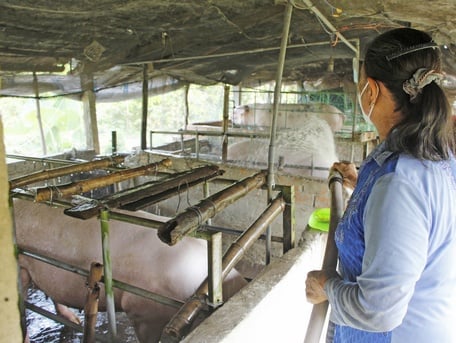
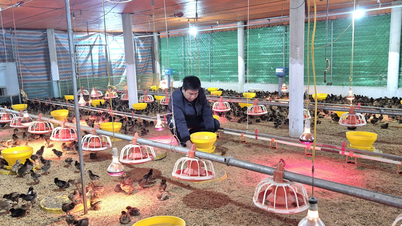
Currently raising 40 pigs for the Lunar New Year, Ms. Nguyen Thi Thuy (Hieu Phung commune, Vung Liem district) said: “I equipped the pig pens with mosquito nets to prevent flies and mosquitoes from entering, I don't allow strangers into the pens, and I regularly clean, disinfect, and spread lime powder in the pens. At the same time, I ensure a clean food source and dispose of waste according to regulations. I also make sure to vaccinate my pigs fully against diseases. Thanks to this, my pig herd has never had an outbreak of disease in many years.”
Ms. Nguyen Huynh Nga stated: "Vaccines are available to prevent all animal diseases. Farmers should proactively vaccinate their animals fully, at the correct dosage and on time to achieve the best disease prevention results. Daily cleaning of barns and equipment, and proper disposal of manure and waste are also important."
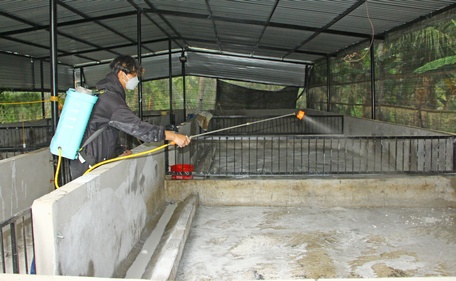
Regularly spray disinfectants throughout the entire farm and surrounding areas to eliminate pathogens; vehicles transporting pigs and feed must be thoroughly disinfected each time they enter and leave the farm and breeding area; strictly control the source of feed and vehicles entering and leaving the farm and breeding facility. Before entering the breeding area, all regulations regarding veterinary hygiene, personal protective equipment, and disinfection must be fully complied with. A disinfectant pit must be placed at the entrance of each farm; minimize access for visitors and strangers to the farm and breeding area.
 |
“Furthermore, given the current shortage of breeding pigs, farmers must be cautious when choosing breeding stock, ensuring that the animals are healthy and have been fully vaccinated. Farmers should prioritize purchasing breeding stock from reputable suppliers and must adhere to quarantine procedures before introducing them into the herd. The veterinary sector is also continuing to strengthen control over the buying, selling, transportation, and slaughtering of animals throughout the province; especially tightening control over the import of livestock into the province, ensuring that breeding stock has a clear origin, good health, and is vaccinated according to regulations... to serve the production needs of the people,” Ms. Nga added.
| According to the Ministry of Agriculture and Rural Development, Vietnam's pig population currently exceeds 30 million, ranking 6th in the world . Pork also makes up the majority of the Vietnamese diet. However, the pig farming industry is facing many challenges, including dangerous infectious diseases in pigs, especially African Swine Fever (ASF). Since the ASF outbreak in February 2019, Vietnam has culled over 6 million pigs. From the beginning of the year to November 25th, over 1,500 ASF outbreaks have occurred nationwide in 48 provinces and cities, resulting in the death and culling of over 88,200 pigs. |
Text and photos: THAO LY
Source: https://baovinhlong.vn/tin-moi/202412/dung-chu-quan-voi-benh-dich-ta-heo-chau-phi-4f70f6d/



































































































Comment (0)