


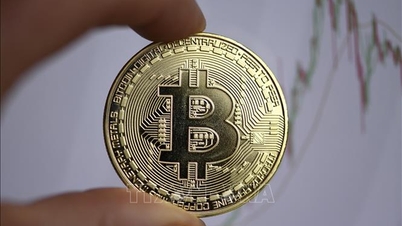
According to the latest survey by fintech company Finder (UK) with 24 experts in the cryptocurrency industry, Bitcoin price is predicted to peak at 162,353 USD/BTC this year, before cooling down to around 145,167 USD/BTC. The highest price of Bitcoin is predicted to reach 250,000 USD/BTC, while the lowest price ranges from 70,000 - 87,618 USD/BTC.
Since late last year, Bitcoin has risen from below $100,000/BTC to around $120,000/BTC today. Analysts say there are many factors driving demand for Bitcoin investments, including a more transparent legal framework, increased utility (such as payments) and changing economic conditions.
“New regulations, such as the European Union (EU) Markets in Cryptoassets Regulation (MiCA), have contributed significantly to the current momentum,” said Przemysław Kral, CEO of Zondacrypto, a cryptocurrency exchange. MiCA sets a unified legal framework for cryptocurrencies across the EU.
At the same time, growing interest from financial institutions – particularly through exchange-traded funds (ETFs) – has also made cryptocurrencies more accessible. Cryptocurrency ETFs, which allow investors to access digital assets without having to buy them directly, have exploded since Bitcoin ETFs began trading in the US last year.
According to experts, more and more large financial institutions see Bitcoin as a potential reserve asset. Mr. Anthony Pompliano - CEO of investment company Professional Capital Management - commented: "Bitcoin is a rare asset whose risk decreases as its scale increases." He said that when Bitcoin's market capitalization was low, few institutional investors dared to approach it, but now that this asset has reached a scale of trillions of USD, large investors around the world can completely allocate capital here.
Bubble forming?
While the growing penetration of cryptocurrencies into traditional financial markets has boosted demand for Bitcoin, some experts warn of the risk of a “bubble” – a sharp increase in price without a supporting fundamental.
Professor Ravi Sarathy from Northeastern University (USA) said that some large organizations such as MicroStrategy are holding large amounts of Bitcoin - up to 65 billion USD - and may be indirectly keeping the price high. He noted that the US approval of Bitcoin ETFs has caused money from both individual and institutional investors to flow into this high-risk asset.
Bitcoin’s supply is limited to 21 million BTC, while demand continues to grow – putting upward pressure on prices. This drives corporate strategies like Digital Asset Treasuries, where companies raise capital to invest in Bitcoin and other tokens. In digital assets, a token is a coded unit of value that represents an asset or interest, built on blockchain technology. It can be a cryptocurrency, a digital asset, or a tool to perform specific functions in a blockchain ecosystem.
Mr. Sarathy believes that if the US passes more laws to support the market, Bitcoin prices could continue to rise in the long term, although they may go through corrections in the short term.
The US fuels Bitcoin's price increase
Interest in Bitcoin has exploded after US President Donald Trump pledged to make the US the world ’s cryptocurrency hub. Last week, dubbed “Crypto Week” by the US government, came as Congress debated a series of bills that could shape the regulatory framework for the industry. On July 18, US President Donald Trump signed into law the US Stablecoin National Innovation Establishment and Guidance Act, or the landmark Genius Act, marking the first federal regulation of stablecoins. The Genius Act sets standards for stablecoins – a digital currency designed to maintain price stability, typically pegged 1:1 to the US dollar and widely used to trade between digital assets.
“Bitcoin and cryptocurrencies are being strongly supported by the Trump administration, which is quite surprising given that bitcoin was originally conceived as an alternative to government- backed currencies,” said John Hawkins, a senior lecturer at the University of Canberra. However, he still believes that Bitcoin has no intrinsic value and is “still a speculative bubble.”
On the contrary, some experts believe that Trump's support is the reason to buy Bitcoin. Mr. Desmond Marshall - Director of investment company Rouge International & Rouge Ventures - said: "Not only does Mr. Trump support it, but his son is also involved in large-scale cryptocurrency projects. The US government is even buying Bitcoin as part of its asset reserves."
“The demand from institutions has not decreased, while individual investors have not yet joined the game and countries are gradually adopting. This is an opportunity for a big increase in the price of Bitcoin,” said Martin Froehler, CEO of the decentralized exchange Morpher. Decentralized exchanges, also known as DEX (Decentralized Exchange), are cryptocurrency exchanges that allow users to trade directly with each other (peer-to-peer) without going through a centralized intermediary like traditional exchanges (CEX).
Since the start of 2025, Bitcoin's price has increased by nearly 25%, despite geopolitical risks, tariff tensions and unloose monetary policy in the US.
Reasonable strategy
About 61% of experts surveyed by Finder believe that now is the right time to buy. However, the CEO of Zondacrypto warned: “Despite the high expectations, investors should be cautious. No one knows for sure whether the price will go up or down. Do your own research before investing.”
Kadan Stadelmann, chief technology officer of the Komodo trading platform, predicts that Bitcoin will continue to rise in price for the next six months before entering a bear market. “With Bitcoin already at $110,000/BTC and at least half a year of growth left, I expect the peak to come in the first quarter of 2026,” he said.
In the long term, Finder's survey found that experts believe Bitcoin price could reach $458,647/BTC by 2030 and surpass $1 million/BTC by 2035.
Could Quantum Computers Threaten Bitcoin?
Up to 79% of surveyed experts believe that quantum computers are a threat to the security of Bitcoin, due to their ability to break the encryption algorithm that currently protects the digital currency.
About 25% believe this risk will occur within the next five years; another 25% believe it will occur within the next five to 10 years. Only 8% of experts believe that quantum computers are not a threat, and only a third believe that the Bitcoin community is currently somewhat prepared for this scenario.
Source: https://doanhnghiepvn.vn/kinh-te/gia-bitcoin-tang-vot-co-hoi-dau-tu-hay-nguy-co-bong-bong-moi-/20250723082753119
![[Photo] National Assembly Chairman Tran Thanh Man receives First Vice Chairman of the Federation Council of the Federal Assembly of the Russian Federation](/_next/image?url=https%3A%2F%2Fvphoto.vietnam.vn%2Fthumb%2F1200x675%2Fvietnam%2Fresource%2FIMAGE%2F2025%2F12%2F02%2F1764648408509_ndo_br_bnd-8452-jpg.webp&w=3840&q=75)




























































































Comment (0)