



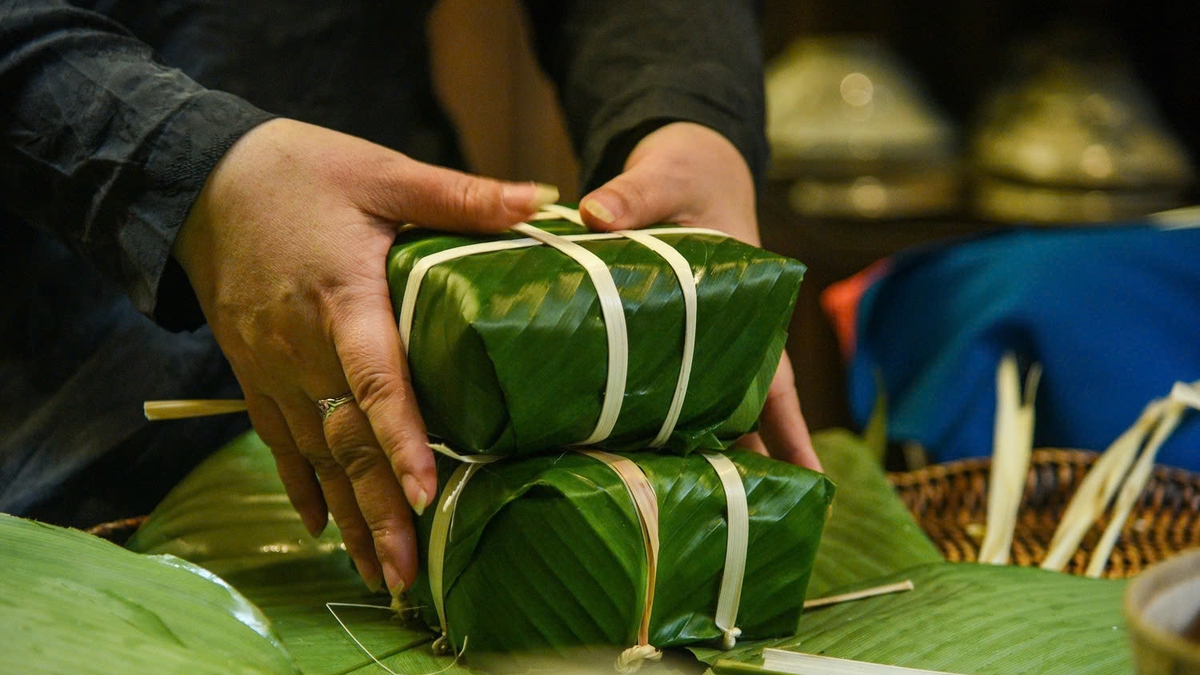
Wrapping banh tet (Vietnamese sticky rice cake) at the home of Mrs. Tran Ngoc Huong (third person from the left).
For many years now, every year-end, Mrs. Tran Ngoc Huong's porch has become a familiar gathering place for the women in the neighborhood. They come here to wrap banh tet (traditional Vietnamese rice cakes), then share a few cakes with their neighbors as a gesture of goodwill, creating a simple yet warm Tet atmosphere. Taking on the main tasks, Mrs. Tran Ngoc Huong, now over 60 years old, nimbly arranges the leaves while slowly recounting stories of Tet in the past.
For Ms. Tran Ngoc Huong, gathering around to wrap and tend the fire of the banh tet pot is an indispensable activity during Tet: "In the old days, if there was a 30th day of the lunar month, we would start preparing the sticky rice and leaves around the 28th day of the 12th lunar month. If there wasn't a 30th day, we had to start earlier. Every family made it themselves, children learned from the adults, so everyone knew how to wrap banh tet."
According to Ms. Tran Ngoc Huong, after a year, Tet is a time for the whole family to reunite, work together, eat together, and share together; therefore, the pot of banh tet (sticky rice cake) also symbolizes keeping the flame of family together alive. From ancient times to the present, banh tet from the Mekong Delta has been meticulously made, from the selection of ingredients to the preparation method. To make delicious banh tet with banana filling, ripe Siamese bananas must be used, marinated in sugar for the filling. Glutinous rice is carefully selected, soaked thoroughly, and stir-fried with coconut milk for a fragrant and rich flavor, with added red or black beans for a nutty taste. Besides that, savory banh tet with mung beans and pork fat is also indispensable. Pork belly is cut into long strips, marinated with spices, and sometimes lightly sun-dried so that it looks translucent and beautiful when cooked. The cooked cake feels heavy in the hand, the glutinous rice is firm, subtly fragrant with the scent of banana leaves, the filling is well-seasoned, and the fat is soft and melts in your mouth without being greasy.
Sitting next to Ms. Huong is Ms. Le Thi Em, who has been involved with the group wrapping banh tet (Vietnamese sticky rice cakes) here for many years. With practiced hands, she wraps the cakes while chatting animatedly. For her, Tet (Vietnamese Lunar New Year) is a rare time to rest, reunite with family, and prepare thoughtfully for the family meal. Ms. Le Thi Em confided, "When Tet comes, we sisters who live nearby help wrap banh tet together for fun, then share them to eat."
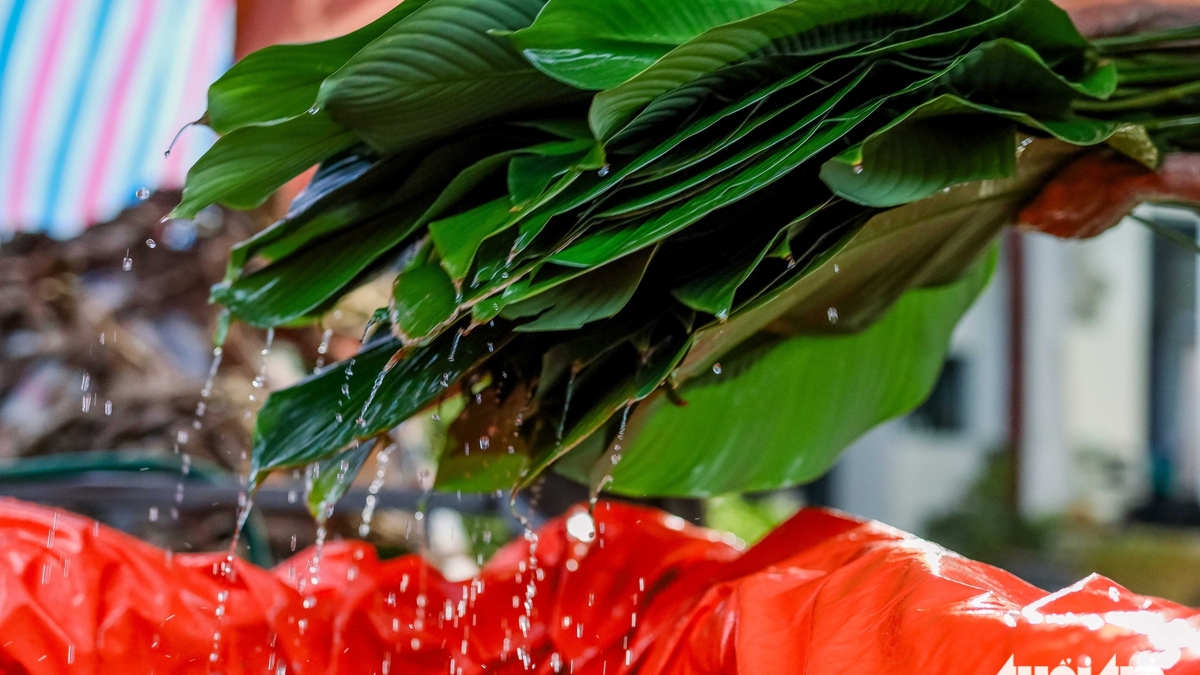
Among the group wrapping bánh chưng (traditional Vietnamese rice cakes) is Ms. Nguyen Ngoc Hai. Since childhood, she has been familiar with the sight of her grandparents and parents gathering to wrap bánh chưng during Tet (Vietnamese New Year). Back then, she and her siblings only helped with small tasks. "In the old days, grandparents and parents would wrap the bánh chưng, while children would help wipe the leaves and peel the bananas. The adults taught us, and we practiced wrapping until we got used to it. We should try to preserve the old customs of our grandparents; every Tet, we wrap bánh chưng and give them to our grandparents and relatives," Ms. Nguyen Ngoc Hai expressed. Therefore, she participates in wrapping bánh chưng with her neighbors, both to maintain the tradition and to give her children and grandchildren the opportunity to see and learn from her.
As the sticky rice cakes were neatly arranged in the large pot and the fire was lit, the conversations in the neighborhood became more lively. Some reminisced about Tet celebrations of the past, others recounted stories of their children and grandchildren working far away, and still others discussed the offerings for their ancestors. This simple act held profound meaning, reflecting the spirit of mutual support and compassion, a quintessential example of traditional culture.
In the context of increasingly modern life, where many customs are at risk of disappearing, maintaining the tradition of making banh tet (traditional Vietnamese rice cakes) together during Tet in villages is a way to naturally and sustainably preserve the "spirit of Tet." It's not just a story about cakes and sweets, but also a story of human connection, of community bonding—values that need to be cherished and preserved for today and tomorrow.
Text and photos: MONG TOAN
Source: https://baocantho.com.vn/giu-net-thom-thao-ngay-tet-a198524.html

![[Photo] General Secretary To Lam works and extends New Year greetings to the Party Committee, government and people of Dak Lak province.](https://vphoto.vietnam.vn/thumb/1200x675/vietnam/resource/IMAGE/2026/02/11/1770808701306_ndo_tl_img-4099-5201-jpg.webp)






































Comment (0)