

Honoring those who "keep the soul" of heritage with new titles is a "necessary" condition. However, the "sufficient" condition for those who hold the core elements of cultural heritage to maintain their enthusiasm, love, and actively pass on the heritage to future generations requires additional "nurturing" through the shared responsibility of various sectors and localities.
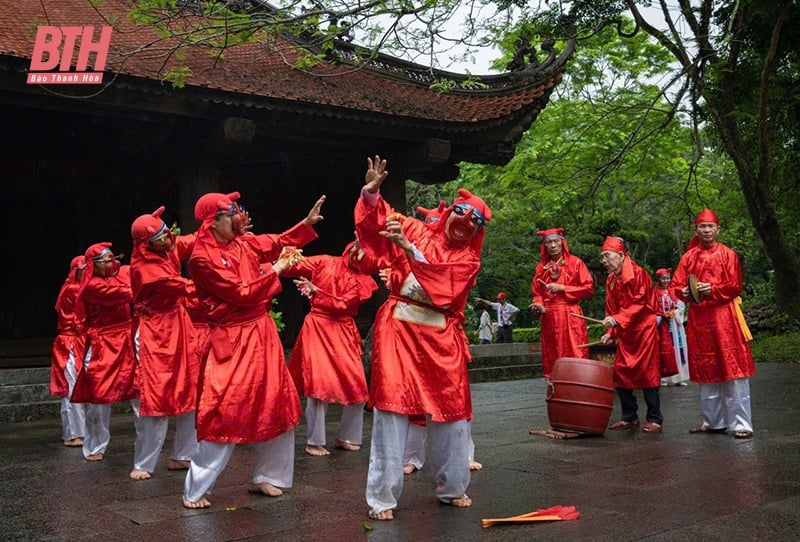
Appropriate behavior is necessary.
Thanh Hoa currently has 25 intangible cultural heritage sites recognized as national intangible cultural heritage. The province has 66 individuals awarded or posthumously awarded the title of "Outstanding Artisan" and 3 individuals awarded or posthumously awarded the title of "People's Artisan". To date, 55 artisans are still alive. Of these, 11 artisans receive benefits under Decree No. 109/2015/ND-CP on support for People's Artisans and Outstanding Artisans with low income and difficult circumstances.
However, in reality, artisans are often elderly people, many living in old age without any support or financial security. Some even struggle to make ends meet. With such difficult living conditions, even if they try to dedicate their time to contributing to national culture and sharing their experience with the community, it's difficult to do so completely.
To support and encourage artisans to actively participate in the practice and transmission of culture, the Department of Culture, Sports and Tourism, along with local authorities, has implemented many activities to support them. Many localities have actively mobilized social resources to support artisans and those who preserve valuable cultural assets when participating in performances, practices, guidance, and teaching of cultural heritage. However, the resources mobilized are often limited and only available for large-scale activities, lacking long-term and regular support. For example, in Dong Khe commune (Dong Son district), whenever a group of artisans participates in folk culture performances or provincial arts festivals, the local authorities often mobilize social resources to provide financial support and encouragement to the artisans.
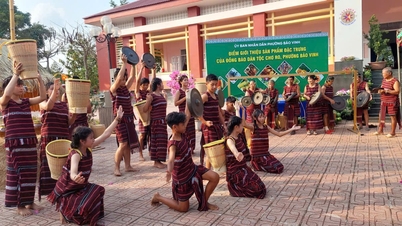
Several mountainous districts, such as Ngoc Lac and Nhu Xuan, have supported artisans under the National Target Program for socio -economic development in ethnic minority and mountainous areas. Implementing Project 6: Preserving and promoting the valuable traditional culture of ethnic minorities in conjunction with tourism development, these mountainous districts have provided partial funding to artisans through activities such as organizing the teaching, transmission, and dissemination of traditional cultural practices, as well as training and mentoring their successors.
In Ngoc Lac district, there is one People's Artisan and four Distinguished Artisans, one of whom has passed away. No artisans in the district receive the benefits stipulated in Decree No. 109/2015/ND-CP regarding support for People's and Distinguished Artisans with low incomes and difficult circumstances, despite the fact that most artisans are elderly, frail, and face significant family challenges. The district has been struggling to find ways to support and encourage them to continue contributing. Since the implementation of the National Target Program for socio-economic development in ethnic minority and mountainous areas, the district has used a portion of the training and mentoring funds from Project 6 to support artisans participating in the transmission of their heritage.
In collaboration with local authorities, the Provincial Cultural and Film Center has actively organized training programs and provided professional guidance on organizing cultural and artistic events for participating artisans. Simultaneously, it regularly organizes cultural exchange programs, competitions, and performances within the province to allow artisans to practice and showcase their talents. Notably, the Provincial Cultural and Film Center has regularly arranged for artisans to participate in competitions and performances nationwide. According to Nguyen Thi Mai Huong, Director of the Provincial Cultural and Film Center: “In these training programs, artisans not only receive professional guidance and support in building cultural and artistic programs in a systematic way, but they also receive partial financial support for food and accommodation. This serves as an encouragement for artisans to actively participate in cultural and artistic programs and pass on cultural heritage in their localities. Especially, through competitions and contests in provinces and cities across the country, artisans have the opportunity to interact with many ethnic groups, gaining a deeper understanding of the value of their culture and the uniqueness of the heritage they possess. From there, they further appreciate and actively pass on the cultural heritage of their ethnic group.”
Don't block the source of "nurturing"
The titles of "Outstanding Artisan" and "People's Artisan" are aspirations for anyone dedicated to folk culture. Honoring artisans is about recognizing and preserving cultural "resources." The valuable and beautiful traditional values are embodied in these "living treasures"—folk culture artisans. Therefore, since they are considered the core of traditional culture, it is necessary to provide them with the conditions to "burn" with heritage and "pass on" that heritage to the community.
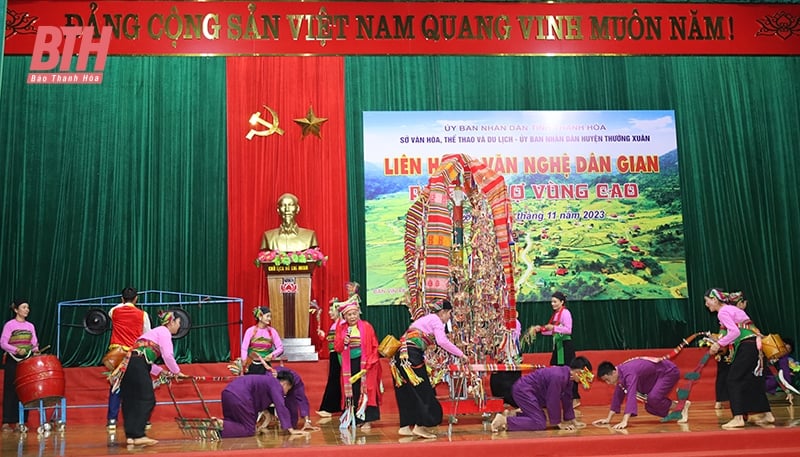
Recognizing artisans with titles is, I believe, only addressing the symptoms. The root cause lies in creating conditions for artisans to live with their heritage and to spread its precious values in a long-term and sustainable way. Currently, localities have established arts clubs/groups and organized activities for artisans to practice and teach. However, the activities of these clubs are not yet vibrant or regularly maintained. Many people, after being recognized as artisans, are only sporadically involved and do not actively participate in practicing and teaching the heritage.
Mr. Pham Nguyen Hong, Director of the Department of Culture, Sports and Tourism, believes that for artisans, awarding certificates of honor and providing monthly allowances are merely forms of encouragement. The core issue is how these artisans will live, work, and contribute after being recognized – that's what needs to be addressed. Currently, besides the benefits for artisans under Decree No. 109/2015/ND-CP on support for People's Artisans and Distinguished Artisans with low incomes and difficult circumstances, there is no policy to support artisans in general. Furthermore, the policies currently in place have not had a significant impact on artisans – those who hold the spirit of the heritage. Therefore, policies are needed to ensure their livelihoods, maintain their daily activities, and provide healthcare so they can fully contribute to the community. In parallel, policies are needed to help artisans utilize and develop the knowledge they possess, contributing to the overall economic, cultural, and social development.
Most of the People's Artists and Distinguished Artists are elderly and frail. All support policies for them need to be implemented promptly. Timely and fair support for these honored artists not only affirms their role and recognizes their value but also emphasizes the humanistic aspect of the Party and State's policies towards those who contribute to culture. At the same time, providing them with the right support and conditions to fully contribute is an effective way to maintain the "nurturing" of culture and promote the precious cultural heritage that these artists have preserved throughout their lives.
Even without supportive policies in the past, artisans dedicated their lives to the passion and contribution of national culture. However, it would be better if there were support to give them more leverage and confidence to continue their commitment to culture. In reality, there is ample evidence showing that if we do not cherish and preserve the "nurturing" resources of culture, many valuable cultural values will certainly not be preserved in a focused and systematic way, and risk being lost or fading away due to a lack of transmission to the community, especially the younger generation.
Reporters Team
Source: https://baothanhhoa.vn/nhung-nguoi-giu-hon-di-san-van-hoa-bai-cuoi-giu-nguon-duong-nuoi-di-san-231177.htm
![[Image] National Assembly discusses the implementation of the socio-economic development plan.](https://vphoto.vietnam.vn/thumb/1200x675/vietnam/resource/IMAGE/2026/04/20/1776696707422_ndo_br_img-20260420-185419-jpg.webp)


![[Photo] General Secretary and President To Lam meets with National Assembly delegates from ethnic minorities.](https://vphoto.vietnam.vn/thumb/1200x675/vietnam/resource/IMAGE/2026/04/20/1776696701056_a1-bnd-8331-3342-jpg.webp)















![[Infographic Series] Historical Sites in Dong Nai: Long Khanh Provincial Administrative Building, Long Khanh Town Party Committee Base, Xuan Loc Temple - Xuan Hoa Pagoda Complex](https://vphoto.vietnam.vn/thumb/402x226/vietnam/resource/IMAGE/2025/9/26/1331532306fb4ad18e4a849e5c64202a)
















































Comment (0)