



We sat under Mr. Rom's stilt house, the sound of the three gongs echoing through the stream, reverberating up the mountains and hills, sometimes cheerful and melodious, sometimes rising and falling like the life cycle of the ethnic people, born of parents, growing up, falling in love and becoming husband and wife… “Each gong has its own soul. To control it, you must understand it, treat it as your friend, so that when you play the gong, your soul and the gong's soul will blend together, creating poignant sounds that resonate through the mountains and forests,” Mr. Rom shared.
Touching the surface of the gong with his hands, Mr. Rom began to tell his story about his love for the art: "I remember when I was little, I often followed my parents to village festivals, and I was fascinated watching the artisans play the gongs. It was from those festivals that my love for gongs began to burn brightly in my veins."
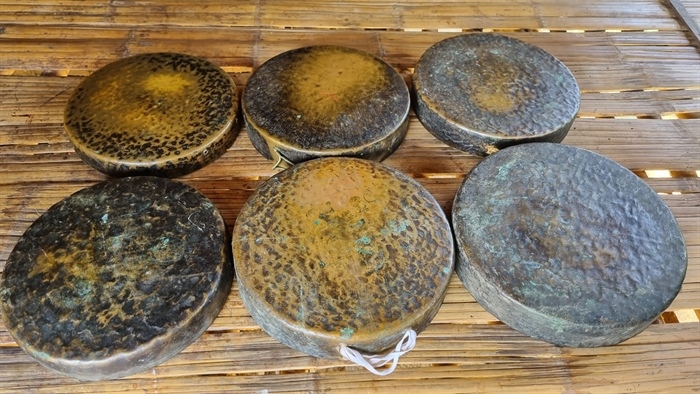
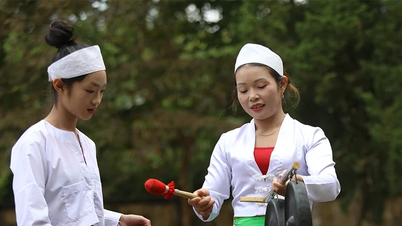
Carefully wiping away the dust from each dent on the gong's surface, Mr. Rom explained that the three-gong set has become a unique spiritual nourishment in the daily lives of his fellow villagers. According to the villagers, it's called the three-gong set because it consists of three gongs. During performances, the Vong gong is tilted, the Tum gong is laid flat, and the Tuc gong is suspended on a string. The Tum gong plays the role of keeping the rhythm, while the Vong and Tuc gongs follow the melody. The Vong and Tum gongs are played with bare fists, while the Tuc gong is played with a fist wrapped in a cloth to give the gong a warmer sound. The most skilled gong player plays the Tuc gong, leading the gong ensemble in the correct musical arrangement and rhythm. When performing with the three-gong ensemble, the gong player sits in a stable position and does not move.
With the development of modern society, the cultural traditions of the ethnic minorities in Ba Vinh commune are gradually fading away. Therefore, artisans like him are trying to preserve and pass on these cultural traditions to younger generations to continue maintaining the cultural heritage passed down through generations. “I always actively participate in teaching the three-gong playing technique to the younger generation; on average, 25 to 30 children attend classes at the village cultural center each year. I only hope that future generations will preserve the traditional culture that our ancestors have left behind for generations,” Mr. Rom confided.
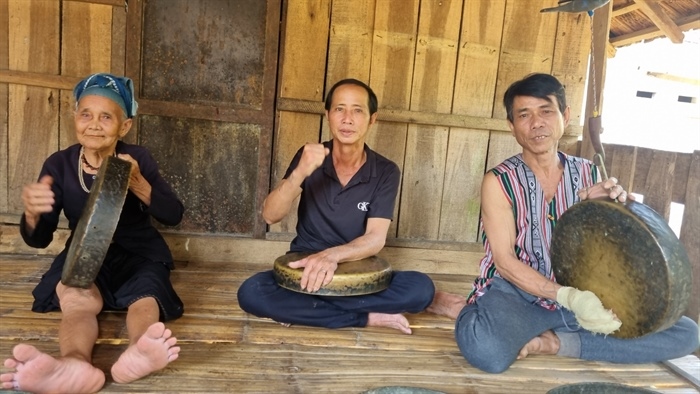
Over the years, the family of artisan Pham Van Rom has consistently achieved the title of "Culturally Exemplary Family." He himself actively encourages the villagers to effectively implement the contents and criteria of the "National Unity in Building a Culturally Rich Life" movement. At the same time, he leads in economic development, ensuring his children have stable jobs and his grandchildren are well-behaved and excel in their studies.
Speaking about artisan Pham Van Rom, Le Cao Dinh, Deputy Head of the Culture and Information Department of Ba To District, said: “Artisan Rom is actively involved in preserving and promoting the cultural identity of the Hre ethnic group in the district. He is a skilled gong player and has preserved many gongs. People like Mr. Rom have been and are contributing to the preservation of gong culture to serve the spiritual and cultural life of the Hre people.”
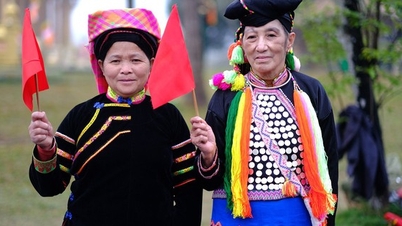
Ba To is a mountainous district in Quang Ngai province, predominantly inhabited by the Hre ethnic group. It boasts numerous historical and cultural relics and breathtaking landscapes. The Hre people's traditional gong performance art, recognized as a National Intangible Cultural Heritage by the Ministry of Culture, Sports and Tourism, is being preserved and promoted through collaborative efforts by local authorities and residents to contribute to tourism development. Currently, Ba To has become a highly significant historical tourism destination, a valuable site for students from within and outside the province to visit, research, and study.
Source











































































Comment (0)