

The first summit between the European Union and the Gulf Cooperation Council (GCC) after 35 years of establishing relations may be late, but it is necessary in the current context.
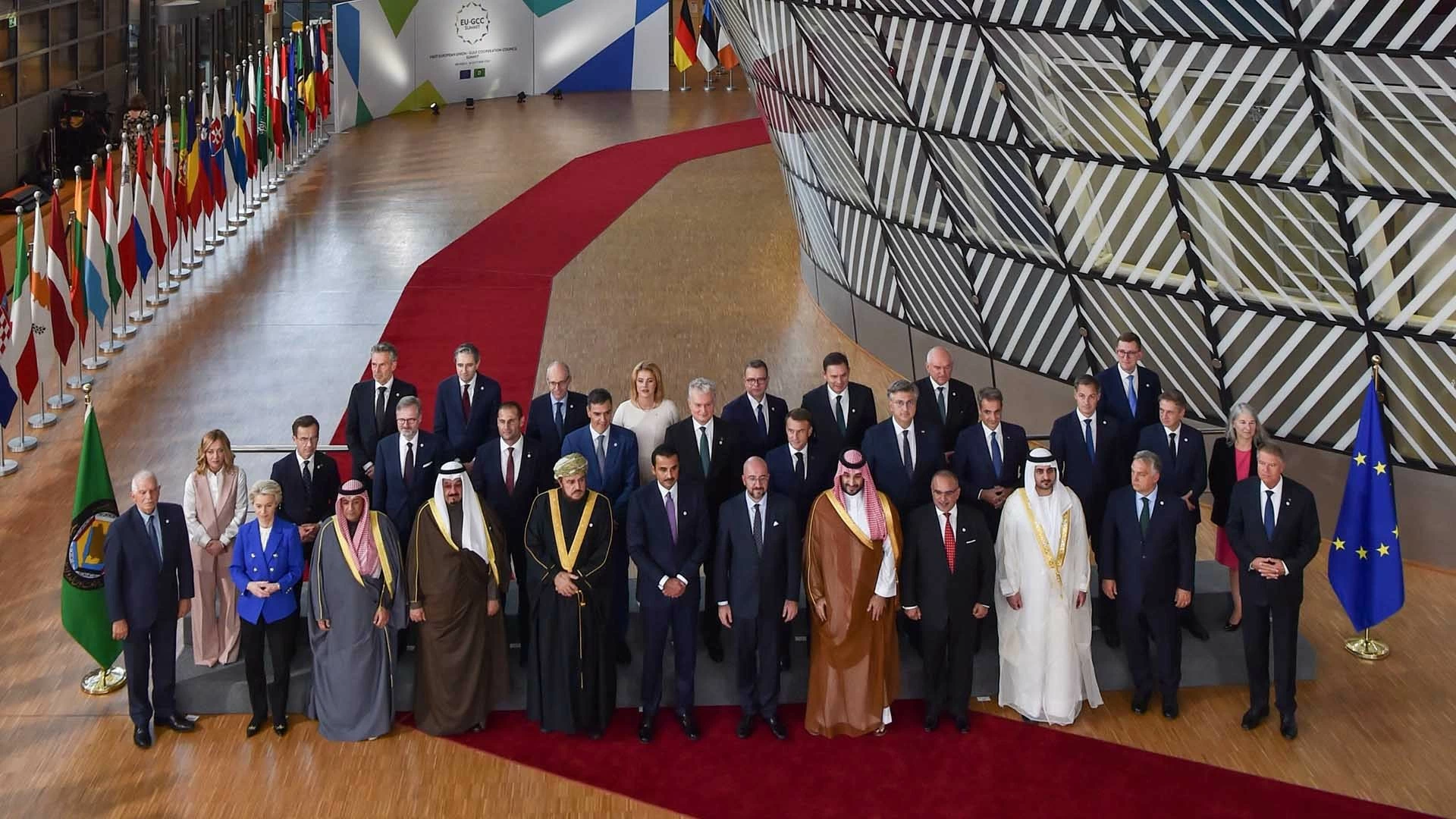 |
| The European Union and the Gulf Cooperation Council held their first summit in 35 years since establishing relations. (Source: X) |
The conference on October 16th at the European Union (EU) headquarters in Brussels, Belgium, was attended by the Crown Prince of Saudi Arabia, the Emir of Qatar, and the leaders of Kuwait and Bahrain. Meanwhile, the Deputy Prime Minister , the Minister of Finance, and the Deputy Prime Minister for Foreign Affairs respectively represented the United Arab Emirates (UAE) and Oman at the conference.
On the host side, the President of the European Commission and the President of the European Council attended the conference. The President of France, along with leaders of several key EU member states, also participated. The German Chancellor had a "pre-scheduled appointment" in her home country and did not attend.
According to the European Council, the conference is an opportunity for EU countries to “establish closer partnerships with the GCC and its members, who are now geostrategic partners in the context of today’s challenging geopolitical landscape.”
Many shared benefits
It's not difficult to see that the phrase "challenging geopolitical context" refers to the Russia-Ukraine and Israel-Hamas conflicts. On the one hand, these two hotspots are forcing Europe to find solutions to the energy crisis and rising inflation. Conversely, the Middle East faces the risk of escalating conflict, with the situation in Lebanon being a prime example. This is not to mention a range of common issues that both sides must address, such as managing relations with major powers and responding to non-traditional security challenges like climate change, cybersecurity, and terrorism.
To address the energy crisis caused by the Russia-Ukraine conflict, the EU has strengthened cooperation with Gulf states. Furthermore, Qatar, Saudi Arabia, and the UAE have recently played a mediating role in the Russia-Ukraine conflict with some success – Europe clearly wishes to maintain such efforts, with closer involvement and coordination between GCC and EU members. At the same time, Gulf states could play a more active role in ending the conflict in the Gaza Strip, restoring stability to the Red Sea shipping lanes, and contributing to improving inflation and illegal immigration in many European countries.
Conversely, the GCC hopes to expand cooperation with the EU in many areas, with energy being a key focus. This would allow countries to further diversify their relationships beyond cooperation with Russia, the US, or China. Furthermore, Europe could be more proactive and open in supporting the Gulf states' efforts to control and prevent the conflict from spreading throughout the Middle East.
Implementing the strategy
However, achieving such benefits is not simple. Despite having formal relations since 1989, EU-GCC cooperation only truly progressed after the Russia-Ukraine conflict erupted in February 2022. At that time, the foreign ministers and foreign affairs officials of the two blocs agreed on a joint cooperation agenda for 2022-2027 (most recently updated in October 2023), focusing on promoting cooperation in trade and investment, climate change, green transition, people-to-people exchanges, and counter-terrorism.
Since then, bilateral relations have developed strongly. In May 2022, the EU and the High Commissioner for Foreign Policy established a “Strategic Partnership with the Gulf region”. In June 2023, Italian Foreign Minister Luigi Di Maio was appointed Special Envoy for the region.
On that basis, at the first summit, both sides prioritized several common concerns. Trade was certainly a prominent topic. Last year, the EU sought to resume negotiations with the GCC on a free trade agreement, which began in 1989 but was frozen in 2008. However, old obstacles remain – many Gulf states reject EU-proposed terms on labor, environmental standards, and government asset sales. Nevertheless, with renewed momentum from Saudi Arabia, this summit could yield more positive results.
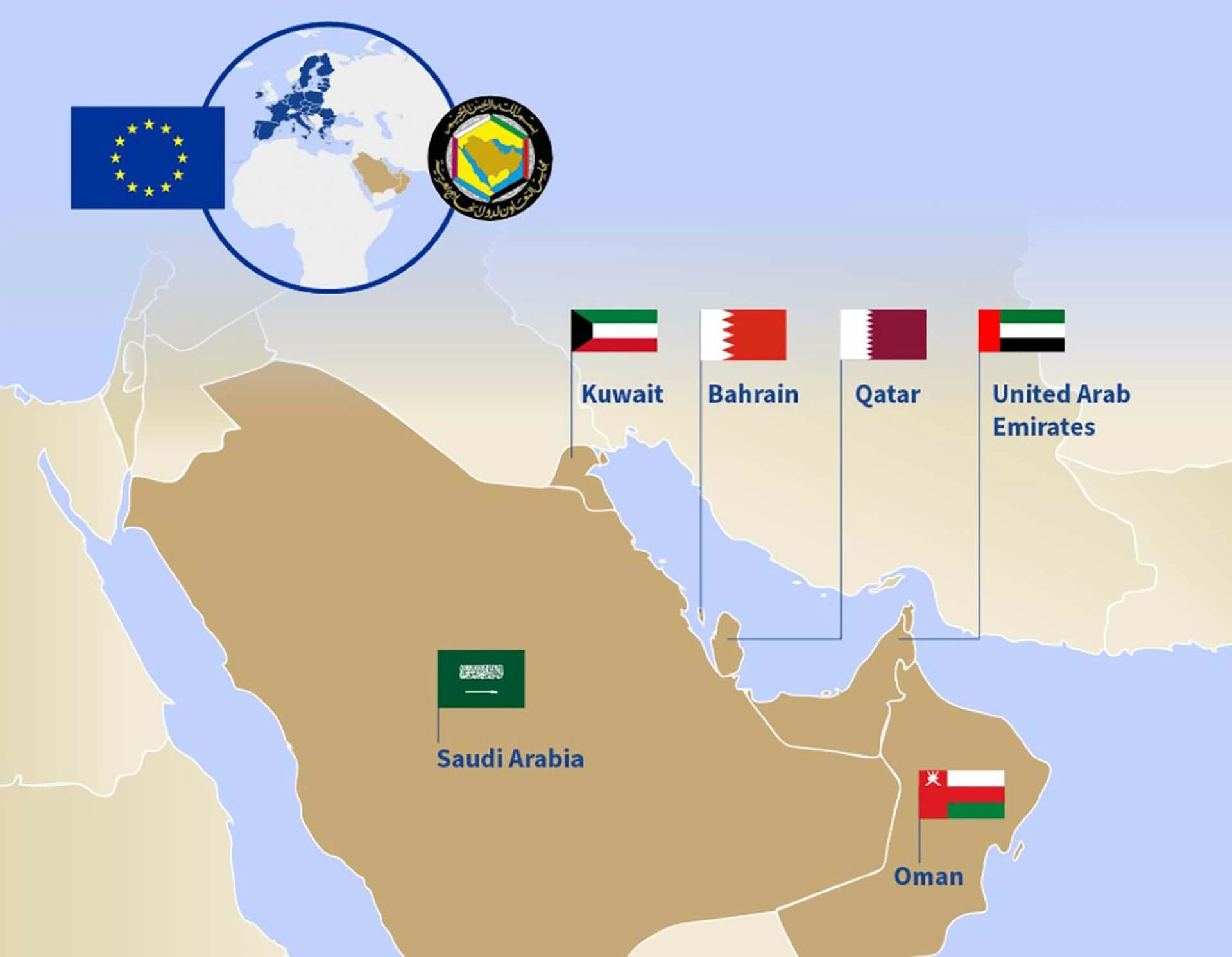 |
| The first-ever EU-GCC summit took place in Brussels, Belgium, on October 16. (Source: Doha News) |
From a geopolitical standpoint, things are somewhat more complicated. The GCC wants the EU to confirm that the Gulf policy under High Commissioner for Foreign Policy Josep Borell will be maintained by his successor, Kaja Kallas. They are concerned that the former Estonian Prime Minister has taken too hardline a stance toward both Russia and China, key partners of the GCC. This is because the Gulf region places great importance on its relationship with Moscow, whether it's coordinating oil policy, expanding opportunities to mitigate the damage from Western sanctions, or leveraging opportunities from Russia to strengthen its position in the Middle East and Africa.
Conversely, some European countries could use the Summit to convey a tough stance toward Russia. Firstly, Europe would maintain strong support for Ukraine, regardless of the US election results. Secondly, they see Moscow as a competitor to the Gulf region in the energy market, particularly in Asia. Thirdly, the EU wants to convince the GCC that Russia, through its military ties with Iran, is an unreliable partner, potentially putting the parties at the Summit in an awkward position.
Finally, the situation in the Middle East will be an indispensable topic of discussion at the Conference. Currently, both the EU and the GCC unanimously condemn Hamas's attack on Israel in October 2023, as well as Israel's large-scale military campaign in the Gaza Strip and Lebanon.
Nevertheless, Europe could express further support for the Gulf's mediating role, efforts to promote ceasefires in Gaza and Lebanon, and a two-state solution for Palestine. The EU could also call on the GCC to engage more actively with Iran, seeking common interests and values, including the desire to end the Israel-Hamas conflict and improve the situation in Lebanon.
However, the realization of these goals depends significantly on the political will of EU and GCC leaders at the summit in Brussels.
Source: https://baoquocte.vn/hoi-nghi-thuong-dinh-eu-gcc-muon-con-hon-khong-290437.html


![[Image] Leaked images ahead of the 2025 Community Action Awards gala.](/_next/image?url=https%3A%2F%2Fvphoto.vietnam.vn%2Fthumb%2F1200x675%2Fvietnam%2Fresource%2FIMAGE%2F2025%2F12%2F16%2F1765882828720_ndo_br_thiet-ke-chua-co-ten-45-png.webp&w=3840&q=75)
![[Live] 2025 Community Action Awards Gala](/_next/image?url=https%3A%2F%2Fvphoto.vietnam.vn%2Fthumb%2F1200x675%2Fvietnam%2Fresource%2FIMAGE%2F2025%2F12%2F16%2F1765899631650_ndo_tr_z7334013144784-9f9fe10a6d63584c85aff40f2957c250-jpg.webp&w=3840&q=75)
![[Photo] Prime Minister Pham Minh Chinh receives the Governor of Tochigi Province (Japan)](/_next/image?url=https%3A%2F%2Fvphoto.vietnam.vn%2Fthumb%2F1200x675%2Fvietnam%2Fresource%2FIMAGE%2F2025%2F12%2F16%2F1765892133176_dsc-8082-6425-jpg.webp&w=3840&q=75)
![[Photo] Prime Minister Pham Minh Chinh receives Lao Minister of Education and Sports Thongsalith Mangnormek](/_next/image?url=https%3A%2F%2Fvphoto.vietnam.vn%2Fthumb%2F1200x675%2Fvietnam%2Fresource%2FIMAGE%2F2025%2F12%2F16%2F1765876834721_dsc-7519-jpg.webp&w=3840&q=75)































![[Photo] Prime Minister Pham Minh Chinh attends the Vietnam Economic Forum 2025](https://vphoto.vietnam.vn/thumb/402x226/vietnam/resource/IMAGE/2025/12/16/1765893035503_ndo_br_dsc-8043-jpg.webp)



















Comment (0)