

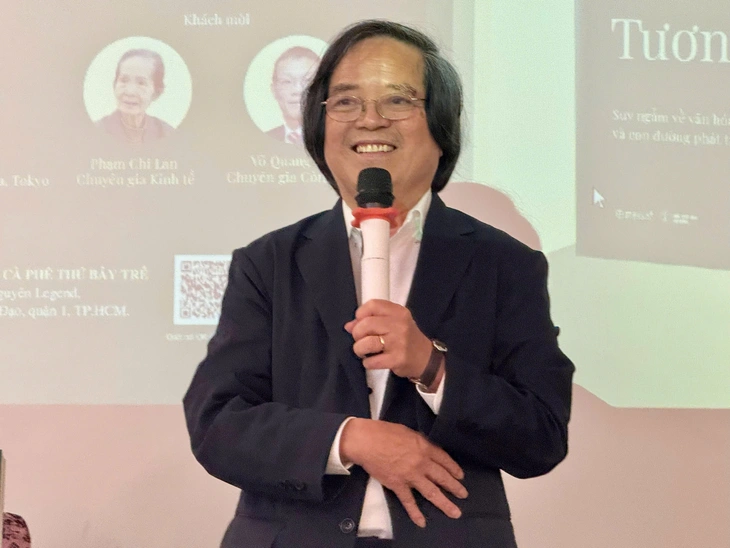
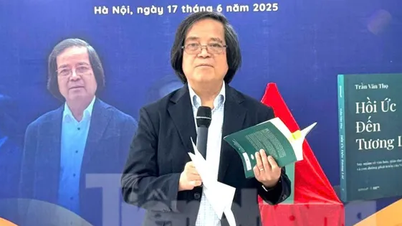
Professor Tran Van Tho talks about the circumstances that led him to write the book "Memories to the Future" - Photo: HO LAM
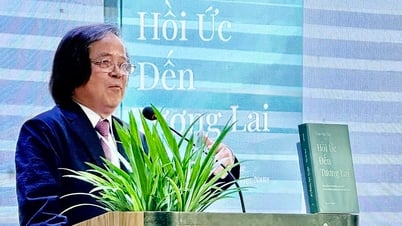
On the afternoon of May 31st, at the Saturday Youth Coffee Space, a book launch and discussion took place for "Memories to the Future - Reflections on Culture, Education , and the Development Path of Vietnam, " featuring Professor Tran Van Tho and guest speakers including economist Pham Chi Lan, expert Vo Quang Hue, and researcher Tran Huu Phuc Tien.
Memories leading to the future profoundly reflect two overarching concerns throughout Mr. Tho's life: how to lift Vietnam out of poverty and become a high-income country; and the ideal image of a nation where people live happily, possess culture, and are respected by the world .
Always carry images of Vietnam with you when you are far from home.
As one of the prominent Vietnamese intellectuals in Japan, Professor Tran Van Tho spent decades living and working abroad. Yet, his homeland was never absent from his thoughts. It was from this love that his book, " Memories to the Future, " was born.
From cherished memories of family and friends to reflections on education, culture, and ethics in the process of national revival and development, he compiled and distilled political articles, notes, and essays filled with thoughtful reflections and rich emotions over many years.
Articles such as: There are two homelands to return to; Culture, leadership character and the destiny of the nation; Preparing on the eve of a new era; Development and happiness... are all imbued with the spirit of civic responsibility and the character of a great intellectual.
Professor Tran Van Tho confided: "Leaving my homeland in my twenties, I carried with me the sentiments and images of Vietnam."
These images are largely formed through books on history, culture, literature, or music, and are deeply ingrained in the subconscious, fostering national pride and love for one's homeland. When I write about current events related to economics, education, or politics, these images naturally reappear and are connected to the content of the article."
For example, when Mr. Tho discussed heroes in the modern era, he hoped that today's leaders and officials would dedicate themselves wholeheartedly to the country:
"To imagine, decades later, when their hair has turned gray, sitting together drinking wine by Hoan Kiem Lake and enthusiastically discussing the spectacular achievements of the recent development process, in which they themselves played a crucial role. This image is depicted by recalling two lines of poetry about the glorious victories of the Tran dynasty's king and his subjects: 'The old soldier with gray hair, endlessly recounts the story of Nguyen Phong.'"
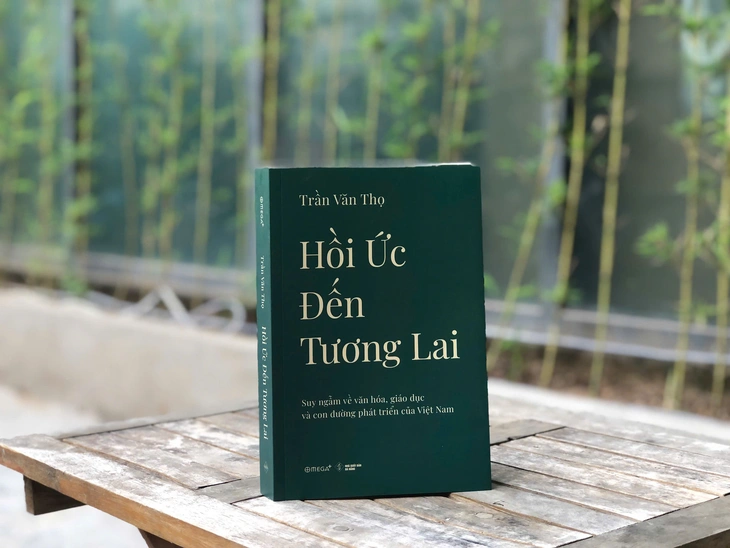
The book "Memories to the Future" - Photo: Publisher
I admire Nhat Linh's ideology of prioritizing the poor.
For the speakers, "Memories to the Future" represents Professor Tran Van Tho's aspiration for a developed Vietnam.
Economist Pham Chi Lan shared her feelings: "For Vietnamese people like me, Professor Tran Van Tho is a role model of a true intellectual who has constantly learned, researched, innovated, and improved his stature in his research and teaching of economic science."
Research and work in this field is never easy, especially in a country that created an "economic miracle" from the late 1950s and continues to write miracles in the new era of globalization and the modern industrial revolutions that followed.
Similarly, researcher Phuc Tien and expert Quang Hue both recognized "the cultural essence in the economist Tran Van Tho."
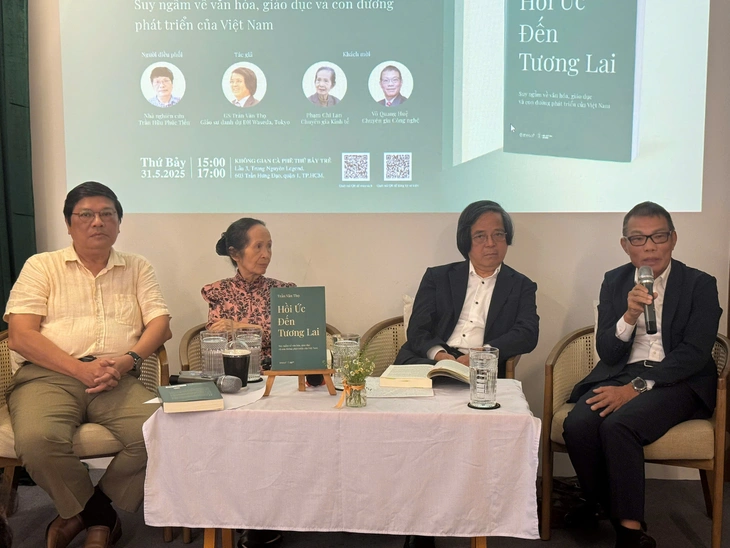
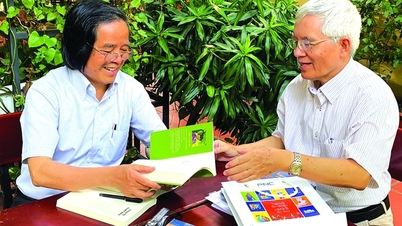
From left to right: Researcher Tran Huu Phuc Tien, economist Pham Chi Lan, Professor Tran Van Tho, and expert Vo Quang Hue - Photo: HO LAM
Mr. Tien cited an example from the article "Rediscovering the Traces of the Self-Reliance Literary Group," where Mr. Tho recognized a beautiful line spoken by the character Dung about patriotism in Nhat Linh's "The Farewell" :
"That afternoon, Dung felt as if the soul of the nation was embodied not in kings, emperors, or famous figures, but in the humble, nameless common people. The people are the nation. To love one's country is to love the common people, to think of their suffering."
Professor Tran Van Tho commented: "This is a very good and practical definition of patriotism. Back then, I admired Nhat Linh not only for his literary talent but also for the ideas he encapsulated in his novels."
Today, looking out the back window from the Self-Reliance Literary Group Memorial House at the former site of the House of Light, where writers lived and engaged in literary activities every weekend, I am once again filled with admiration for Nhat Linh's ideology of serving the poor."
LAM LAKE
Source: https://tuoitre.vn/hoi-uc-den-tuong-lai-la-khat-vong-vi-mot-viet-nam-phat-trien-cua-giao-su-tran-van-tho-20250531152402452.htm

![[Image] Close-up of the newly discovered "sacred road" at My Son Sanctuary](/_next/image?url=https%3A%2F%2Fvphoto.vietnam.vn%2Fthumb%2F1200x675%2Fvietnam%2Fresource%2FIMAGE%2F2025%2F12%2F13%2F1765587881240_ndo_br_ms5-jpg.webp&w=3840&q=75)






















































Comment (0)