

In the 1960s in South Vietnam, a group of young people were sent to study abroad in advanced countries around the world .
Later, they became well-known figures and made significant contributions to the country.
They flew more than halfway around the world to distant places like the United States, France, England, Germany, Italy, Belgium… hoping to be trained to become talented individuals. Others, including Tran Van Tho, chose a shorter path – going to Japan, also with the belief that they would receive a modern education .
Studying economics in Japan, like Tran Van Tho did, is a perfect fit, with "the right time, the right place, and the right people." Defeated after World War II, devastated materially and psychologically, Japan nevertheless suppressed its pain and humiliation, revived its national spirit, and became a leading developed market economy in the world, earning the respect of humanity.
Japan and Vietnam are located in the same "East Asian civilization" region. The two countries have had educational ties since the early 20th century, when the Dong Du movement initiated by Phan Boi Chau sent the first 200 young Vietnamese people to Japan to study.

Illustrative image
Having been trained and self-taught to become a brilliant economist, Professor Tran Van Tho did not stop at theoretical knowledge but always sought to apply it to important areas of social life.
After Vietnam's reunification, Professor Tran Van Tho returned to the country, participated in numerous seminars and conferences, and lectured at several universities. He proposed many suggestions and solutions for the country's economic development, creatively incorporating lessons learned from Japan and the rest of the world.
According to Professor Tran Van Tho, the two key factors leading to the miraculous progress of the Land of the Rising Sun are social capacity – which includes patriotism, national pride, and a sense of responsibility – and institutions as a developmental state. Having lived within Japanese society for 56 years, he has witnessed and reflected on specific issues, such as the ability to attract high-quality foreign direct investment (FDI), the construction of high-speed rail, and solutions for civil service recruitment.
However, Professor Tran Van Tho was not a supporter of economic prudence or liberalism in economics. When discussing economic issues, he always linked them to cultural and human foundations, viewing culture as the driving force of development and education as the guide for the future of culture.
In fact, for many years, not only Professor Tran Van Tho but also many other insightful intellectuals, regardless of their expertise and achievements in their respective fields, have been concerned with and offered suggestions for Vietnamese education. This is because they understand that education is a field that connects to all other fields. Moreover, a truly effective education system is the only way to fundamentally solve the problems of human resources, creative knowledge, and the labor market.
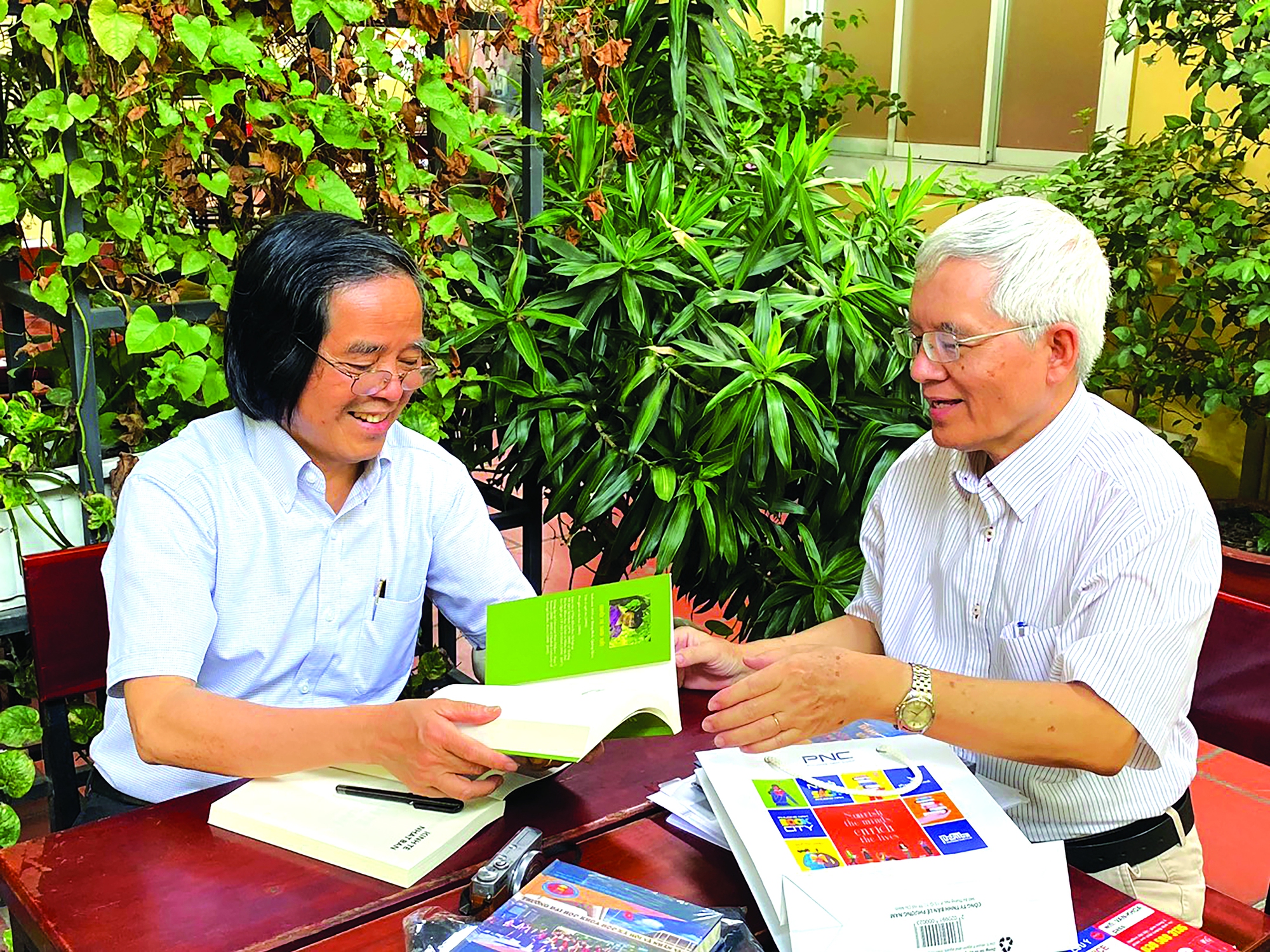
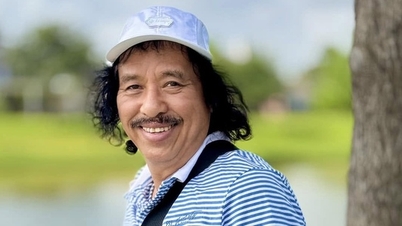
The author (Professor Huynh Nhu Phuong) during a meeting and discussion with Professor Tran Van Tho (on the left) in Ho Chi Minh City. (Photo provided by the author)
In that spirit, Professor Tran Van Tho's opinions on the public and private university systems, the organization of doctoral training and degree awarding, and the selection of academic fields to serve the industrialization strategy are all worth considering.
Reading the books and articles of Professor Tran Van Tho, we can see that the direction in each person's life is both the result of the influence of objective circumstances and the culmination of that person's own qualities, abilities, and aspirations.
According to the author's account, after passing the full high school graduation exam in Philosophy, the young man from Hoi An, Quang Nam, went to Saigon with the intention of studying the preparatory year of Literature at the Faculty of Vietnamese Literature, and then transferring to the University of Education to become a high school teacher. One day, while passing by the gate of the Ministry of National Education on Le Thanh Ton Street, he saw an announcement recruiting students for a scholarship from the Japanese government. He applied, took the exam, and was accepted.
Having arrived in Tokyo in 1968, it was more than half a century later that Professor Tran Van Tho revisited the Faculty of Literature - now the University of Social Sciences and Humanities in Ho Chi Minh City. This is where he had attended literature lectures during his first academic year.
When Professor Tran Van Tho visited his old school, we sat together around a coffee table on the rooftop of the Faculty of Literature, reminiscing about the teachers who have now passed away: Nguyen Khac Hoach, Pham Viet Tuyen, Luu Khon. Most touching was the mention of Professor Huynh Ngoc Hoa, also known as Huynh Phan, his sworn brother who helped Tran Van Tho during his early days at university.
Huynh Phan, the author of the book "The Story of Teacher and Student," organized extensive interviews about educational reform when he was a student at a teacher training college. This is one of my favorite books, which I quoted in an article I wrote in 1972 at Tran Quoc Tuan High School (Quang Ngai) and in my recently published book "Aspirations for Schools."
Like Huynh Phan and Tran Van Tho, Vietnamese students, no matter where they go, always remember the advice of Phan Chau Trinh: "The best thing to do is to study." They study to become better people and to make a humble contribution to society. They may differ in circumstances and age, and may have never met before, yet they meet in shared aspirations, hopes, and ambitions for a humane, liberating education that is both nationalistic and modern.
Like Professor Tran Van Tho, Vietnamese students, no matter where they go, always remember the advice of Phan Chau Trinh: "There is no better way than to study." Study to become a better person and to make a humble contribution to life.
Source: https://nld.com.vn/tam-long-voi-que-huong-ngan-dam-196250122103019153.htm


![[Photo] Prime Minister Pham Minh Chinh holds a phone call with the CEO of Russia's Rosatom Corporation.](/_next/image?url=https%3A%2F%2Fvphoto.vietnam.vn%2Fthumb%2F1200x675%2Fvietnam%2Fresource%2FIMAGE%2F2025%2F12%2F11%2F1765464552365_dsc-5295-jpg.webp&w=3840&q=75)


























































Comment (0)