

Looking back at the 2020-2025 term and looking ahead to the new 2025-2030 term, the role of these four key areas becomes even more apparent.
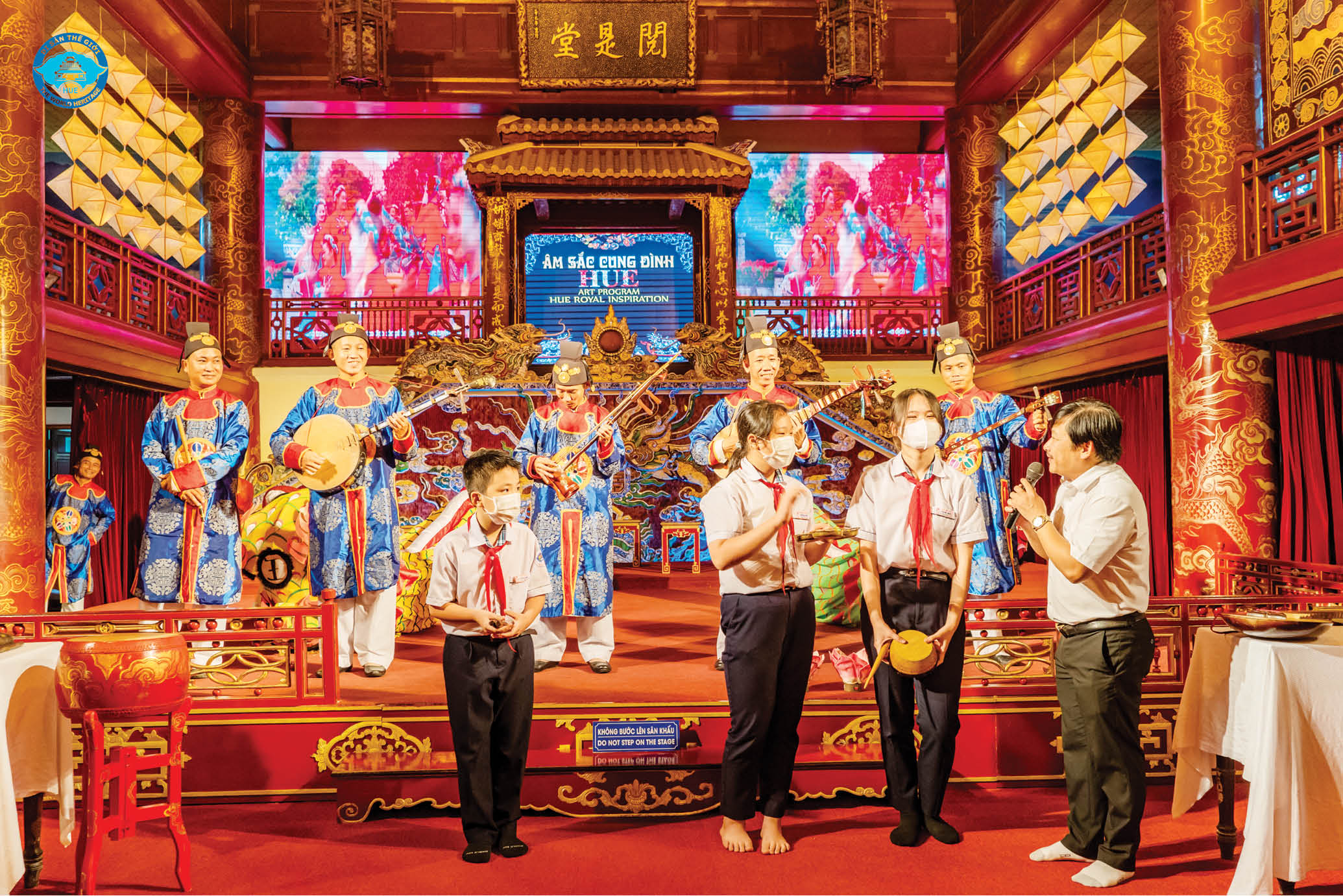 |
| Students participate in activities to learn about Hue's cultural heritage. Photo: Bao Minh |
Culture - Identity and Competitive Advantage
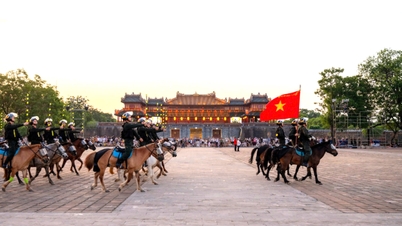
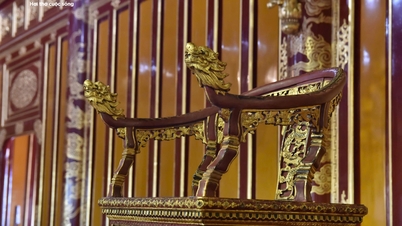
During the period 2020-2025, culture continues to be a fundamental pillar, demonstrated through outstanding achievements: many national and international festivals and events have been successfully organized; heritage preservation work has been systematically implemented; and the cultural space of Hue is gradually expanding and spreading to the community. The brand "Hue - Heritage City, Festival City, Festival City" contributes to enhancing its status and attracting tourists .
However, Hue's cultural value is still primarily exploited in the tourism sector, while its potential for developing cultural industries and the creative economy has not been fully realized. Therefore, in the next term, the orientation is to make culture a driving force for development, linked with creative industries, cuisine, fashion, performing arts, and especially heritage tourism. This requires strong innovation in management mechanisms, investment policies, and exploitation methods, so that culture is not only a "spiritual asset" but also an "economic resource" for Hue.
Healthcare - specialized centers and high-quality services
With its foundation built upon the Hue Central Hospital system, the University of Medicine and Pharmacy, and numerous specialized research facilities, Hue has been asserting its position as one of the country's major medical centers. During the 2020-2025 term, the work of providing healthcare to the people, preventive medicine, and responding to the COVID-19 pandemic demonstrated the leading role of Hue's medical sector. The highly qualified medical staff, combined with increasingly modern facilities, has created strong confidence within the community.
Entering the 2025-2030 period, Hue aims to become a leading center for specialized medical care in the Central and Central Highlands regions, with a vision to reach the Southeast Asian region. This is not only to meet the domestic demand for high-quality medical examination and treatment, but also to capitalize on the development of medical services linked to health tourism – a global trend. Applying digital technology and artificial intelligence in diagnosis, treatment, and hospital management; developing traditional medicine alongside modern medicine; and expanding international cooperation are key directions for Hue to affirm its position as a specialized medical center.
Education and training: the foundation of human resources for development.
If culture is identity and healthcare is a strength, then education and training are the foundation for nurturing and developing high-quality human resources for Hue. During the 2020-2025 term, Hue continues to maintain its position as one of the country's major educational centers, especially in undergraduate and postgraduate training. Educational institutions and universities are increasingly expanding their partnerships, aligning with labor market demands and international integration. Many key sectors such as medicine, information technology, and arts and culture have provided human resources not only for Hue but also for Central Vietnam and the entire country.
In the coming term, the orientation is to build Hue into a center for training high-quality human resources, closely linked to the development strategies of the health, science and technology, tourism, and culture sectors. International cooperation in education, attracting students from many countries, along with building an academic-research-application ecosystem, will help Hue rise to become a "city of knowledge," creating abundant resources for other fields.
Science and Technology: The Driving Force for Breakthroughs in the Digital Age
During the 2020-2025 term, science and technology in Hue, while making progress, has not yet achieved a true breakthrough. Notable successes lie in the implementation of e-government, smart cities, and the application of information technology in administrative management and urban life. Several high-intellectual-content information technology, healthcare, and education products have been developed, laying the foundation for the development of the digital economy.
For the period 2025-2030, Hue identifies science and technology as the foundation and driving force for development. This includes promoting digital transformation, developing digital government, digital society, and digital economy; building an innovative startup ecosystem; closely connecting research institutes, universities, and businesses; and applying high technology in heritage preservation, specialized healthcare, and modern education. All of this will create a leap forward for Hue in the new era. This will also serve as a "tool" for the sustainable and effective development of the other three key areas.
Four sharp points joined together to create synergy.
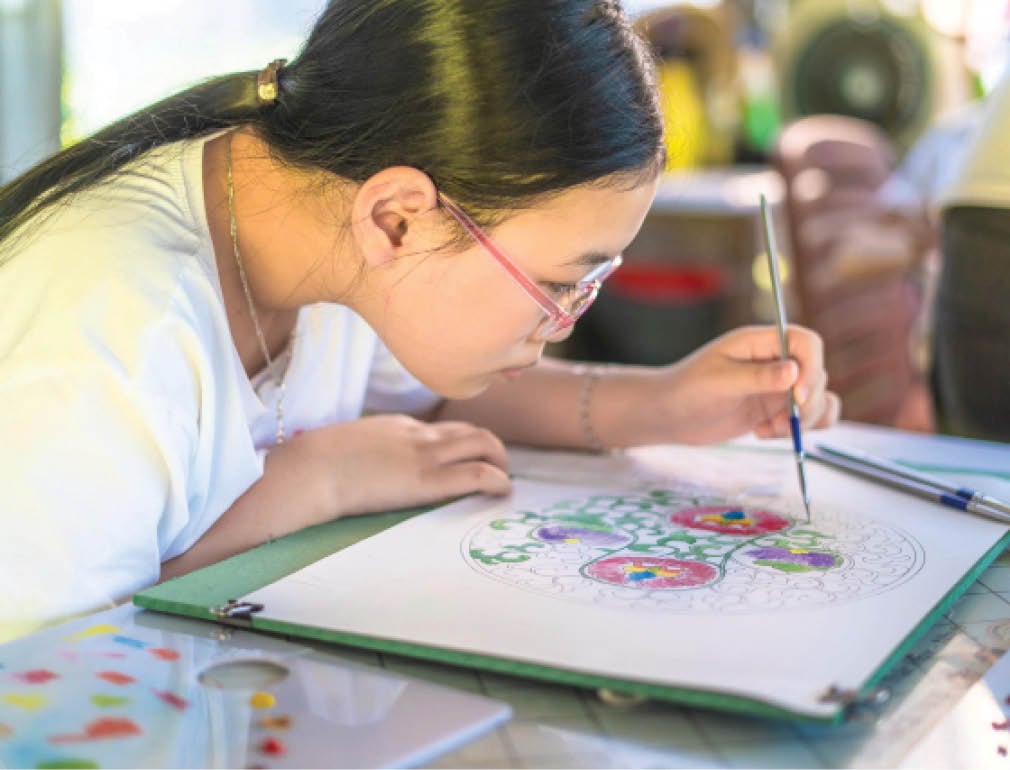 |
| Students participate in activities to learn about Hue's cultural heritage. Photo: Bao Minh |
Notably, the four pillars of Hue's development do not exist in isolation but complement and interact with each other. Culture and heritage can be combined with science and technology for intelligent preservation and exploitation. High-quality healthcare can thrive thanks to digital technology and a highly trained workforce. Education and training provide the workforce for healthcare, technology, and culture. And science and technology are the "key" for all four sectors to operate within an ecosystem of innovation, creativity, and integration.
Solutions to maximize the effectiveness of the four key areas.
For the four key areas to truly become the driving force for development, focus should be placed on several key solutions:
1. Regarding mechanisms and policies: Develop unique and superior mechanisms for Hue in all four areas, creating flexibility in attracting investment, land use, finance, and talent.
2. Regarding human resources: Focus on training and development, while attracting talent from both within and outside the country; prioritize specialized healthcare, international education, and scientific and technological research.
3. Regarding regional and international linkages: Expand cooperation with major centers domestically and internationally, learn from advanced governance models; create a global network of connections.
4. Regarding integrated development: strengthen the linkages between the four key areas, for example: culture linked with technology and tourism, healthcare combined with health tourism, and education alongside applied research.
5. Regarding branding and communication: build the brand "Hue - a center of culture, education, health, science and technology" with national and international reach, creating attraction for investment and integration.
The 2020-2025 term demonstrated Hue's immense potential in developing its four key areas. However, these achievements have essentially remained at the level of "potential and advantages." Moving into the 2025-2030 period, the requirement is to transform these advantages into tangible strengths through superior mechanisms, targeted investments, and innovative approaches. If successful, Hue will not only maintain its status as a "heritage city" but also rise to become a creative urban center, a regional hub for culture, healthcare, education, and technology, contributing to affirming its strategic role in the nation's development as it enters a new era – an era of national progress.
Source: https://huengaynay.vn/van-hoa-nghe-thuat/hue-bon-mui-nhon-phat-trien-trong-tam-nhin-moi-158407.html





































![[Video] Sunset at Lap An Lagoon – Where the sun sets over the fishing nets](https://vphoto.vietnam.vn/thumb/1200x675/vietnam/resource/IMAGE/2026/05/31/1780192137701_beach-landscape-sea-water-nature-grass-745871-pxhere-com.jpeg)

























Comment (0)