

From this requirement, the task "Research on electron beam radiation technology to treat PCBs in used transformer oil to ensure environmental standards and reuse it as fuel oil", code DTĐLCN.69/22, chaired by Dr. Tran Duy Hai and chaired by Ho Chi Minh City University of Natural Resources and Environment, has opened a breakthrough direction.
According to the research team, the core objective of the mission is to determine the mechanism of action of electron beams in the decomposition of PCBs compounds in liquid environment, thereby laying the scientific foundation for the application of radiation technology to treat toxic organic compounds containing chlorine. On that basis, the team has successfully built a technology to thoroughly treat PCBs in transformer oil using electron beam irradiation, which both meets environmental standards and allows the reuse of treated oil as fuel.
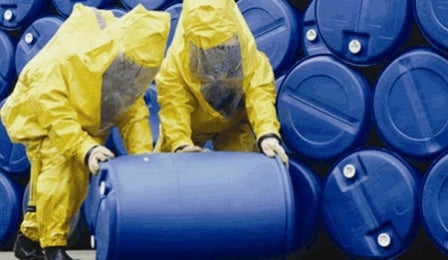
New directions for hazardous waste elimination.
This is the first domestic project to study the mechanism of PCBs separation using electron beam radiation, a technology that has been applied in many other fields but has never been exploited to treat toxic waste containing chlorine. The radiation method brings a series of advantages: The process is carried out under atmospheric temperature and pressure conditions, without the need to create a special reaction environment; the products after decomposition are easy to separate and isolate; in particular, the base oil after treatment can be reused as fuel oil or continued to be exploited for recycling purposes. When PCBs are completely destroyed, the transformer oil after treatment becomes safe, no longer having to be stored or destroyed according to strict procedures as at present. Compared to incineration methods, which potentially pose a risk of creating more toxic compounds, this technology contributes to preventing the risk of secondary emissions, protecting the environment and public health.
Not only is it new, the project also has high practical value. The research results have created a scientific and technical basis for the complete and thorough treatment of PCB-containing transformer oil nationwide. This is an important preparatory step to help the electricity industry and related units choose a safe and effective treatment solution, contributing to helping Vietnam fulfill its international obligations under the Stockholm Convention. In the context of the large amount of PCB-containing transformer oil in Vietnam and the lack of optimal treatment technology, opening up a feasible solution in the country has long-term strategic significance.
In terms of economic efficiency, although the task has only been deployed at the laboratory and pilot scale, the research team estimates the potential benefits when applying the technology to treat the inventory of PCB-containing transformer oil. With the ability to reuse the treated oil as fuel, the recovered value brings clear economic benefits, while reducing the cost of hazardous waste disposal. If the target of using the treated oil as lubricant, cutting oil or even reuse as insulating oil is further expanded, the economic efficiency is expected to be even higher.
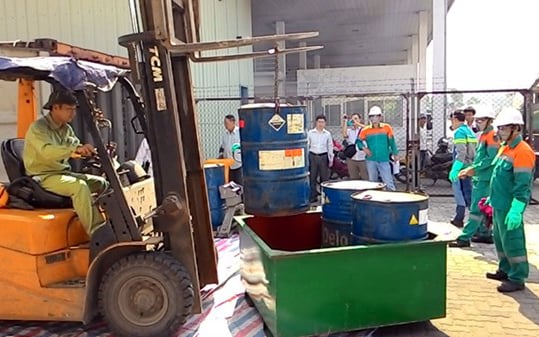
In terms of social and environmental aspects, the implementation of this technology on an industrial scale does not require much labor, but brings sustainable value to Vietnam's development strategy. PCBs are being collected and destroyed as hazardous waste, leading to a waste of non-toxic base oil. Reusing treated oil as commercial fuel not only reduces costs but also contributes to reducing greenhouse gas emissions, in line with the green development goals and the roadmap to achieving "0" net emissions that Vietnam is committed to. At the same time, this technology opens up a clean, thorough treatment solution, minimizing the risk of PCBs spreading into the environment, which is difficult to ensure with current combustion technologies.
With its technological novelty, profound scientific significance and high practical value, the task of DTĐLCN.69/22 is an important step forward in the field of hazardous waste treatment in Vietnam. This is not only a technological solution, but also a strategic contribution to help Vietnam get closer to the goal of eliminating all PCBs before 2028, while promoting the trend of sustainable development in industrial waste management and environmental protection.
Source: https://mst.gov.vn/huong-di-moi-cho-muc-tieu-loai-bo-chat-thai-nguy-hai-197251201093515456.htm


![[Photo] Prime Minister Pham Minh Chinh receives President of Cuba's Latin American News Agency](/_next/image?url=https%3A%2F%2Fvphoto.vietnam.vn%2Fthumb%2F1200x675%2Fvietnam%2Fresource%2FIMAGE%2F2025%2F12%2F01%2F1764569497815_dsc-2890-jpg.webp&w=3840&q=75)
























































Comment (0)