

Located approximately 20km from the center of Hanoi, the Co Loa Ancient Citadel in Co Loa commune, Dong Anh district (Hanoi) is a popular tourist destination. For a long time, it has been a tourist spot rich in historical and literary values, intertwined with many legends of the Vietnamese people.
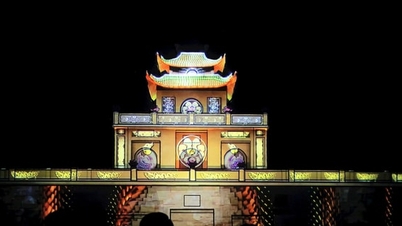
Co Loa was once the capital of the Au Lac state during the reign of King An Duong Vuong (3rd century BC) and of Dai Viet during the reign of Ngo Quyen (10th century). Archaeologists consider the Co Loa citadel to be "the oldest, largest, and most uniquely structured citadel in the history of ancient Vietnamese fortifications." Currently, Co Loa citadel includes unique structures and architecture such as: the An Duong Vuong Temple, the Ngu Trieu Pavilion, the My Chau Shrine, the Ngoc Well, and the statue of General Cao Lo…
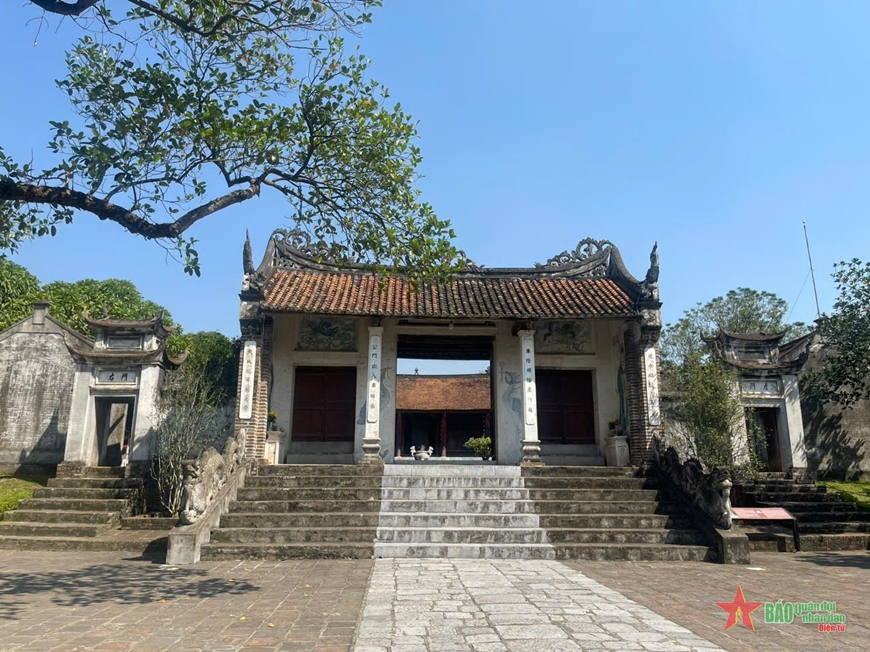
The Co Loa historical site covers approximately 500 hectares. Legend says the citadel consisted of nine spiral walls, hence the name "Snail Citadel" by the local people. Below the outer walls was a deep moat filled with water, only navigable by boats. Due to the ravages of time and war, only three walls remain today, with remnants of the past: the inner citadel, the middle citadel, and the outer citadel.
The outer citadel has a circumference of approximately 8km, built using a method of digging trenches and simultaneously constructing ramparts and fortifications. The ancient ramparts were 4-5m high, with some reaching 8-12m. The middle citadel has a circumference of approximately 6.5km, with a similar structure to the outer citadel but narrower and more fortified. The inner citadel covers an area of approximately 2km² and served as the residence of King An Dương Vương.
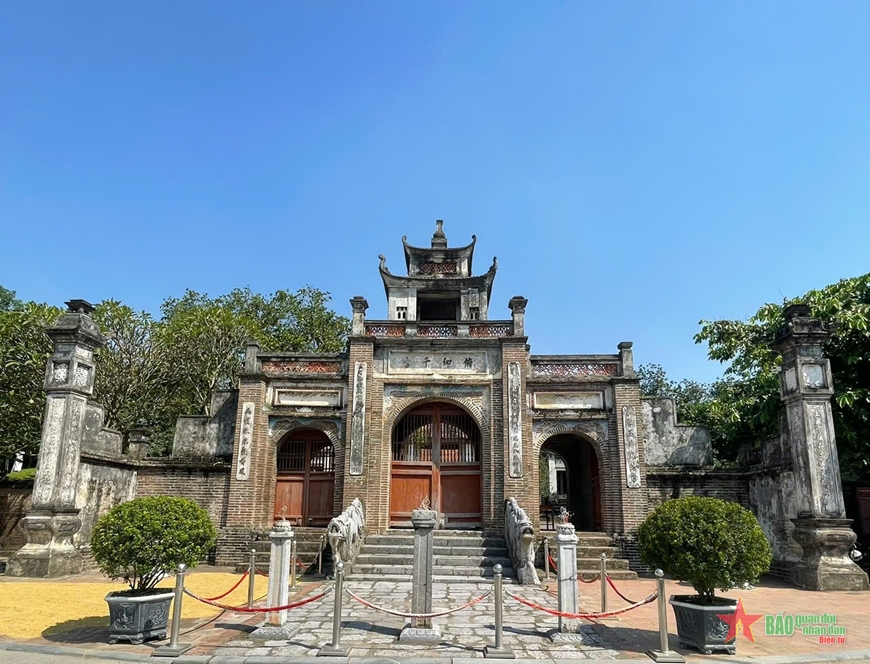
The An Dương Vương Temple, also known as the Upper Temple, is located in the center of the citadel. The temple sits atop a mound shaped like a dragon's head, flanked by forests on either side, with two circular pits below representing the dragon's eyes. Immediately in front of the Upper Temple is a large lake containing the Jade Well – the legendary spot where Trọng Thủy committed suicide. The Jade Well stands out against the clear blue lake water and lush greenery.
Located right behind a thousand-year-old banyan tree that casts shade over a wide courtyard, the tree's trunk splits to form an arched doorway leading to the Lady of the Shrine. Here stands a statue called the My Chau statue - a natural rock formation resembling a headless human figure, hence the villagers call it the My Chau tomb.
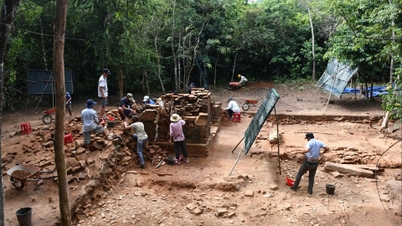
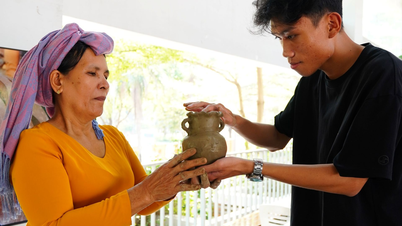
Co Loa Citadel is home to many valuable artifacts, some dating back hundreds of years. Archaeologists have unearthed numerous ancient tombs, bronze axes, bronze drums, tens of thousands of three-edged bronze arrowheads, and arrowhead molds. All of these are preserved here for visitors to freely explore and admire.
Nguyen Minh Van, 21 years old (Long Bien, Hanoi), a student atFPT University, shared her first visit to Co Loa Ancient Citadel: "Stepping through the citadel gate, I felt like I was traveling back in time with legends like 'Thuc Phan An Duong Vuong establishing the capital and building the citadel,' 'The Golden Turtle's magic crossbow,' or the story of My Chau and Trong Thuy… Leaving the citadel gate, I was amazed by a prosperous and civilized rural area, yet still retaining its ancient charm and rich cultural identity."
Unlike the feelings of first-time visitors to Co Loa Ancient Citadel, Pham Thi Phuong Thao, 27 years old (Dong Anh, Hanoi ), said that even though she has visited many times, she still finds it interesting and each time is a different experience, thereby increasing her knowledge about historical and cultural relics, and thus becoming more aware of participating in protecting historical and cultural relics in the place where she lives.
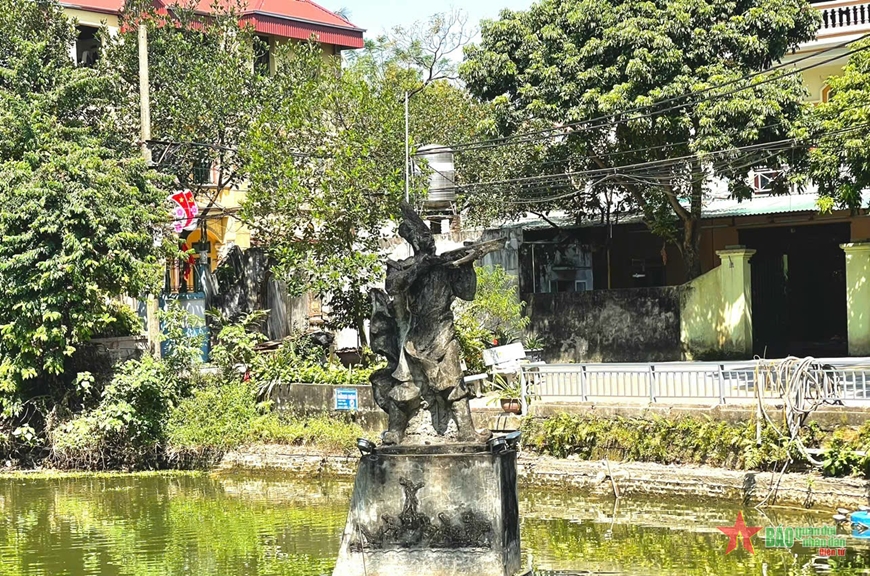
With its profound cultural and historical values and significance, the Co Loa relic site was classified as a national historical and cultural relic by the State in 1962. In 2012, the Co Loa relic site was designated as a special national relic site by the Prime Minister.
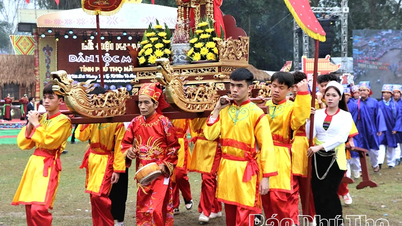
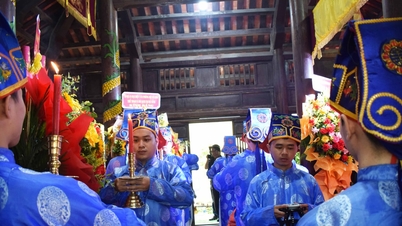
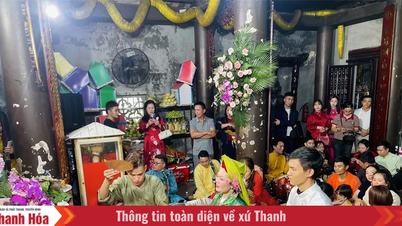
Every year on the 6th day of the first lunar month, the people of Co Loa hold a solemn festival to commemorate those who contributed to the construction of the citadel, especially to express gratitude to An Duong Vuong, the founder of the Au Lac feudal state.
More than just a historical site that has witnessed our country's daily changes and development, Co Loa Citadel is also a symbol of the entire Vietnamese nation, representing its fine traditional values.
According to qdnd.vn
Source: https://baohanam.com.vn/du-lich/kham-pha-di-tich-thanh-co-loa-139539.html

![[Photo] Prime Minister Pham Minh Chinh receives the Chinese Ambassador to Vietnam](https://vphoto.vietnam.vn/thumb/1200x675/vietnam/resource/IMAGE/2026/04/05/1775397481797_ndo_br_dsc-5512-jpg.webp)




































































Comment (0)