

I don't know when it started, but a pair of doves began nesting on the bougainvillea trellis in front of our house. One day, hearing the chirping of their chicks, I followed the sound and discovered their tiny nest hidden among the leaves. My mother told me to let them stay, not to chase them away, that would be a pity. And so, from then on, the little bird family lived with my family.
My mother, whether out of fear of the birds leaving or pity for them struggling to find food, would buy rice and scatter a little in front of the yard every morning before closing the door and watching them through a small gap in the door. Once, I woke up early and caught my mother's strange behavior. Surprised, I asked her what she was doing. She shushed me, telling me to speak softly, lest they startle her. "Who are they?" I wondered, peering through the gap in the door. I saw a pair of doves pecking at the rice while keeping watch. Ah, it turned out to be the pair of birds on the flower trellis. That's all it took for my mother to watch so intently, as if she were watching a musical performance. Old people often have their own unique hobbies that young people like me can't understand. That's my explanation, and I completely forgot about it.
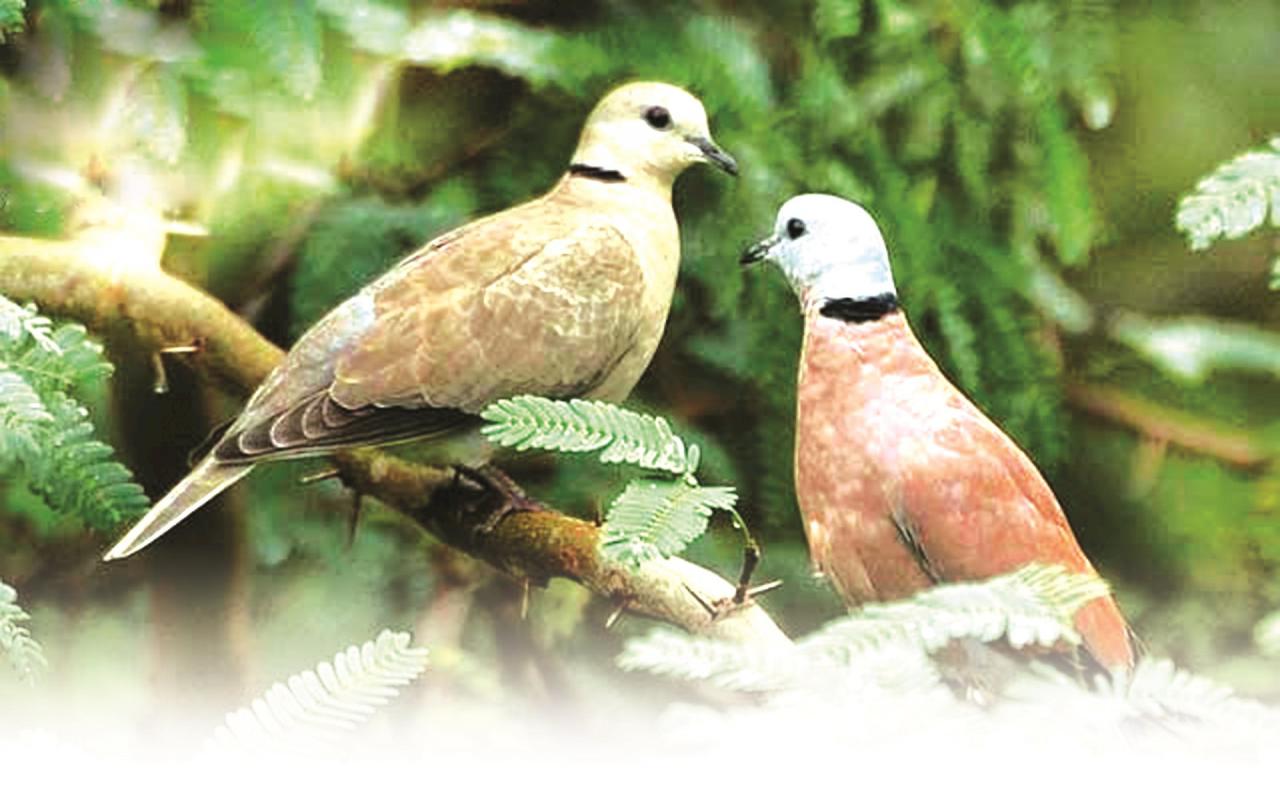
One day, while we were eating, Mom announced that they had a new litter of chicks. I was surprised and asked her, "But I don't remember our Si being pregnant, Mom." Mom glared at me and said, "I wasn't talking about Si, I was talking about those two doves." Ah, so it was the family of birds on the trellis in front of the house. I teased her, "So how many litters have they had, Mom?" To my surprise, she rattled off three litters already. The first litter had two chicks, the next one had three, and she wondered why this one only had one. Maybe she wasn't feeding them enough. Then she mumbled calculations, wondering if she needed to increase their feeding frequency or if they weren't getting enough nutrients and needed to switch to pellet food. I just shook my head, feeling both sorry for Mom being home alone and finding joy in taking care of the birds, and amused that she acted as if those two birds were just pets.
I completely forgot about those two birds again. I tend to forget things I consider unimportant. Besides, I'm busy with work all day, and I don't have the mental capacity to remember such trivial matters. I also completely forgot that my mother is getting older and older. And old people are like yellow leaves on a tree; you never know when they'll fall.
My mother never reminded me that she was getting old.
My mother never demanded anything from me, got angry, or blamed me for anything.
My mother was always smiling, always telling funny stories she'd heard from the neighbors. I felt reassured by her smile. I listened to her stories indifferently, sometimes even secretly thinking how much free time she had. My mother didn't know what I was thinking, or perhaps she knew but chose to ignore it. Old people, when they're no longer healthy, tend to ignore things they don't like to lessen their worries. If you can't find joy, you should ignore sadness, my mother always said.
But my youngest son didn't fully understand the deeper meaning of that saying. He kept burying himself in work, and even at nearly forty, he still hadn't found a daughter-in-law to keep his mother company. He simply thought that having a daughter-in-law wouldn't necessarily bring joy, and he feared that if the two didn't get along, it would only lead to more headaches and arguments. He simply thought that giving his mother money each month for expenses, buying milk, and nutritious food for her was enough. He didn't know that his mother secretly gave the nutritious food to her older siblings because they had many children and were struggling financially; they were too old to eat nutritious food, only the children needed it to grow.
By the time her youngest son understood his mother's loneliness and profound thoughts, she was no longer by his side. Even while lying in her sickbed, she kept reminding her siblings: "Has anyone fed the birds yet? They're starving, poor things." She didn't know that since she fell ill, the two little birds had moved elsewhere. Perhaps they were hungry, or perhaps the house was too noisy with so many people coming and going that they got scared and left. She believed her children's words that they had fed them twice a day as she had instructed. So, before she passed away, she reminded her youngest son to remember to feed the birds for her, "Don't let them starve, poor things."
My son is still engrossed in his work, completely forgetting about our little nest. He only remembers his mother, the delicious meals she cooked. Every time he lights incense at the altar and looks at her photo, he feels sad. Family meals have become less frequent; he often just grabs a quick bite at a restaurant before going home.
It wasn't until he brought his girlfriend home and she mentioned a bird's nest on the trellis, saying she heard the chirping of baby birds, that he suddenly remembered the pair of doves and his mother's warnings. He quickly searched for the small bag of rice his mother kept in the corner of the cupboard. There was still more than half a bag left. He took a handful of rice and scattered it in the yard, then, imitating his mother, closed the door and secretly watched. The two doves, with their bright blue streaks on their wings, swooped down to eat, pecking at the rice while keeping watch. His girlfriend chuckled and whispered, "You have such a strange hobby, don't you?" Only then did he remember thinking about his mother in that way. He remembered her hunched posture and her captivated expression as she watched the birds eat. Tears rolled down his cheeks, and the boy softly called out, "Mom!"
Source


![[Photo] General Secretary To Lam receives the Special Envoy of General Secretary and President of China Xi Jinping](/_next/image?url=https%3A%2F%2Fvphoto.vietnam.vn%2Fthumb%2F1200x675%2Fvietnam%2Fresource%2FIMAGE%2F2026%2F01%2F30%2F1769759383835_a1-bnd-5347-7855-jpg.webp&w=3840&q=75)


![OCOP during Tet season: [Part 3] Ultra-thin rice paper takes off.](/_next/image?url=https%3A%2F%2Fvphoto.vietnam.vn%2Fthumb%2F402x226%2Fvietnam%2Fresource%2FIMAGE%2F2026%2F01%2F28%2F1769562783429_004-194121_651-081010.jpeg&w=3840&q=75)

![OCOP during Tet season: [Part 2] Hoa Thanh incense village glows red.](/_next/image?url=https%3A%2F%2Fvphoto.vietnam.vn%2Fthumb%2F402x226%2Fvietnam%2Fresource%2FIMAGE%2F2026%2F01%2F27%2F1769480573807_505139049_683408031333867_2820052735775418136_n-180643_808-092229.jpeg&w=3840&q=75)


Comment (0)