

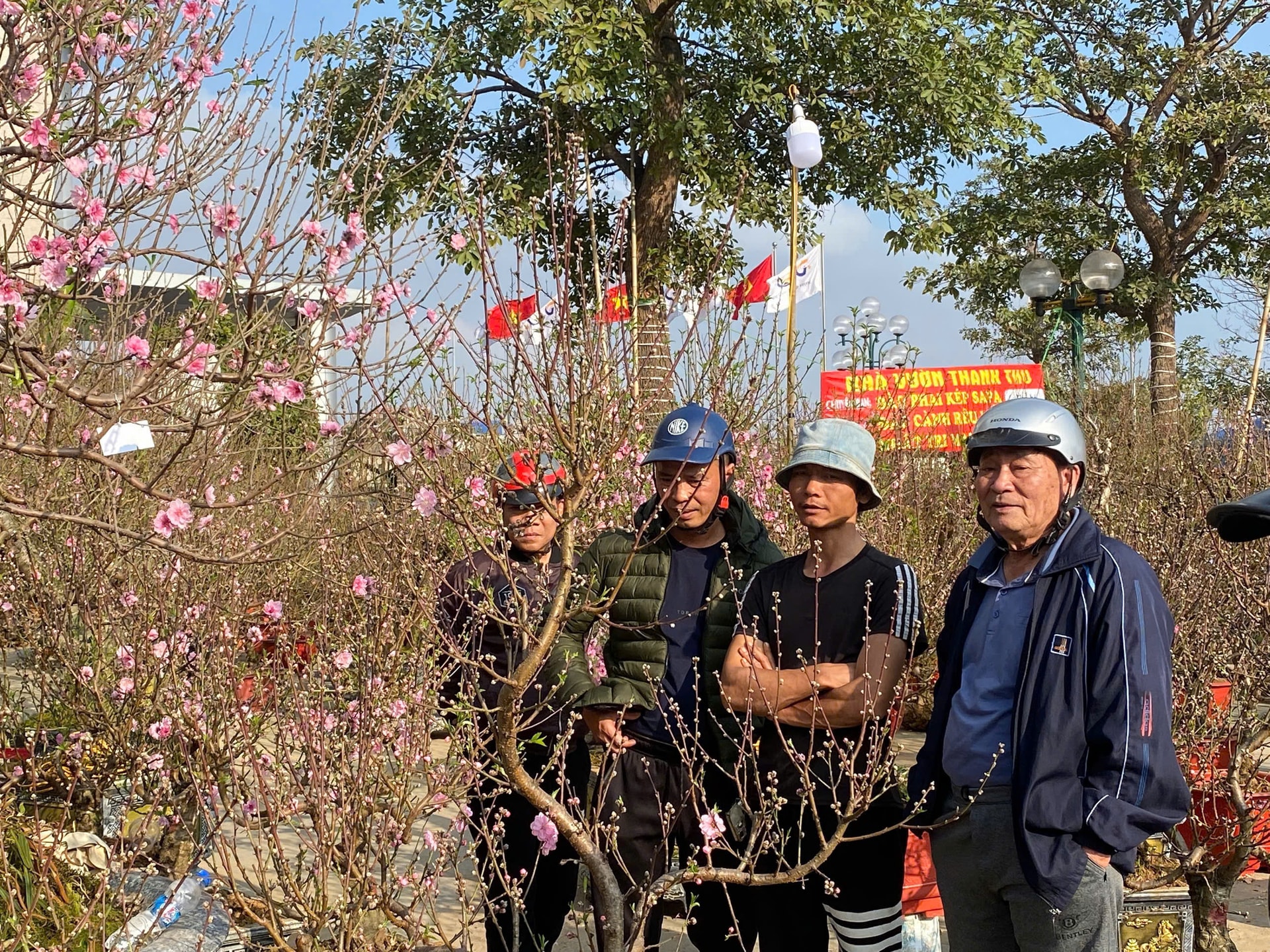
According to the National Center for Meteorological and Hydrological Forecasting, a cold front is currently moving southward in the North. There will be scattered rain in the North, with maximum temperatures generally ranging from 24 to 27 degrees Celsius.
Forecasts indicate that around early morning on February 17th, a cold front will affect the mountainous areas of Northeast Vietnam; from late afternoon and night of February 17th, it will intensify, affecting other areas in Northern Vietnam (except Lai Chau and Dien Bien ), North Central Vietnam, and some areas in Central Vietnam. Winds will shift to the Northeast at level 2-3, and level 3-4 along the coast.
From the night of February 16th to February 19th, Northern Vietnam and North Central Vietnam will experience rain, with scattered light rain. From the night of February 17th to February 19th, Northern Vietnam and Thanh Hoa will be cold, with some mountainous areas experiencing severe cold.
The lowest temperatures are generally 16-19 degrees Celsius, with some mountainous areas experiencing temperatures below 15 degrees Celsius.
In the Hanoi area, there will be scattered light rain from the night of February 16th to 19th; from the night of February 17th to 19th, the weather will be cold. The lowest temperature will be 17-19 degrees Celsius.
Due to the influence of the cold air mass, from early morning on February 17th, the northeast wind in the Gulf of Tonkin will gradually strengthen to level 5, sometimes level 6, gusting to level 7-8, causing rough seas; waves will be 1.5-2.5m high.
In the northern South China Sea (including the Paracel Islands), the northeast wind is force 6, occasionally reaching force 7 in the far northeast, with gusts of force 8-9; the sea is rough; waves are 3-5m high.
From February 18th, the sea area from Lam Dong to Ca Mau and the western part of the South China Sea (including the western part of the Truong Sa special zone) will experience northeasterly winds of force 6, gusting to 7-8, with rough seas; waves will be 2-4m high.
All vessels operating in these areas are affected by strong winds and high waves.
To proactively respond to cold weather and severe cold spells, the National Steering Committee for Civil Defense requests that affected provinces and cities closely monitor meteorological and hydrological warning and forecast bulletins; and promptly inform local authorities and the public to proactively take appropriate preventive measures.
At the same time, review and update plans for responding to severe cold weather; strengthen guidance on ensuring the health of the people, especially the elderly, children, and students in boarding schools. The Steering Committee particularly noted that charcoal stoves should not be used for heating in enclosed rooms to avoid the risk of gas poisoning and explosions causing casualties.
In addition, localities need to strengthen propaganda and guidance for livestock farmers to reinforce and protect their barns; proactively stockpile feed, keep livestock warm, and prevent diseases. For agricultural production, farmers should be guided to implement measures to ensure the safety of rice, vegetables, and other crops, minimizing damage caused by severe cold weather.
Regarding strong winds at sea, coastal provinces and cities need to closely monitor weather developments and promptly inform captains, vessel owners, and ships operating at sea so they can proactively take preventive measures and adjust production plans accordingly; ensuring the safety of people and property. At the same time, they should maintain regular communication to promptly handle any adverse situations that may arise.
PVSource: https://baohaiphong.vn/mien-bac-sap-don-dot-ret-moi-535851.html

![[Photo] General Secretary and President To Lam presides over the meeting to approve the draft report on the results of the second inspection by the Politburo of the Standing Committee of the Hanoi City Party Committee.](https://vphoto.vietnam.vn/thumb/1200x675/vietnam/resource/IMAGE/2026/05/26/1779789811432_a2-bnd-4430-9620-jpg.webp)




















































































Comment (0)