

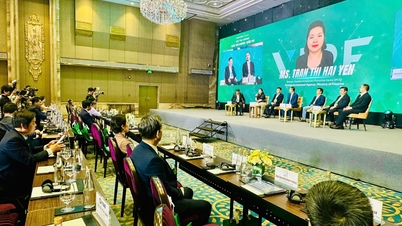
The information was shared by representatives of foreign investors at the 2025 Investment Legal Support Forum with the theme "Investment in Industrial Park Infrastructure Development: Update on Regulations and Implementation Recommendations", organized by the Ho Chi Minh City Investment and Trade Promotion Center (ITPC) in coordination with the Vietnam International Arbitration Center (VIAC) on November 21.
Diversify investment forms in industrial parks
Mr. Seck Yee Chung, Vice President of the Singapore Business Association in Vietnam (SingCham Vietnam), said that Singaporean enterprises are currently participating in the industrial real estate sector flexibly in both forms: direct investment in infrastructure development and land lease to implement projects. However, this depends on the enterprise's strategy when expanding operations in Vietnam.
 |
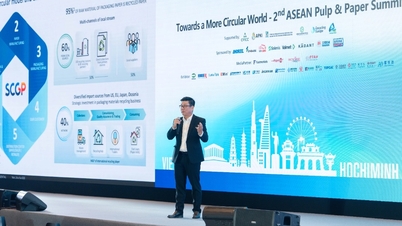
| Foreign investors share at the Forum. |
Analyzing further, he said that the form of direct investment brings many long-term advantages thanks to the strong incentive policies of the Government , in which VSIP - a joint venture model with state-owned enterprises - is often mentioned as a typical model and is clearly supported.
In addition, the opportunity to develop integrated real estate components in industrial parks, aiming at developing multifunctional urban areas, which is the strength of Singaporean enterprises, has also become more attractive in the eyes of investors.
Representative of the Australian Chamber of Commerce in Vietnam (AusCham Vietnam), Mr. Sam Conroy, Chairman of AusCham Vietnam, saw similarities between Australian and Singaporean investors.
Australian businesses prioritize models that offer high control and transparency, of which the 100% FDI model is the main choice. In addition, integrated industrial - urban - service zones are also highly appreciated by Australian investors as the demand for support services is increasing.
AusCham Vietnam representative also said that there is a group of Australian businesses that are starting to show interest in the public-private partnership model under BOT contracts in port infrastructure and logistics projects, showing an expansion in the investment portfolio, in line with the Vietnam Marine Economic Development Strategy to 2030, vision 2045, opening up great potential for exports and employment.
There are still many barriers to overcome.
At the Forum, representatives of foreign investors also raised difficulties in implementing investment projects in industrial park infrastructure in Vietnam. According to Mr. Seck Yee Chung, legal procedures are still quite complicated, time-consuming and lack of connectivity between agencies still makes it difficult for investors.
Meanwhile, if land or infrastructure is leased, it means that the complex legal procedures have been completed by the industrial park investor, and the project implementation time will be shortened. Combined with the existing infrastructure and industrial park ecosystem, this form will be especially suitable for small and medium-sized manufacturing enterprises.
However, investors will depend significantly on the operating capacity of the industrial park owner and face risks regarding the lease term, especially when the contract expiration date coincides with the land use term of the entire industrial park.
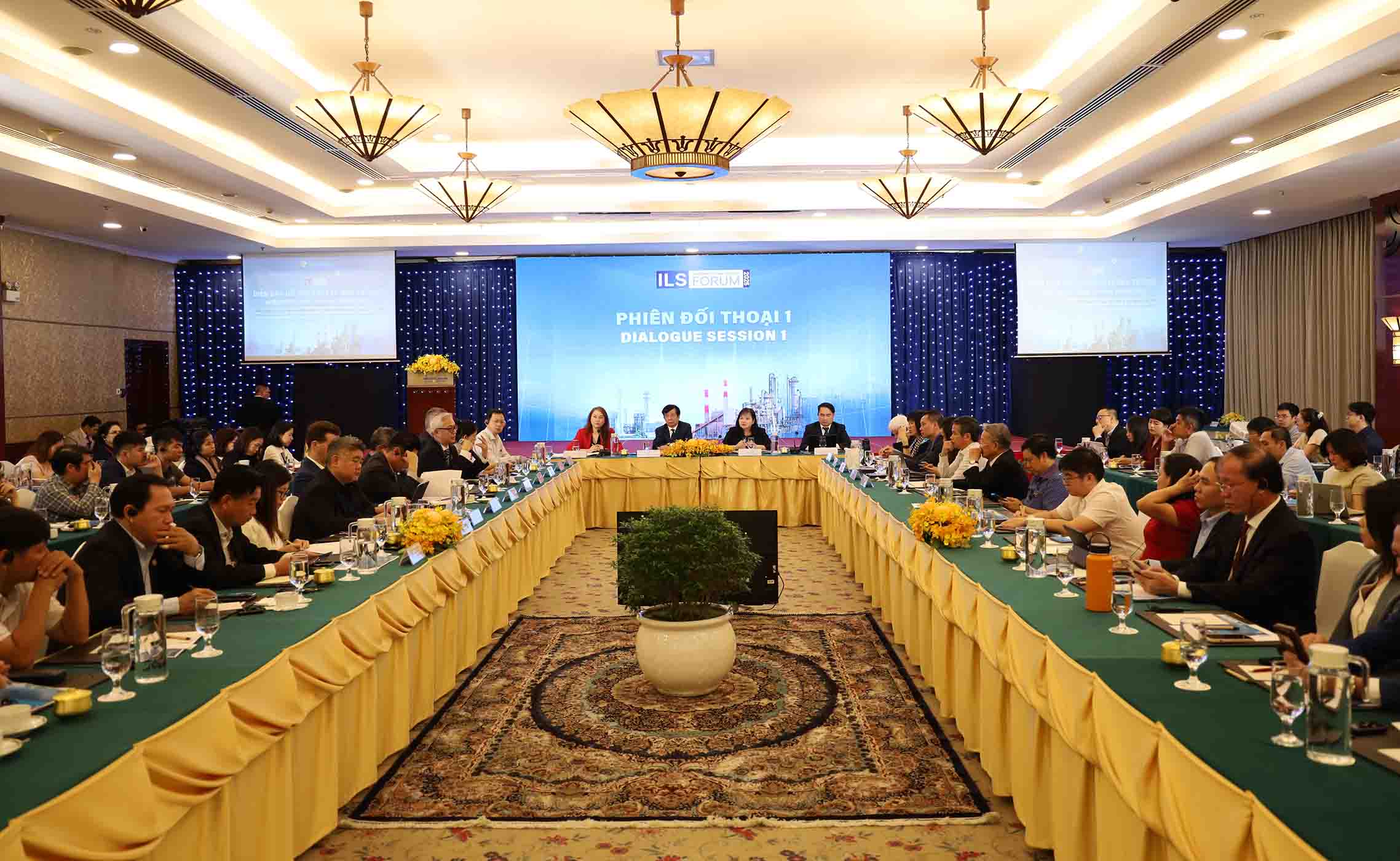 |
| Experts believe that industrial real estate still has many development prospects, but to effectively exploit this segment, agencies, organizations, investors, businesses, etc. need to closely coordinate and support each other. |
Sharing the same view, Mr. Sam Conroy said that legal and administrative shortcomings are the biggest challenges for foreign investors when participating in industrial park projects.
The lengthy permitting process, involving multiple agencies and sometimes varying interpretations of regulations, leads to a lack of predictability and increases the cost of waiting for projects. A lack of suitable land, particularly for specialised manufacturing industries such as maritime, prevents many Australian businesses from expanding or growing strategically, reducing their attractiveness to long-term investors.
In addition, limitations in technical infrastructure and logistics connectivity, which are particularly important for export manufacturing enterprises, increase operating costs and reduce competitiveness.
Through her experience working with investors in industrial park infrastructure investment projects, Lawyer Ngo Thi Van Quynh, Managing Attorney of AN Legal Law Firm, also pointed out a number of issues that businesses need to pay special attention to before deciding to invest.
She said that the subjects leasing land in industrial parks, in addition to investors implementing production projects, also include real estate investors (building factories for rent, warehouse services, and goods storage).
Therefore, leasing land in industrial parks may encounter risks related to the issue of information unification in industrial park land records. This leads to cases where investors are denied procedures even though they have been approved in principle by the infrastructure investor.
In addition, many investors who pay rent at once mistakenly believe that the land is "safe", while in fact the local management agency still has the right to reclaim it if the progress does not meet requirements.
The process of transferring land lease rights in industrial parks, although the new law allows in some cases, the implementation still requires the participation of the infrastructure investor and must be carried out through the termination procedure - re-signing the lease contract, instead of applying a normal transfer contract.
Therefore, Lawyer Quynh recommends that investors need to carefully review information on planning - environment - project progress synchronization from the beginning. At the same time, work closely with infrastructure investors and management agencies to limit legal risks throughout the project life cycle.
According to Prof. Dr. Le Hong Hanh, Chairman of the Vietnam International Arbitration Center (VIAC), industrial parks and export processing zones have always been an important driving force for economic growth. In Ho Chi Minh City, the merger of three major cities and provinces is expected to help the city possess many favorable conditions to develop and upgrade the industrial park system.
However, in reality, projects still face many obstacles, especially in legal issues. In addition to common bottlenecks in investment mechanisms and procedures, legal problems also come from transactions between project participants.
These bottlenecks often result in disputes, causing investors to suffer unnecessary losses and reducing the attractiveness of industrial real estate projects.
Mr. Hanh believes that industrial real estate still has many development prospects, but to effectively exploit this segment, agencies, organizations, investors, businesses, etc. need to closely coordinate and support each other.
Source: https://baodautu.vn/mo-hinh-khu-cong-nghiep---do-thi---dich-vu-hap-dan-nha-dau-tu-uc-singapore-d438652.html











































































Comment (0)