

 |
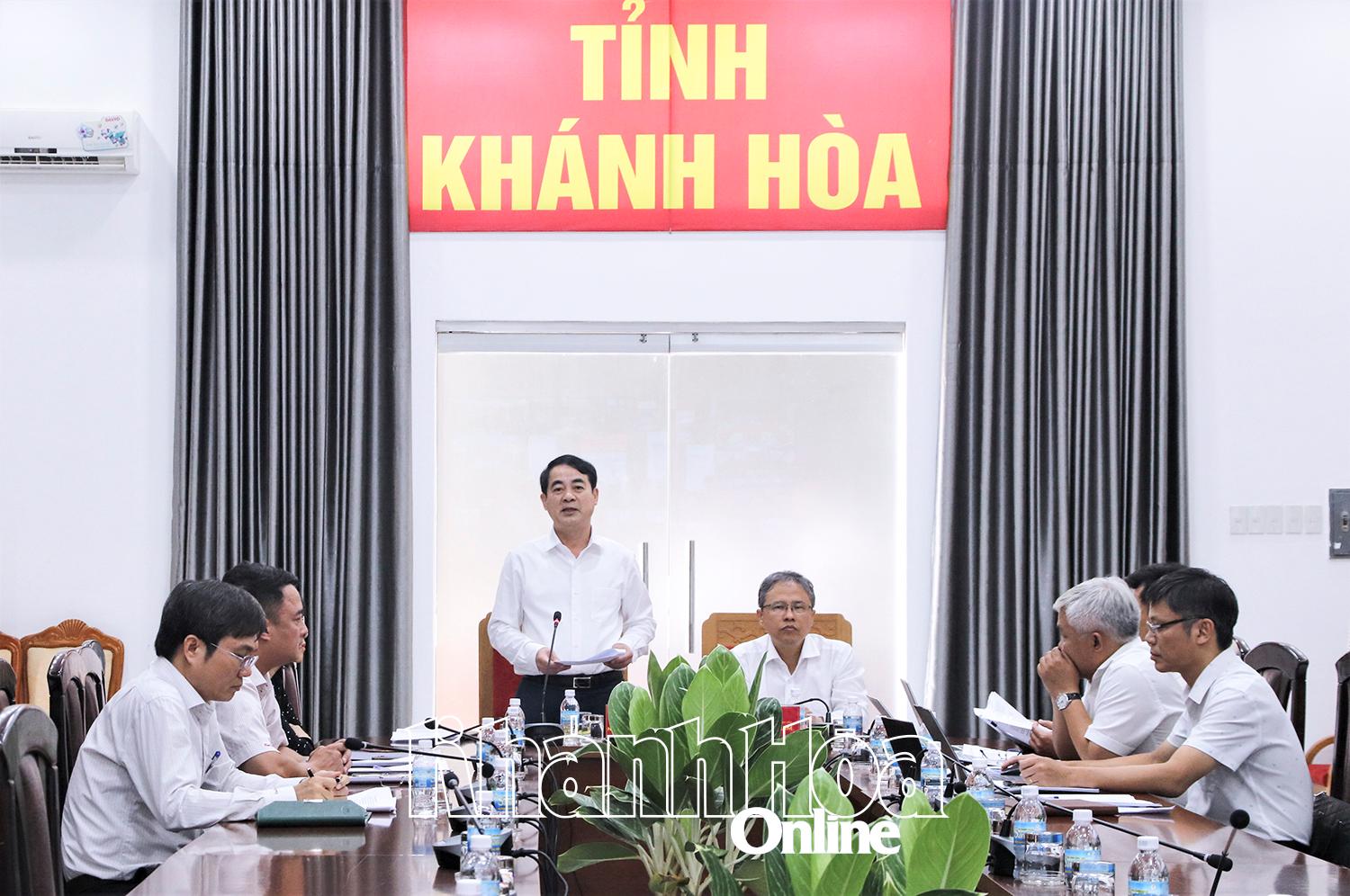
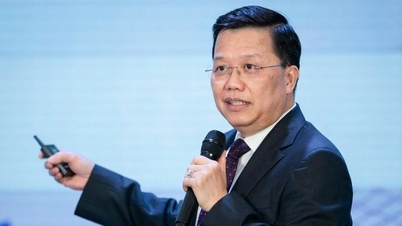
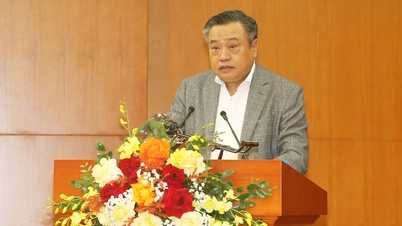
| Provincial Party Secretary Nghiêm Xuân Thành delivered a speech at the Khánh Hòa branch. |
There are still difficulties and obstacles.
Over the three years since the implementation of Resolution No. 18, Party committees, Party organizations, and government agencies at all levels have issued plans and organized comprehensive dissemination and institutionalization of the resolution's viewpoints and orientations. In particular, the 2024 Land Law and its implementing regulations have fundamentally institutionalized the resolution's contents, bringing about many positive impacts, creating a clearer legal basis, minimizing overlaps and inadequacies in land management; promptly resolving and addressing difficulties and obstacles in practice and the requirements of the development process; enhancing the efficiency of land resource use and management; promoting sustainable socio -economic development; and better protecting the rights of the people.
In Khanh Hoa province, after three years of implementing Resolution No. 18, the Party committees, government, Fatherland Front, and political and social organizations have focused on leading, directing, and organizing the implementation of the tasks and solutions outlined in the resolution in a decisive, synchronized, and effective manner; fundamentally reforming and improving the effectiveness and efficiency of land management and use; contributing to attracting investment and creating momentum and leverage for the province's socio-economic development.
However, during the implementation of land acquisition, compensation, support, and resettlement; land allocation, land leasing, and land-use conversion; land use planning and development; land valuation, and land finance, etc., there are still some difficulties and obstacles that need to be amended and supplemented to suit the practical situation at the grassroots level. Although Resolution No. 18 has been institutionalized by the provisions of the 2024 Land Law, the legal system is still being adjusted and changed in many areas, lacking uniformity in application. Speaking at the Khanh Hoa branch, Provincial Party Secretary Nghiem Xuan Thanh said: “ Many projects are implemented through various legal stages but lack clear transitional regulations, causing confusion for localities; prolonging the time, creating additional procedures, and slowing down project progress,... In particular, recently there have been quite a number of violations related to land.”
It needs to be revised to suit current practices.
At the conference, representatives from central ministries and agencies, as well as provinces and cities, discussed many related issues, focusing on difficulties, limitations, and obstacles. Based on this, they proposed amendments to some provisions to suit the current situation. Accordingly, suggestions included allowing investors to acquire land use rights or currently possess land use rights to implement socio-economic development projects without distinction between project types; allowing land acquisition before approving compensation, support, and resettlement plans; ensuring that those whose land is acquired has been provided with temporary housing for those whose land is acquired; and ensuring that the land compensation price for those whose land is acquired and the land price for resettlement are equal and consistent in their application, as determined by the State.
Speaking at the Khánh Hòa branch, Provincial Party Secretary Nghiêm Xuân Thành proposed amendments to the 2024 Land Law regarding the following: Reducing the emphasis on land allocation and leasing through auctions for land use rights and bidding to select investors for land-use projects; expanding the scope of land allocation without auctions, especially for households and individuals without housing or land; and selecting land lease payment methods that suit the needs of investors. He also proposed adding cases where the State can reclaim land regardless of investment capital; prioritizing land reclamation to prepare clean land for investment projects, especially urgent and key projects; and ensuring that land prices are determined by the State but still take into account market prices and prices proposed by consulting firms. The adjustment rate and tax rates for various types and forms of business of organizations will be applied simultaneously with the application of the land price list, aiming to regulate the added value from land and encourage investment in land-use projects. Provincial Party Secretary Nghiem Xuan Thanh proposed accelerating the construction and operation of a unified, interconnected national land database, reforming administrative procedures; and establishing effective mechanisms to handle projects that are behind schedule, projects that have been stalled for a long time due to legal procedural obstacles, and projects that have received inspection, audit, or legally binding judgments, in order to unlock land resources and avoid waste...
Concluding the conference, Deputy Prime Minister Tran Hong Ha requested that the drafting agencies incorporate the opinions of ministries, sectors, and localities to further supplement and refine land policies and laws, contributing to improving the effectiveness and efficiency of land management in the future. At the same time, he urged the completion of land-related institutions, policies, and laws; the development of policies on land use fee exemptions and reductions that are appropriate to the actual conditions and investment attraction needs of each locality; the refinement of legal regulations related to inspection, examination, and resolution of land disputes and complaints, in line with the two-tiered local government model; and the addition of cases where the State can reclaim land regardless of investment capital sources, with land reclamation preceding the project to prepare a clean site for investment projects, especially urgent and key projects.
DINH LAM
Source: https://baokhanhhoa.vn/xa-hoi/202506/nang-cao-hieu-qua-quan-ly-va-su-dung-dat-31d0e33/






































































Comment (0)