

PV: Could you please tell us about the causes and current situation of drought and saltwater intrusion in Nghe An province?
Mr. Nguyen Truong Thanh:
In the last 4 to 5 years, the weather has been extremely complex, with prolonged periods of intense heat, summer temperatures commonly ranging from 37 to 40 ° C, and in some places exceeding 40 ° C, with strong southwest winds. Water levels on the Lam River have dropped significantly. As a result, some pumping stations drawing water from the Lam River have been unable to operate at times; water levels in reservoirs have also decreased rapidly.
In addition, due to the long-standing age of many irrigation infrastructure projects, some have deteriorated, are not synchronized, and do not meet the water supply requirements during the dry season.
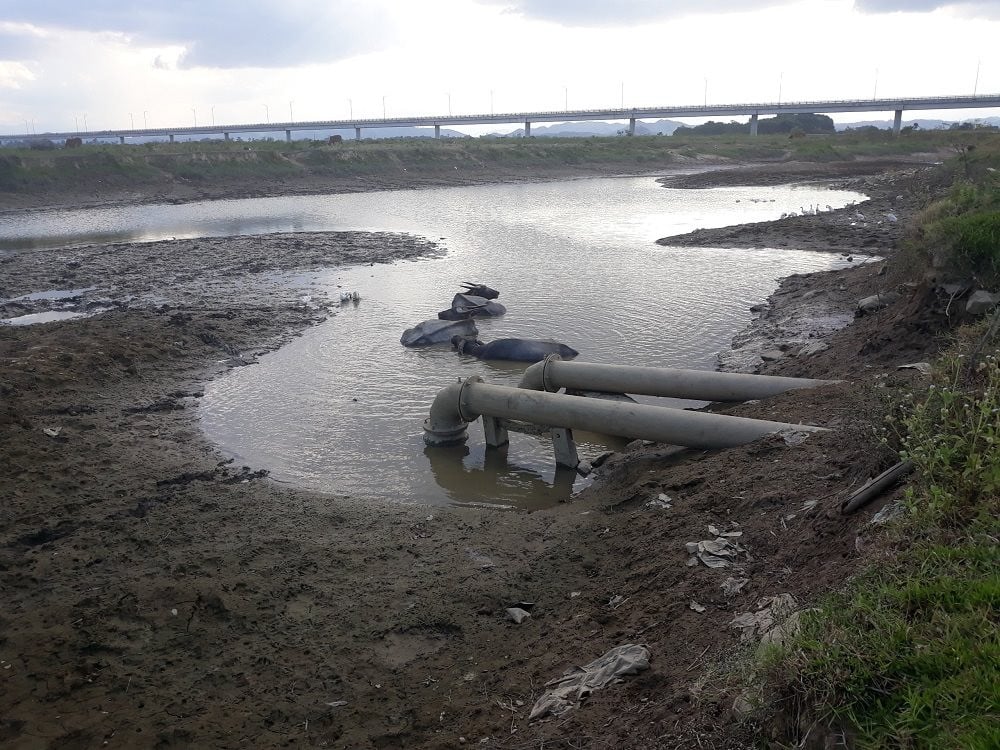
According to the National Center for Hydro-Meteorological Forecasting, the El Nino phenomenon (warm phase) is likely to occur in the latter half of summer 2023 with a probability of about 80-85%; In June 2023, the average temperature is generally 0.5 ° C higher than the multi-year average; from July to September 2023, the temperature is generally 0.5-1.0 ° C higher than the multi-year average. The inflow to the Ban Ve hydropower reservoir tends to be 35-38% lower than the multi-year average.
Therefore, water shortages for agricultural production (especially during the summer-autumn crop season) and for daily life may occur early and on a large scale; at the same time, with low water levels in the fields, the risk of saltwater intrusion into the inland areas of the delta is very high.
PV: What is the extent of the impact of this situation?
Mr. Nguyen Truong Thanh:
Given the current water situation, the water levels in Ban Ve Reservoir and Lam River are very low, and water levels in other reservoirs are low and decreasing rapidly. Therefore, there is a risk of water shortage and drought occurring early and on a large scale (especially in high-lying areas, at the end of canals and irrigation systems, and in small reservoirs).
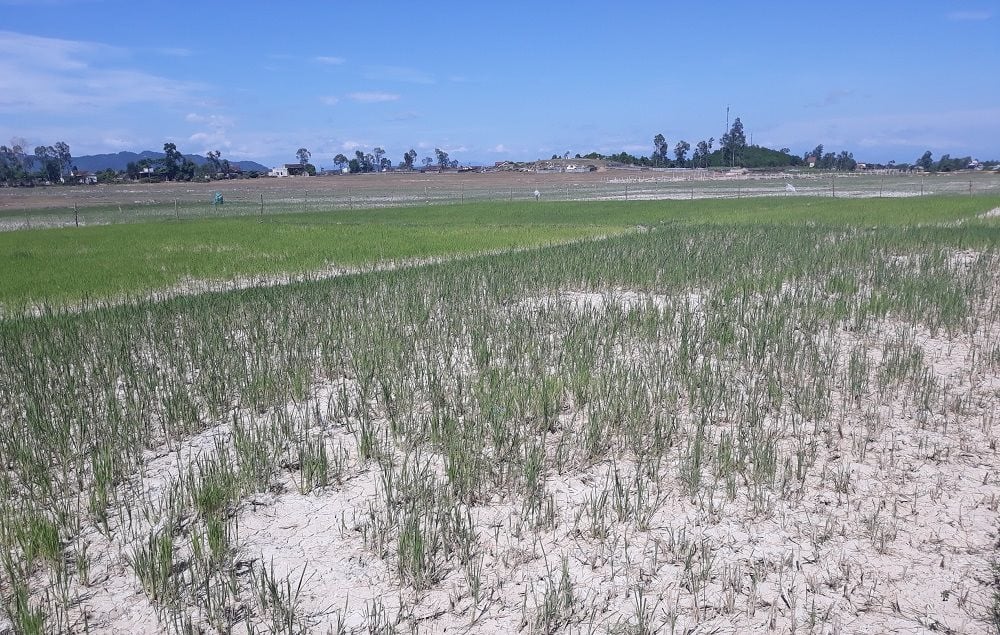
PV: What is the current status of reservoirs and dams in Nghe An province? Will they be sufficient to meet domestic needs and provide irrigation for agriculture this year?
Mr. Nguyen Truong Thanh:
Currently, the storage capacity of irrigation and hydropower reservoirs is low, with many reservoirs having current water levels lower than their design levels, specifically:
By the end of May 2023: There were 102 reservoirs and dams managed by enterprises: of which 75 had a capacity exceeding 50% of WTK (compared to 89 in the same period of 2022); 27 had a capacity below 50% of WTK (compared to 13 in the same period of 2022); over 959 small reservoirs managed by communes and cooperatives, of which 625 had a capacity exceeding 50% of WTK; the remaining reservoirs had a capacity below 50% WTK.
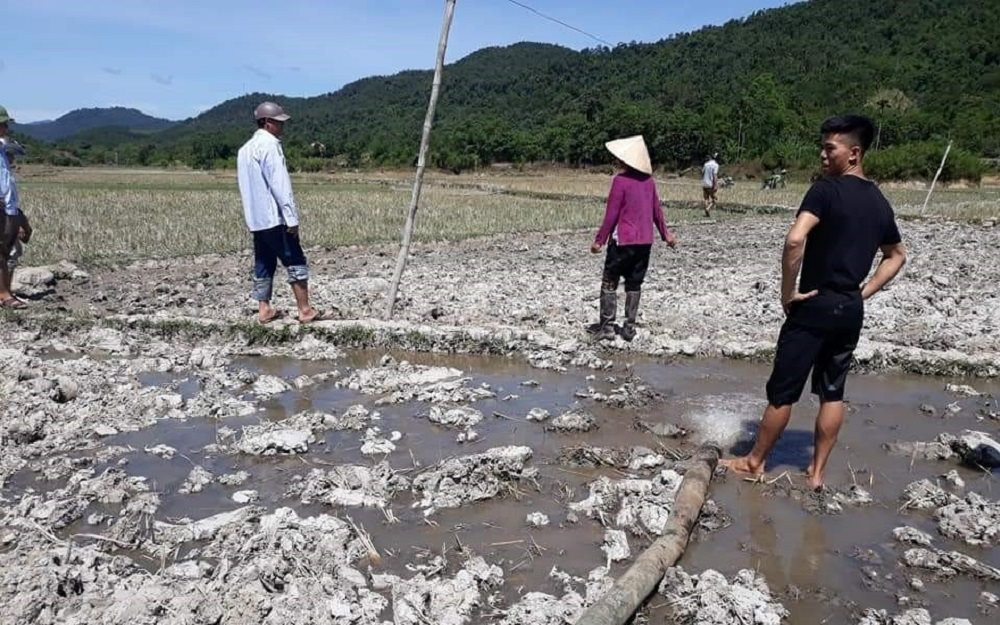
At 7:00 AM on May 22, 2023: The upstream water level of Ban Ve Reservoir was 164.0m (scheduled 176.0m)/200m; the current capacity was 635.4 million m³ of water, reaching less than 34.6% of the designed capacity (corresponding to a usable capacity of 183.8 million m³ ); the inflow into the reservoir was 29.0 m³ /s; 12.0m lower than the lowest water level stipulated in Appendix III - Decision No. 1605/QD-TTg of the Prime Minister , corresponding to a water deficit of 308.42 million m³ . (From May 21 to May 31: The reservoir water level ranged from 176.0m to 179m).
Given the current water situation and unfavorable weather forecasts, if there is no additional rainfall in the coming months of the 2023 dry season, the water level of the Lam River will tend to decrease; the water level of the Ban Ve reservoir will drop very low, potentially leading to water shortages, drought, and saltwater intrusion, causing difficulties for agricultural production during the Summer-Autumn and Monsoon seasons.
PV: So, what solutions has Nghe An province implemented to mitigate damage caused by drought and saltwater intrusion? Especially regarding the restructuring of crop patterns to adapt to climate change?
Mr. Nguyen Truong Thanh:
We always pursue two solutions simultaneously: non-construction solutions and construction solutions.
For non-structural solutions, it is necessary to review the water resource situation; develop drought-resistant irrigation plans for each region and each project, and implement them when drought and water shortages occur; arrange production structures to suit water availability, avoiding planting in areas where water supply cannot be guaranteed throughout the entire production season.
Coordinate and work with the Bản Vẽ, Khe Bố, and Chi Khê hydropower companies to ensure water release meets the needs of downstream production and daily life; strictly manage water resources, prevent leakage and loss, and use water economically and efficiently; increase the use of advanced, water-saving irrigation methods for rice and dryland crops;

Focus on drawing water into the system when hydroelectric reservoirs release water to increase water supply; utilize swamps, ponds, lakes, stagnant rivers, and large main canals to store water in the fields; organize the management and operation of irrigation systems and works appropriately and economically.
Regarding engineering solutions, it can be said that the irrigation system in Nghe An province, having been invested in and built over many periods, has deteriorated (especially medium and small-scale reservoirs and dams). With limited resources for maintenance and repair, water storage capacity has not met requirements, and given the current unpredictable weather conditions, investment in repair and upgrading is urgently needed.
Regarding immediate solutions, it is necessary to organize the dredging of the canal system, water intake gates, and suction basins of irrigation pumping stations to ensure water flow and unobstructed access from the source to the fields, utilizing all available water sources for production; installing temporary pumping stations; maintaining machinery and equipment, and ensuring readiness for operation to combat drought; and replacing dilapidated pumping stations.
For long-term solutions, focus on repairing and upgrading pumping stations along the Lam River; for dams and reservoirs, repair and upgrade 120 reservoirs throughout the province; build dams on the Lam River to prevent saltwater intrusion and store freshwater to supply water to the downstream Ca River.
Thank you very much, sir!
Source
![[Image] The tenacious fighting spirit of Vietnamese women's football](/_next/image?url=https%3A%2F%2Fvphoto.vietnam.vn%2Fthumb%2F1200x675%2Fvietnam%2Fresource%2FIMAGE%2F2025%2F12%2F17%2F1765990260956_ndo_br_4224760955870434771-copy-jpg.webp&w=3840&q=75)
![[Photo] Prime Minister Pham Minh Chinh receives Lao Minister of Education and Sports Thongsalith Mangnormek](/_next/image?url=https%3A%2F%2Fvphoto.vietnam.vn%2Fthumb%2F1200x675%2Fvietnam%2Fresource%2FIMAGE%2F2025%2F12%2F16%2F1765876834721_dsc-7519-jpg.webp&w=3840&q=75)
![[Image] Leaked images ahead of the 2025 Community Action Awards gala.](/_next/image?url=https%3A%2F%2Fvphoto.vietnam.vn%2Fthumb%2F1200x675%2Fvietnam%2Fresource%2FIMAGE%2F2025%2F12%2F16%2F1765882828720_ndo_br_thiet-ke-chua-co-ten-45-png.webp&w=3840&q=75)

![[Live] 2025 Community Action Awards Gala](/_next/image?url=https%3A%2F%2Fvphoto.vietnam.vn%2Fthumb%2F1200x675%2Fvietnam%2Fresource%2FIMAGE%2F2025%2F12%2F16%2F1765899631650_ndo_tr_z7334013144784-9f9fe10a6d63584c85aff40f2957c250-jpg.webp&w=3840&q=75)
![[Photo] Prime Minister Pham Minh Chinh receives the Governor of Tochigi Province (Japan)](/_next/image?url=https%3A%2F%2Fvphoto.vietnam.vn%2Fthumb%2F1200x675%2Fvietnam%2Fresource%2FIMAGE%2F2025%2F12%2F16%2F1765892133176_dsc-8082-6425-jpg.webp&w=3840&q=75)






















































![[Live] Closing Ceremony and Award Presentation for the "Impressive Vietnam Tourism" Video/Clip Creation Contest 2025](https://vphoto.vietnam.vn/thumb/402x226/vietnam/resource/IMAGE/2025/12/17/1765974650260_z7273498850699-00d2fd6b0972cb39494cfa2559bf85ac-1765959338756946072104-627-0-1338-1138-crop-1765959347256801551121.jpeg)




















Comment (0)