

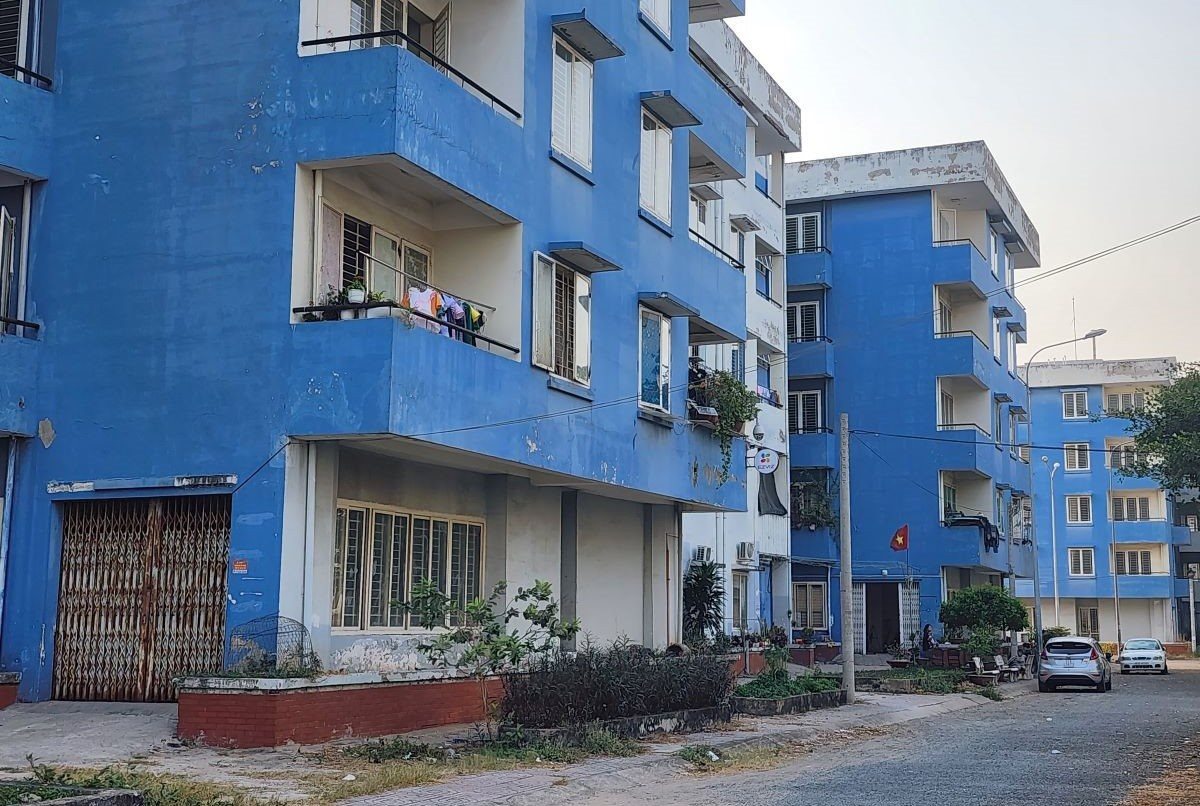
The Vinh Loc B resettlement area (Binh Chanh district) covers more than 30 hectares, comprising 45 apartment blocks with nearly 2,000 apartments and 559 land plots. It was officially put into use in 2011 with the purpose of housing thousands of households displaced by the Tham Luong canal area and other urban renovation programs of Ho Chi Minh City. However, to date, this resettlement area remains sparsely populated. Currently, the area is increasingly deteriorating and showing signs of subsidence and wall cracks. Many residents explain this phenomenon by citing not only the substandard construction quality but also the fact that the resettlement area is far from the city center, with inconvenient transportation affecting their livelihoods, making many people hesitant to live there.
Ms. Hang's family, who have lived in the Vinh Loc B resettlement area for over three years, are facing hardship due to their inability to find employment. Ms. Hang opened a small eatery and beverage stall, but it only lasted a short time before she had to close it down due to a lack of customers. Similarly, Ms. Loan's family is also subject to relocation for the Tham Luong - Ben Cat - Rach Nuoc Len Canal Pollution Improvement Project. According to Ms. Loan, she used to sell noodle soup and rice noodle soup, earning between 100,000 and 200,000 VND per day. After moving to the resettlement area, she opened a stall selling sticky rice in the mornings and snails in the afternoons and evenings, but she had to close it down within a week because there were no customers.
Given the deteriorating condition of resettlement areas, many residents of old apartment buildings who are forced to relocate are also feeling apprehensive. Mr. Duc, a resident of the old apartment building at 155-157 Bui Vien (District 1), said he would look for temporary accommodation while waiting for the building to be renovated rather than moving to the resettlement area because it is far away and would affect his work and his children's studies.
Notably, it's not just resettlement areas far from the city center that are experiencing low occupancy rates; even apartment buildings in convenient locations are facing a situation of "empty gardens and vacant houses." A prime example is the Binh Khanh Resettlement Area (Thu Duc City). Spanning 38.4 hectares, this resettlement area was completed in 2015. However, since then, many buildings remain closed and are severely dilapidated.
As one of the very few families who moved here after their land was confiscated for the construction of the Thu Thiem new urban area, Mr. Ha Van Luong said that although it is located right on the prime Mai Chi Tho main road, the resettlement housing here is quite expensive, and many people cannot afford to buy it, so they have to resell their housing allocation to others. Mr. Luong confided: “This place is more convenient than our old place in terms of transportation and security. However, the resettled people here cannot plan their livelihoods because the infrastructure is not suitable for people to do business and trade. In addition, people are used to their old way of life and are not yet accustomed to living in an apartment building.”
Recently, the leaders of the Ho Chi Minh City People's Committee held a meeting to hear the detailed plan for the procedures to auction off the land plots and 3,790 apartment units in this resettlement area. This is the fourth time this apartment complex has been put up for auction, after previous auctions failed.
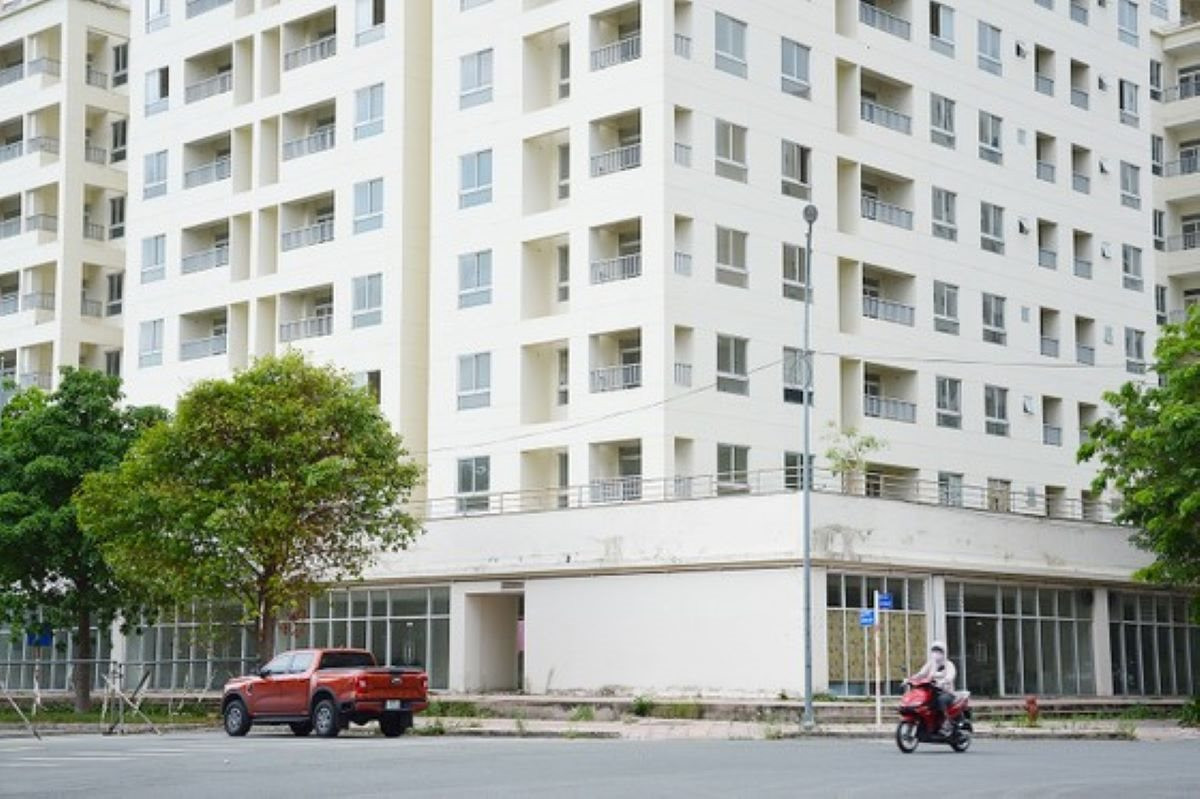
Given the prolonged lack of demand and the deterioration of the buildings in this resettlement area, some experts suggest that the city should consider lowering prices, converting it into social housing, or auctioning off small lots, or even auctioning individual units. According to experts, retail sales are a more accessible approach to those with genuine housing needs at reasonable prices, rather than auctioning off lots with large sums of money, which would be less attractive to individuals or organizations.
According to many experts, there is a paradox: Ho Chi Minh City is in dire need of affordable housing for workers and low-income earners. A survey conducted by the Ho Chi Minh City Institute for Development Research shows that nearly 100,000 households and individuals in the city are in need of buying, renting, or lease-purchasing social housing. Meanwhile, tens of thousands of resettlement housing units are lying vacant, with residents showing little interest in moving in.
Mr. Le Hoang Chau, Chairman of the Ho Chi Minh City Real Estate Association (HoREA), stated: "The Binh Khanh resettlement area is the largest and most massive resettlement area in the city, yet it has been left abandoned, resulting in a significant waste of resources. The lesson learned is that to avoid wasting resources on resettlement housing projects, we must do a good job of planning, correctly identifying the location for the resettlement area to ensure transportation and social infrastructure for the recipients."
Furthermore, it is necessary to correctly identify the beneficiaries to suit the needs, circumstances, and living culture of the residents in each area. The apartments built must be linked to social welfare policies such as vocational training, better job placement, or income restoration, contributing to improving the quality of life for people after relocation. The apartments built need to be carefully calculated to meet actual needs, avoiding surplus. The resettlement process must be reformed, analyzing and forecasting needs accurately to balance them with the capacity to meet demand and ensure rational allocation.
According to experts, there are many reasons explaining why people are not enthusiastic about resettlement housing or why many resettlement apartments are left vacant. One reason is that people are accustomed to their old homes and do not want to move to resettlement housing. First, people are concerned about the quality of resettlement housing, as many current resettlement areas are of poor quality, with some showing signs of deterioration such as leaks and cracks shortly after being put into use. In addition, the location of some resettlement areas is inconvenient, in areas with cheap land, or where infrastructure and amenities are severely lacking. The fact that resettlement housing is not suitable for the living conditions of relocated households is the main reason for the current situation of abandoned housing areas.
Source



![[Photo] Prime Minister Pham Minh Chinh receives the Chinese Ambassador to Vietnam](https://vphoto.vietnam.vn/thumb/1200x675/vietnam/resource/IMAGE/2026/04/05/1775397481797_ndo_br_dsc-5512-jpg.webp)

































































Comment (0)