

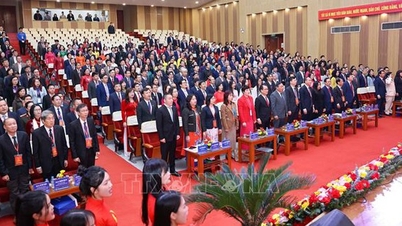
Reviewing, evaluating, and classifying Party organizations and members at the end of the year is one of the important solutions to improve the leadership capacity and fighting strength of grassroots Party organizations, as well as the quality of Party members. However, how to make this work truly substantive and not merely 형식적인 (formalistic) remains a major question.
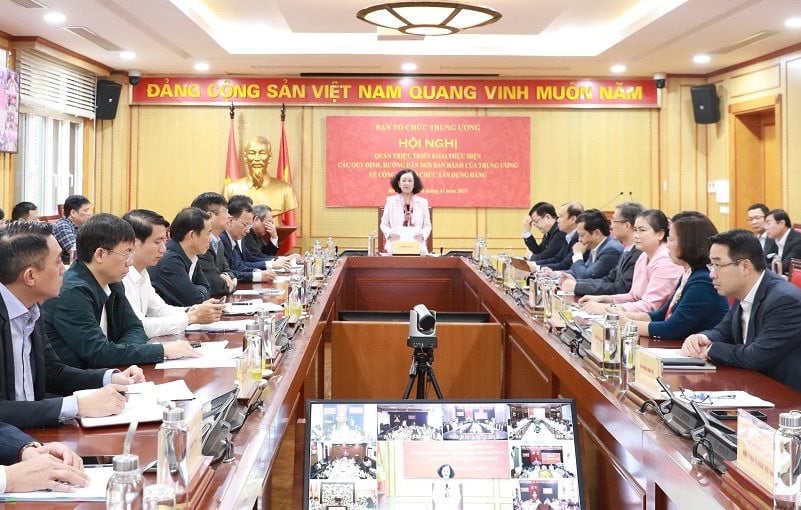
Self-criticism is a process of self-reflection and self-correction.
The Binh Thuan Provincial Party Committee has 463 grassroots Party organizations with 41,782 Party members. Over the years, the evaluation and ranking of Party organizations and members in the province has always been carried out seriously and systematically by Party committees and members at all levels. Party organizations and members throughout the province have consistently followed the guidelines of the Central Committee and the Provincial Party Committee to perform this task. Accordingly, the general requirement in the year-end review and ranking is to overcome the tendency to be lenient, avoid confrontation, and "not defend what is right, not fight against what is wrong"; to clearly identify and determine manifestations of ideological and political degradation, moral decay, lifestyle deviations, "self-evolution," and "self-transformation" in order to correct and overcome them. Using the results of collective self-criticism as a basis for individual self-criticism, and conversely, using the results of individual self-criticism to supplement and refine collective self-criticism... Through the objective and substantive self-criticism and evaluation of Party organizations and Party members, each Party member in the province has become aware of the need for "self-reflection and self-correction," thereby striving to improve themselves and better fulfill their assigned tasks. In the first half of the 2020-2025 term, over 87% of grassroots Party organizations and over 92% of higher-level Party committees completed their tasks well or better each year, exceeding the target set by the Provincial Party Congress Resolution by more than 12%. On average, the percentage of grassroots Party organizations achieving excellent performance is 13%, and higher-level Party committees is 14.2%.
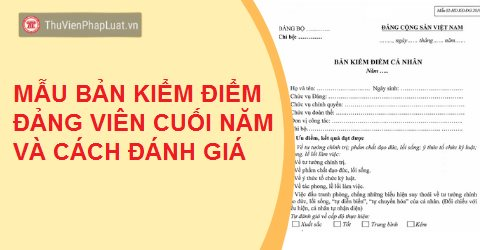
However, in reality, many Party committees, organizations, and members still do not fully understand the importance of this work, leading to inadequate preparation for collective and individual self-criticism in some places, and the self-criticism process being neither thorough nor frank in addressing the issues. Avoidance, deference, reluctance to confront issues, and a tendency to be lenient towards others still occur in some areas. And somewhere, the practice of reusing old year's reports and "copying" them into this year's report still happens, meaning that the strengths and weaknesses of the past year are "transmitted" from one year to the next. Furthermore, in some places, collective self-criticism is not linked to individual responsibility; the year-end evaluation becomes an opportunity to undermine each other's reputation, to dig up dirt, and to elevate viewpoints… rather than in a constructive spirit for those being criticized to accept the feedback. And there is a common pitfall in many places: focusing only on reviewing the performance of professional duties while paying little attention to reviewing ideology, moral character, and lifestyle. As a result, the detection and prevention of manifestations of ideological and political decline, moral decay, and lifestyle degradation, as well as manifestations of "self-evolution" and "self-transformation," have not been timely...
Improve the authenticity of performance reviews and rankings.
In early October, the Central Committee issued Regulation No. 124-QĐ/TW on the annual review, evaluation, and ranking of the quality of collectives and individuals within the political system. Regulation 124-QĐ/TW replaces Regulation No. 132-QĐ/TW dated March 8, 2018. The purpose of Regulation No. 124-QĐ/TW is to promote the spirit of self-criticism and criticism, self-reflection, self-correction, identifying strengths to promote and weaknesses to overcome; proactively detecting and preventing manifestations of degradation, "self-evolution," "self-transformation," corruption, waste, and negative phenomena, contributing to improving the leadership capacity and fighting strength of Party organizations, cadres, and Party members, and building a clean and strong Party. It also aims to raise awareness and responsibility of Party committees, Party organizations, leadership collectives, organizations, agencies, and units, especially the heads and individual cadres and Party members. Ensuring honesty, impartiality, objectivity, transparency, and achieving substantive results. The content of the Party member review aims to clarify achievements, shortcomings, weaknesses, limitations, causes, solutions, and timelines for rectification. Notably, the Regulation emphasizes using the collective evaluation and ranking results as the basis for determining the ranking percentages of subordinate units and individuals; using the evaluation and ranking results of cadres, civil servants, and public employees as the basis for interconnected evaluation and ranking of Party members; thereby providing a basis for building evaluation and ranking criteria that reduce qualitative and increase quantitative aspects through specific products, ensuring objectivity and fairness in evaluation and ranking. At the same time, it adds criteria for review, evaluation, and ranking regarding: the exemplary conduct, sense of organizational discipline, communication culture, work style, and work methods of individuals; A spirit of innovation, dynamism, and creativity for the common good, in line with the regulations of the Politburo .
At the national online conference on November 16th to disseminate and implement new Central Committee documents on Party building and organization, Comrade Truong Thi Mai, Member of the Political Bureau, Standing Secretary of the Central Committee, and Head of the Central Organization Department, emphasized: Since the beginning of this term, the Central Committee, the Political Bureau, and the Central Secretariat of the Party have issued many documents on personnel work, aiming to "close" all issues related to this work, including Regulation No. 124 of 2023 to overcome the limitations of implementing Regulation No. 132. Regarding the scope and subjects of application, Regulation 124 clearly defines that it is specifically for Party committees, Party organizations, collective leadership and management, organizations, agencies, units, and individuals within the Party system; while the State system is governed by the Law on Cadres and Civil Servants and the Law on Public Employees.
The Standing Committee of the Party Central Committee requested that, when implementing Regulation No. 124, the spirit of self-criticism, criticism, self-reflection, and self-correction must be continued. It is necessary to proactively prevent mistakes and violations, rather than waiting for consequences to occur before addressing them. At the same time, the substantive nature of evaluation, self-criticism, and criticism must be enhanced.
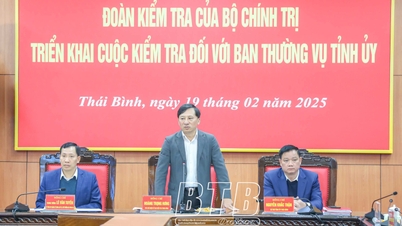
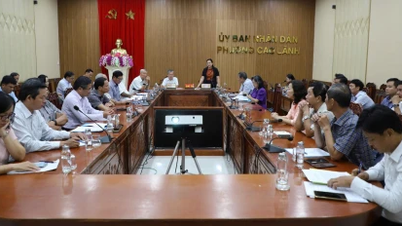
At this time, agencies, units, and localities within the political system are preparing for the year-end performance review and evaluation. To ensure that Regulation No. 124-QĐ/TW is truly effective, each Party member and Party organization needs to prepare well for their self-criticism and avoid superficial implementation. To achieve this, it is necessary to carefully study the guiding documents on self-criticism and criticism according to the correct procedures, while also upholding the pioneering and exemplary role in "self-criticism and criticism." Only then will the evaluation and ranking of Party members and Party organizations be serious, substantive, and highly effective.
“Review, evaluation, and classification must maintain a spirit of unity, not compromise or leniency. Emphasis should be placed on political qualities, moral conduct, leadership and management methods, and a management approach that focuses on outputs, results, specific products, capabilities, and work efficiency,” emphasized Comrade Truong Thi Mai, Member of the Political Bureau, Standing Secretary of the Central Committee, and Head of the Central Organization Department, at the nationwide online conference to disseminate and implement new Central Committee documents on Party organization and building.
Source
![[Image] Pleasant weather helps students enter the 10th grade entrance exam with confidence.](https://vphoto.vietnam.vn/thumb/1200x675/vietnam/resource/IMAGE/2026/05/29/1780034401612_ngay-1-thi-lop-10-minh-duy-8-5009-jpg.webp)


![[Photo] Ba Lang An Lighthouse - the "eye of the sea" amidst the "rock museum" of Quang Ngai province.](https://vphoto.vietnam.vn/thumb/1200x675/vietnam/resource/IMAGE/2026/05/29/1780038698840_anh-man-hinh-2026-05-29-luc-14-10-42.png)


























































Comment (0)