


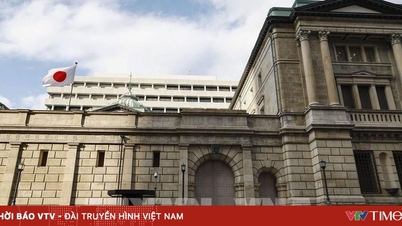
According to Reuters, Mitsui Fudosan - Japan's largest real estate developer - entered the Indian market in 2020 by partnering with RMZ Real Estate to build an office complex in the tech city of Bengaluru. Recently, the company is considering investing an additional 30 to 35 billion yen (equivalent to 190-225 million USD), or even more, in new projects, with its current partner or other local developers. Last month, Mitsui Fudosan's management board visited Mumbai and the surrounding area of the capital New Delhi to survey investment opportunities.
The wave of investment is not limited to Mitsui. Sumitomo Realty and Development, Japan’s third-largest real estate group, sees Mumbai as its “second growth engine” after Tokyo and has committed a total of $6.5 billion to five projects in the city. The company is also looking for more land around Navi Mumbai Airport, a major infrastructure project that is expected to be operational soon and is expected to give a new impetus to the regional real estate market.
Analysts say more and more Japanese developers are turning to India for its rare combination of low costs and high profit potential. Construction labor costs in India are a fraction of those in developed economies , and the cost of building luxury offices in Mumbai is much lower than in New York, London or Tokyo. Against this backdrop, real estate investment yields in India are estimated at 6-7%, significantly higher than the 2-4% typical in the Japanese market.
Along with low costs, office rents in India are rising rapidly thanks to sustained economic growth, averaging around 8% over the last three financial years. The Bandra Kurla Complex, Mumbai's financial hub, recorded a rent increase of more than 14% in the third quarter, leading the Asia- Pacific region, surpassing Tokyo and Seoul.
Unlike many foreign investors who usually only buy existing assets to avoid the risk of delays, Japanese companies are considered to be willing to participate in project development from the early stages. Designing and building from scratch allows them to apply advanced construction technologies that are not yet popular in India, such as steel structures that create large, column-free office spaces, increasing efficiency and allowing for higher rental rates. Some projects even expect rental prices to be 30-40% higher than the average level thanks to these advantages.
Not only Mitsui and Sumitomo, many other Japanese companies such as Daibiru Corp are also expanding their presence in the Indian market, from office real estate to new areas such as housing, data centers and hotels. According to a survey by Sumitomo Mitsui Trust Research Institute, the investment of Japanese companies and funds in overseas real estate has increased by about 20% this year, in which the level of interest in India has increased significantly compared to the same period last year, reflecting the trend of Japanese corporations shifting investment more strongly to this fast-growing South Asian economy.
Source: https://baotintuc.vn/bat-dong-san/nguyen-nhan-thuc-day-cac-ong-lon-bat-dong-san-nhat-ban-do-bo-thi-truong-an-do-20251201113324694.htm
![[Photo] Prime Minister Pham Minh Chinh receives President of Cuba's Latin American News Agency](/_next/image?url=https%3A%2F%2Fvphoto.vietnam.vn%2Fthumb%2F1200x675%2Fvietnam%2Fresource%2FIMAGE%2F2025%2F12%2F01%2F1764569497815_dsc-2890-jpg.webp&w=3840&q=75)

























































































Comment (0)