

Escape from the "ivory tower"
Dr. Nguyen Viet Thai, currently teaching at a university in Hanoi, believes that lecturers' frequent exposure to practical experience and opportunities to exchange ideas with those directly working in the field helps to review and refine the theories being taught in schools. This makes lectures more engaging and up-to-date, helping to identify issues that need adjustment, supplementation, or "correction" of the theoretical system.
As someone who both teaches and works with businesses and travel agencies outside of the university, Dr. Nguyen Viet Thai observes that many current theories are lagging behind practice, especially in industries like tourism, where marketing activities are being digitized rapidly and are happening very quickly.
During his experience advising businesses, he observed that while theory is often broken down into separate areas, operational practice is more holistic, organized according to the specific goals and needs of the business.
Based on that practical experience, he can add much new content, reflecting issues being implemented in socio -economic life, thereby enhancing the attractiveness of the lectures and updating and perfecting the curriculum. The connection with businesses also facilitates expanded cooperation and connections with organizations that accept student interns, contributing to strengthening the link between training and the actual needs of the labor market.
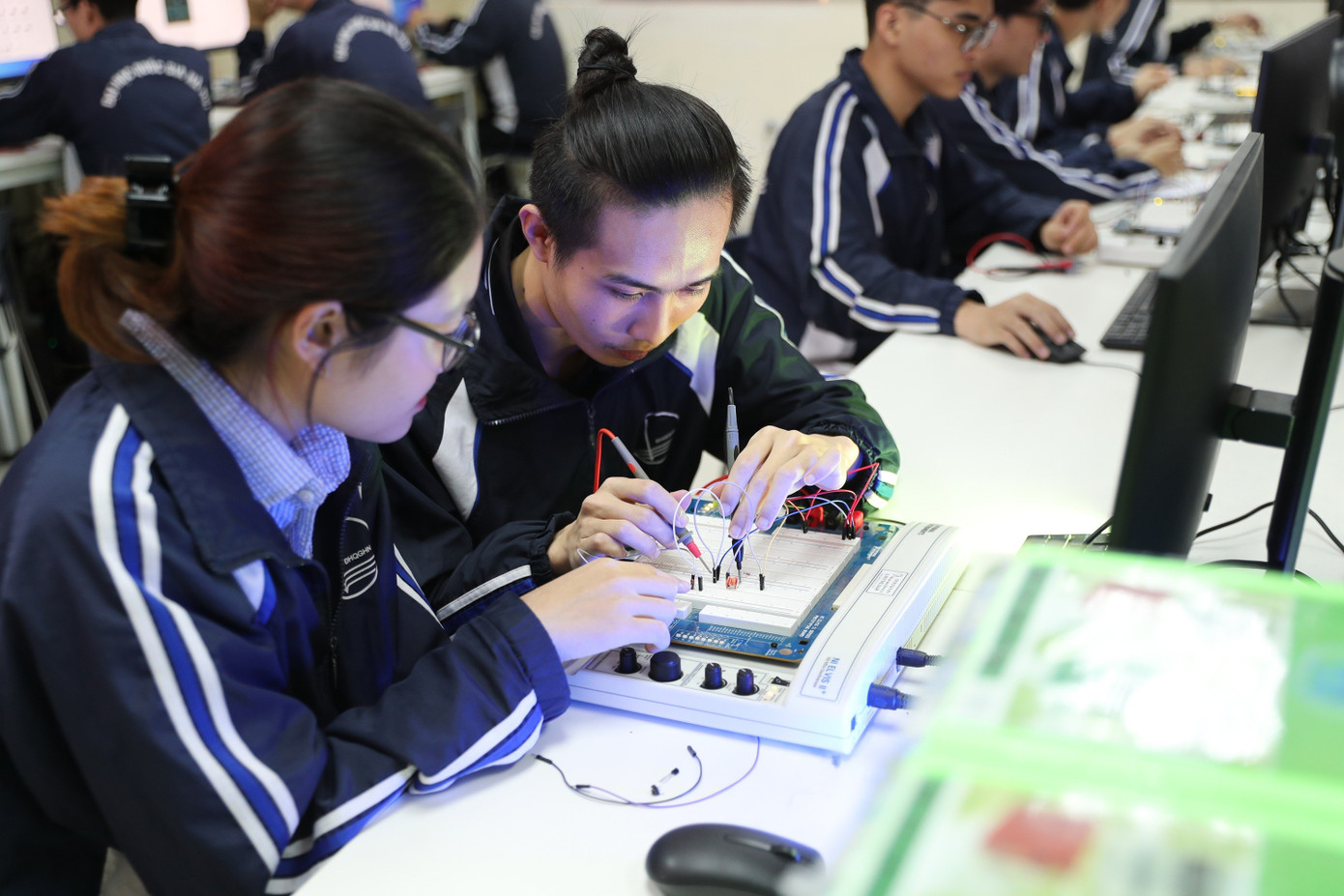
Professor Chu Duc Trinh, Rector of the University of Technology (Vietnam National University, Hanoi), said that the university does not keep statistics on the number of lecturers working at businesses outside the university, but every year, there are research projects from large corporations such as Viettel, Samsung, VNPT, FPT, and Imra, with each group participating with about 5-10 lecturers. Professor Trinh supports lecturers participating in scientific research projects, or R&D if possible. However, it requires lecturers to arrange and allocate their time appropriately.
We need to free PhDs from their role as "teachers."
Professor Phung Ho Hai (Institute of Mathematics, Vietnam Academy of Science and Technology) assessed that the policy stated in Announcement No. 45 is a positive signal for the scientific community. However, according to him, the core issue currently lies not in the funding source, but in the mechanism.
Citing the example of a large university, Professor Phung Ho Hai argued that a model based primarily on tuition fees, with a large student body and high fees, is causing universities to operate according to business logic. When the number of lecturers does not increase proportionally, personal income may improve, but the quality of education is difficult to guarantee. "In that model, how can there be quality?" Professor Hai questioned.
According to Professor Phung Ho Hai, the State needs to invest in higher education not by prioritizing infrastructure, but by creating mechanisms that allow lecturers time for research. Based on his observations, he noted that at the aforementioned university, many lecturers are in a state of being merely "teaching technicians," with virtually no time left for scientific research.
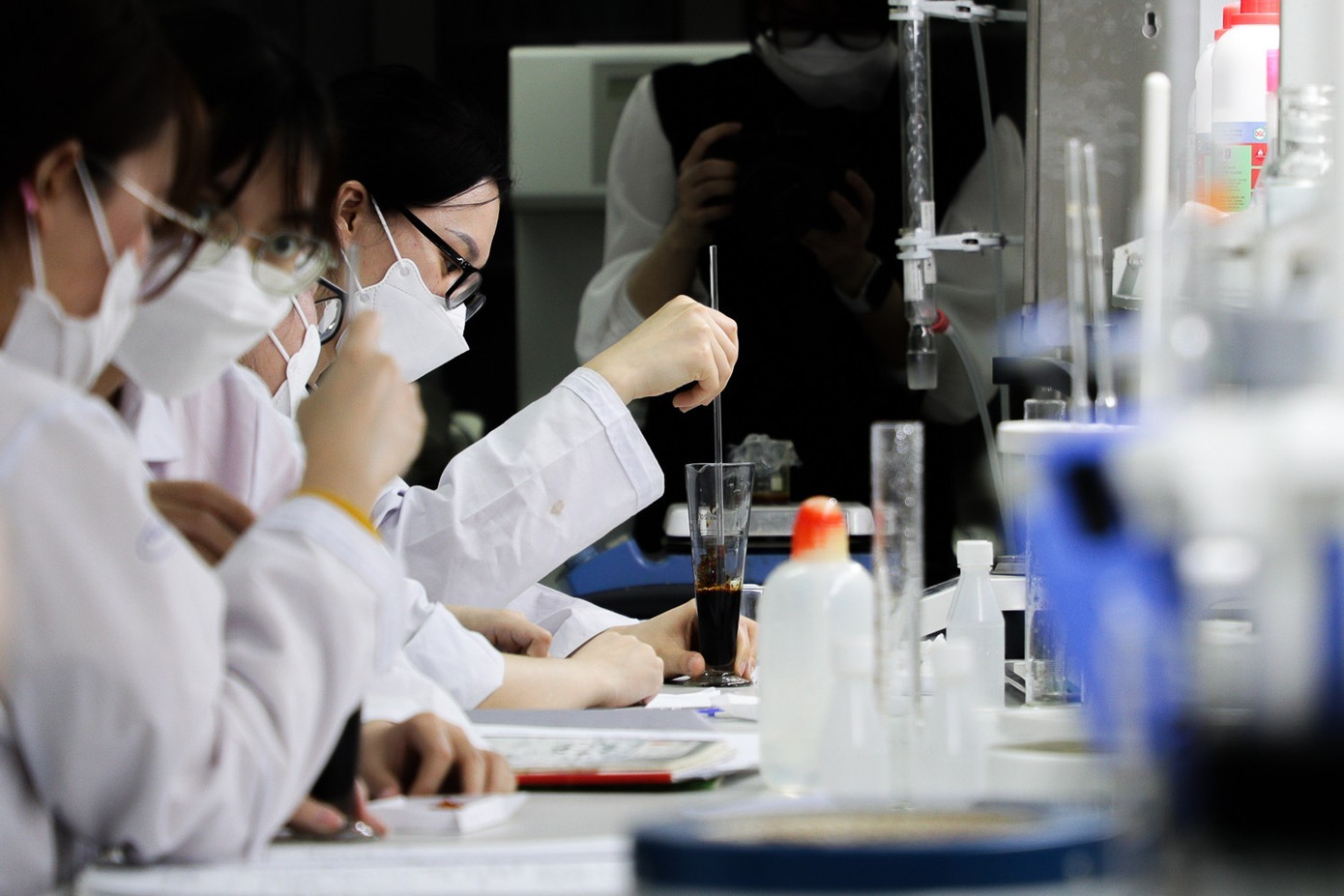
Professor Phung Ho Hai cited international experience, noting that in many countries, professors and associate professors enjoy academic leave with full or partial pay, and use that resource to conduct research and academic collaborations abroad. In Vietnam, current salaries are insufficient for lecturers to cover their own professional development costs. More importantly, when all their time is devoted to teaching, without foundational research, lecturers also find it difficult to engage in substantive academic collaborations with international universities.
The policy allowing lecturers and PhD holders to spend time working at businesses or pursuing further studies abroad every 5-7 years is seen as a progressive step. However, many experts warn that with lecturers already overloaded with teaching and lacking time and resources for research, talk of sabbaticals or further studies risks remaining merely slogans, or even having a counterproductive effect on the quality of university education.
He pointed out the paradox regarding teaching staff at some large training institutions, where some subjects lack sufficient full-time lecturers, forcing them to hire external instructors. Each year, the university graduates approximately 7,000-8,000 students, but the number of lecturers qualified to supervise theses is only a few hundred. This means that, for undergraduate thesis supervision alone, each lecturer is responsible for an average of at least 10 students per year, not including the teaching workload for other training programs and postgraduate studies. According to Professor Phung Ho Hai, this overload is "strangling" research time, a key factor in improving lecturer qualifications and training quality.
Only by increasing the ratio of PhDs to undergraduate students can the quality of training be improved. When PhDs are no longer just "teachers," but have time for research, they can enhance their professional capacity and effectively serve teaching activities. Professor Phung Ho Hai emphasized that the ratio of undergraduate students writing dissertations per PhD student should be capped at a maximum of 4 students. However, in reality, some departments have up to 15 students per PhD student. This number makes him doubt the ability to ensure the quality of training. Regarding postgraduate training, he believes that it is necessary to create genuine "demand" in society before discussing expanding "supply."
From a broader perspective, many experts believe that the policy of "every 5 years, lecturers or PhD holders can spend one year working at a company or pursuing further studies abroad" is a reasonable approach, bearing significant similarities to the sabbatical model widely applied in universities around the world.
If properly understood and designed, the policy allowing lecturers to spend one year working at a company or pursuing further education abroad every 5-7 years of service is essentially quite similar to the sabbatical model. The key issue lies not in the idea itself, but in the implementation phase, which requires capable partners, specific projects, clear mechanisms regarding rights and intellectual property, and measurable output criteria to avoid the risk of implementation being merely a formality.
Experts also warn that if policies are turned into administrative procedures aimed at completing dossiers or meeting targets, the desired results will not only be unmet but may also be counterproductive. In particular, there is a possibility that businesses may exploit the policy to enhance their image of cooperation without engaging in genuine R&D activities. In such cases, faculty members may only participate formally, failing to create new products, technologies, or knowledge, while simultaneously disrupting research activities at the educational institution.
Conversely, if implemented correctly, this policy can have a positive impact. When faculty members participate in work at businesses with genuine R&D capabilities, and are assigned specific research tasks, they not only gain access to industry-standard product development thinking but can also create tangible outputs such as prototypes, technological processes, research data, intellectual property records, or scientific publications. Upon returning to the university, these capabilities and collaborative networks will contribute to improving research quality and expanding the potential for technology transfer.
This is not a new or unfounded idea, but has been proven effective in international higher education practices. However, the value of the policy can only be realized when it is implemented in the true spirit of a sabbatical capacity-building program, rather than becoming a mere formality or a means of "polishing" cooperation.
Source: https://tienphong.vn/nhung-giang-vien-vao-thuc-te-post1820003.tpo





















































































Comment (0)