

Common types of cough
Coughing is a bodily reaction, not a disease. It's a physiological mechanism to expel phlegm and mucus from the respiratory tract, but it can also be a symptom of underlying medical conditions. Coughing is bothersome in daily life and therefore needs to be treated effectively. There are two most common types of cough: dry cough and productive cough (with phlegm).

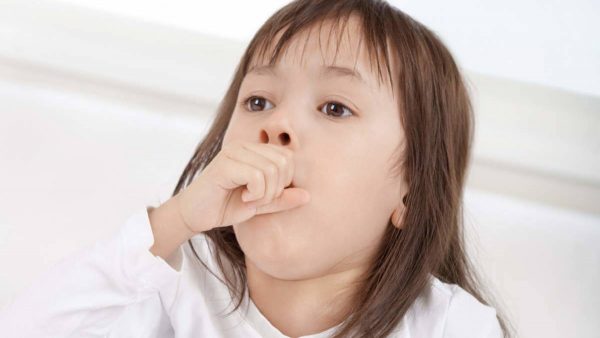
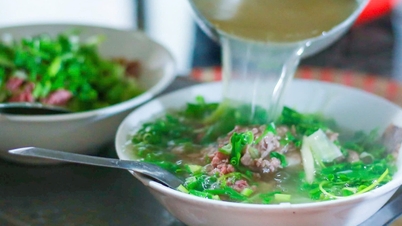
There are two common types of cough: dry cough and productive cough (with phlegm). Parents should be mindful when choosing and using cough medicine. (illustrative image)
Dry cough
A dry cough, which typically causes a sore throat and doesn't produce phlegm, can lead to hoarseness or loss of voice.
A dry cough is often caused by inhaling food particles or irritating fumes such as cigarette smoke, coal smoke, or chemical odors. It can also be due to a recent viral infection, the flu, or a common cold, or it could be a symptom of other conditions such as asthma, gastroesophageal reflux, or heart failure. Patients with a dry cough usually feel well and do not experience chest tightness or shortness of breath.
Cough with phlegm
This type of cough is characterized by chest tightness and often involves expectorating mucus and phlegm. Patients experience a feeling of suffocation and difficulty breathing, often leading to exhaustion.
Symptoms often worsen with walking and talking. A productive cough can be a lingering symptom after a sore throat, rhinitis, or sinusitis… The cause of the cough usually depends on how long the symptoms have been present.
Cough medicine
Dry cough
Depending on the specific type of cough, there are appropriate cough medicines. Generally, cough medicines come in syrup, tablet, or lozenge form and contain various ingredients such as antibacterial agents, pain relievers, anti-inflammatory agents, or anesthetics.
Commonly used cough suppressants for dry coughs include codeine, eucalyptine, dextromethorphan, pholcodine, calyptin, chericof, neo-codion, etc. Among these medications, dextromethorphan is a good choice for chronic dry coughs because it is non-addictive, has no analgesic effect, and has very little sedative effect.
Cough with phlegm
Commonly used cough medicines for phlegm include mucomyst, mucusan, rinathiol promethafine, terpicod, terpin hydrate, etc. Generally, each course of treatment should only last 3-5 days and should not be used for extended periods.
A cough with phlegm is often associated with chronic respiratory diseases. Using expectorants, mucolytics, bronchodilators in combination with corticosteroids and antibiotics is quite helpful. However, expectorants and mucolytics increase the volume of respiratory secretions so they are more easily expelled, preventing them from getting stuck in the throat and causing discomfort.

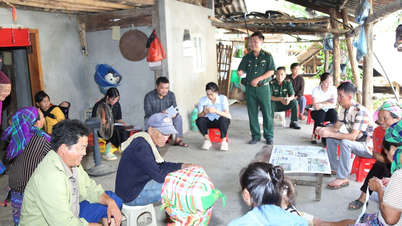
Frequent coughing can cause fatigue and affect the respiratory system, so you should take your child to see a doctor as soon as possible for examination and effective treatment. (illustrative image)
If used incorrectly, cough medicine can obstruct the airways, potentially causing pleural effusion (fluid accumulation in the lungs) and damaging the protective mucus lining of the stomach. Caution is advised for individuals with a history of peptic ulcers. This medication should not be used in people with respiratory failure, asthma, children, or breastfeeding women.
Patients must strictly adhere to their doctor's prescription, dosage, and treatment duration. Avoid self-medication or stopping medication without consulting a doctor, as this can worsen the condition. Patients should seek immediate medical attention if they experience a persistent cough of unknown origin to receive proper advice and treatment.
Source: https://benhvienthucuc.vn/thuoc-tri-ho/
![[Photo] Admire the coral "masterpiece" amidst the million-year-old heritage of Dak Lak province.](https://vphoto.vietnam.vn/thumb/1200x675/vietnam/resource/IMAGE/2026/05/31/1780221235105_anh-man-hinh-2026-05-31-luc-16-53-27.png)

![[Photo] The General Secretary, President and his wife begin their state visit to the Philippines.](https://vphoto.vietnam.vn/thumb/1200x675/vietnam/resource/IMAGE/2026/05/31/1780230559452_anh-man-hinh-2026-05-31-luc-19-28-11.png)
![[Image] Hanoi Police officially crowned champions of V-League 2025/2026](https://vphoto.vietnam.vn/thumb/1200x675/vietnam/resource/IMAGE/2026/05/31/1780244769054_ndo_br_039d561b692be875b13a-jpg.webp)

![[Photo] Solemn bathing ceremony and Buddha procession in Hue](https://vphoto.vietnam.vn/thumb/1200x675/vietnam/resource/IMAGE/2026/05/31/1780228263543_1-jpg.webp)












![[Video] Sunset at Lap An Lagoon – Where the sun sets over the fishing nets](https://vphoto.vietnam.vn/thumb/340x192/vietnam/resource/IMAGE/2026/05/31/1780192137701_beach-landscape-sea-water-nature-grass-745871-pxhere-com.jpeg)
































![[Photo] Admire the coral "masterpiece" amidst the million-year-old heritage of Dak Lak province.](https://vphoto.vietnam.vn/thumb/402x226/vietnam/resource/IMAGE/2026/05/31/1780221235105_anh-man-hinh-2026-05-31-luc-16-53-27.png)




































Comment (0)