


Floating fish farming village on Cu Lao Gieng island. Photo: PHAM HIEU
Peaceful pace of life
In the coastal town of Rach Gia, this was our first visit to Cu Lao Gieng, so we couldn't hide our astonishment. On the islet, the simple, peaceful life of the locals flowed with the current, the gentle sound of boats splashing on the Tien River, and the sunset filtering through the shady mango trees… The feeling of peace and tranquility made us exclaim: "Oh, how I love this place!"
To reach Cu Lao Gieng, visitors must cross the My Luong - Tan My bridge over the Tien River. Although there are small ferries that ferry passengers across the river daily, we chose to cross the bridge for convenience. From afar, the My Luong - Tan My bridge looks like an extended arm, a benevolent "messenger" of the island community welcoming visitors to this land for a unique experience.
Stopping in the middle of the bridge, I gazed down at the Tien River, thick with silt. The villagers' fish farms were moored close together, carrying with them hopes through the ebb and flow of the tides… While still lost in my thoughts, my colleague urged me to hurry into the small village. The island wasn't noisy or bustling, but simple and peaceful, like a watercolor painting, enveloped in the lush green of mango orchards laden with fruit, their fragrance wafting through the air. Suddenly, a church bell rang out, further stirring the traveler's emotions.
Seeing our bewildered expressions, Ms. Tran Thi Ngoc Ha, Deputy Secretary of the Party Committee of Cu Lao Gieng commune, enthusiastically introduced us to the island village in detail. According to Ms. Ha, Cu Lao Gieng has a history of over 300 years of development. During the French colonial period, this area had a large ferry terminal and a horse-drawn carriage station. The French also erected two steel wire poles near the head of the island, connecting it to the other side of the river to establish communication. To this day, these steel wire poles are still visible and have become a national historical and cultural relic. Ships traveling to Phnom Penh (Kingdom of Cambodia) and Saigon frequently stopped at Cu Lao Gieng to deliver mail and pick up passengers.
The commune also boasts numerous architectural structures, historical and cultural relics, and religious sites for tourists to visit. Notable examples include the Cu Lao Gieng Church, with its distinctive French colonial architecture, predating even Notre Dame Cathedral (Ho Chi Minh City). Next to it are the ancient-looking Providence Monastery and the Franciscan Monastery. The commune also features the Con En eco- tourism area and a famous boat-building village with over 100 years of history, attracting a large number of domestic and international tourists.
The land of abundant sand dunes
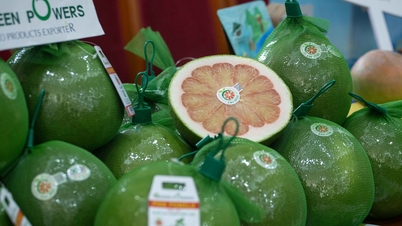
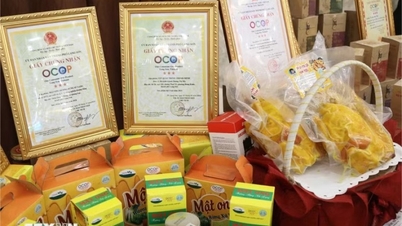
Mango cultivation in Cu Lao Gieng has flourished for over 10 years, making the locality the leading mango "capital" of the Mekong Delta. "In Cu Lao Gieng, mango trees are no longer just a means of livelihood but have become a new symbol, a source of pride, and the very soul – the very essence that creates the unique identity of this island village," Ms. Ha proudly stated.
That pride is well-deserved! Because, after its establishment from the merger of three communes – Tan My, My Hiep, and Binh Phuoc Xuan – Cu Lao Gieng has nearly 4,200 hectares of mango orchards, accounting for over 98% of its fruit tree area. The commune has been granted 35 fruit tree growing area codes, covering 2,974 hectares, with VietGAP certification for 735.9 hectares and GlobalGAP certification for 49.9 hectares… “There are also many mango processing and consumption cooperatives operating very strongly in the commune, helping Cu Lao Gieng mangoes conquer many demanding markets such as Australia, the US, and New Zealand… significantly increasing the value of the mangoes for the local people,” Ms. Ha added.
Sitting in his mango orchard laden with fruit, Mr. Pham Quoc Bong, a resident of Tan Phu hamlet, calculated that with 1 hectare of green-skinned mango trees, the profit is approximately 200 million VND per year. Thanks to this, the lives of the people in this island region have become much more prosperous in the last 5-7 years...
While still enjoying our leisurely stroll in the mango capital, the sun began to set. Hastily bidding farewell to our newly made friends, we took another walk along a small path to the century-old boat-building village before heading back to the coastal city of Rach Gia. From the entrance of the village, the sounds of hammers, saws, and chisels echoed regularly and rhythmically, like the breathing of the riverside community. Diligent craftsmen, their hands calloused by years of experience, meticulously carved each plank, frame, and curve to create the distinctive boats of the Mekong Delta.
Looking back towards the village, I still see the refreshing image of mango orchards. There, farmers and women are diligently pruning branches, bagging fruit, and chatting lively. Occasionally, a few glances and charming smiles from behind the conical hats are directed at the stranger, stirring my emotions…
As the afternoon sun slants by, standing on this side of the Tien River and gazing towards Cu Lao Gieng, the water sparkles in the sunset, illuminating the small village and making it even more captivating. Clearly, Cu Lao Gieng possesses a unique beauty—unpretentious, quiet, and not ostentatious or extravagant. On the contrary, the small village by the river wins hearts with its simplicity, sincerity, the warmth of its local people, its peaceful scenery, and its profound cultural and historical depth.
Leaving Cu Lao Gieng, the baggage of these strangers included not only a few photos and some local gifts from new friends, but also an indescribable feeling of longing to return to our beloved island village someday…
Source: https://baoangiang.com.vn/nong-nan-cu-lao-gieng-a471424.html
![[Photo] General Secretary and President visit the China-ASEAN AI Application Cooperation Center](https://vphoto.vietnam.vn/thumb/1200x675/vietnam/resource/IMAGE/2026/04/17/1776404277677_vna-potal-tong-bi-thu-chu-tich-nuoc-tham-trung-tam-hop-tac-ung-dung-ai-trung-quoc-asean-8706616-2286-jpg.webp)













![[Photo] National Assembly Chairman Tran Thanh Man attends the policy seminar to promote Vietnam-Türkiye cooperation.](https://vphoto.vietnam.vn/thumb/1200x675/vietnam/resource/IMAGE/2026/04/16/1776351415367_vna-potal-chu-tich-quoc-hoi-tran-thanh-man-du-toa-dam-chinh-sach-thuc-day-hop-tac-viet-nam-tho-nhi-ky-8705791-jpg.webp)


































Comment (0)