

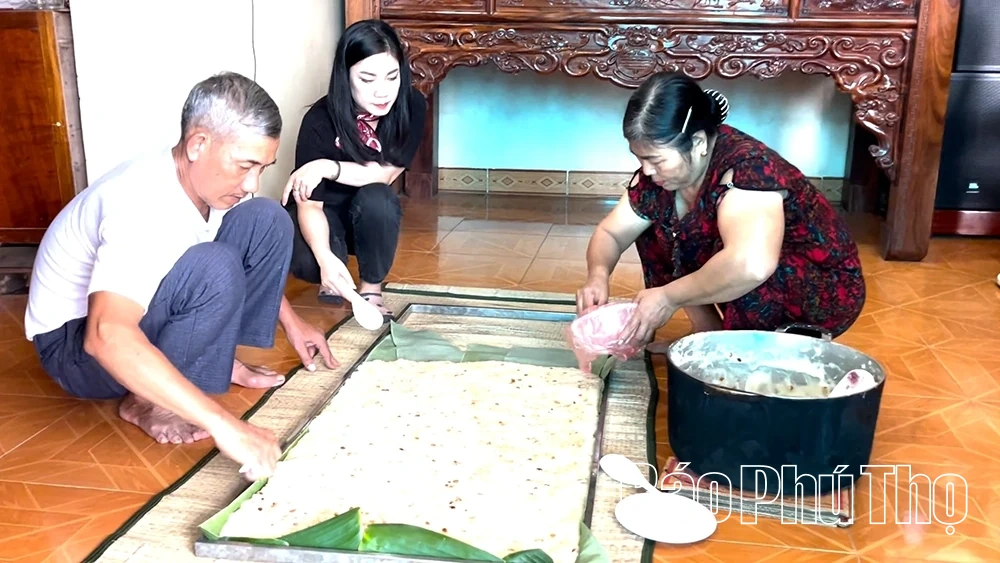
Kẻ Đanh rice cake is a popular local dish dating back to the 1960s, and Đinh Xá village has a long tradition of making it.
The memory is called "The Fierce Man".
Kẻ Đanh rice cakes are closely associated with the image of the hardworking villagers of Đinh Xá, Nguyệt Đức commune, diligently selling them in various markets. Perhaps it is the distinctive flavor – a mild, fragrant aroma, a rich, creamy taste, and a natural golden hue – that makes this rice cake so memorable, leaving a lasting impression.
The name "Ke Danh Rice Cake" originated from this, becoming part of an old folk song: "Ke Danh rice cake, Ke Mo onions and vegetables" (Ke Danh is the ancient name of Dinh Xa village, while Ke Mo is now Yen Lac commune). According to Ms. Nguyen Thi Hong Phuong, the owner of the OCOP product, rice cake has been a popular local dish since the 1960s, and Dinh Xa village has a long tradition of making rice cakes.
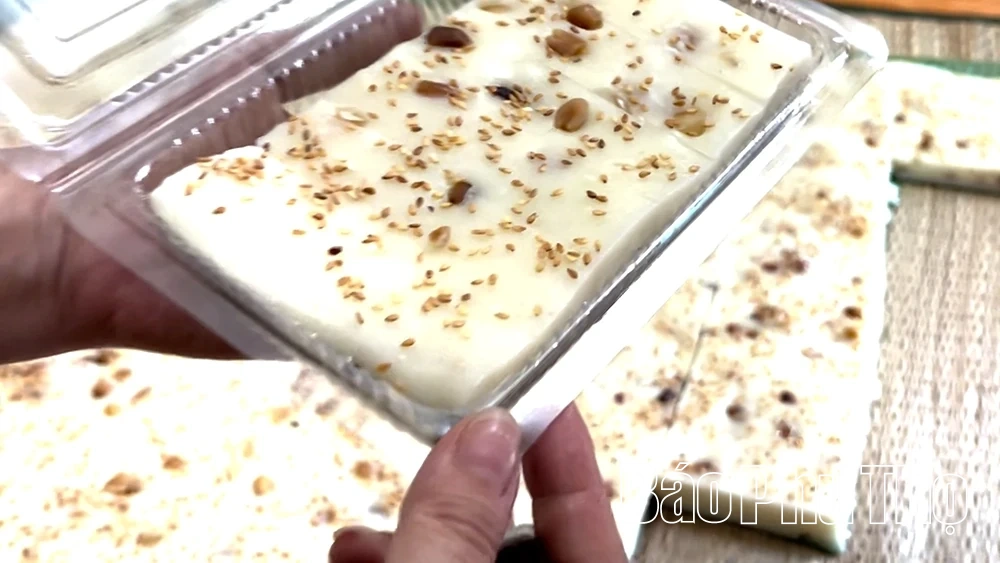
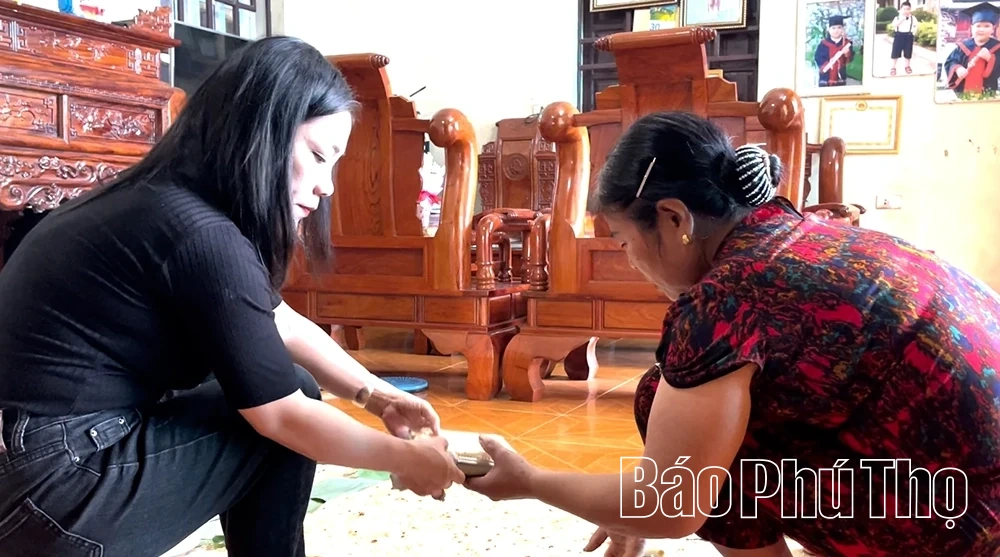
Kẻ Đanh rice cake is soft and smooth, with a crispy, chewy texture and the rich, nutty flavor of peanuts, and the fragrant aroma of sesame seeds.
Kẻ Đanh rice cakes have a milky white color with a natural hint of pale yellow, dotted with peanuts and fragrant roasted sesame seeds. The cake is soft and smooth, with a crisp, chewy texture and the rich, nutty flavor of peanuts and sesame seeds. It has a particularly refreshing taste, and when dipped in fermented soybean paste, it creates an unforgettable, rich flavor. Locals also eat the rice cakes with crab soup or fish sauce, creating a simple yet incredibly appealing dish. For those from Đinh Xá who are far from home, suddenly hearing the call of a rice cake vendor will inevitably stir up nostalgia, reminding them of the flavors of their childhood.
Meticulous effort to preserve the traditional flavor.
To produce authentic Kẻ Đanh-style rice cakes, bakers must adhere to an extremely meticulous and thorough processing procedure.
Ingredients are a crucial factor, carefully selected: The rice must be Q5 rice (a high-quality local rice). The rice is soaked in lime water for 6-8 hours. After soaking, the rice changes from white to light yellow; the soaked rice is rinsed several times under clean running water to remove the lime smell before being ground. The craftsman must carefully adjust the amount of water to achieve the right consistency and smoothness of the flour.
The dish's soul is incomplete without the golden, crispy roasted peanuts and sesame seeds as a topping. All of these agricultural ingredients are sourced locally.
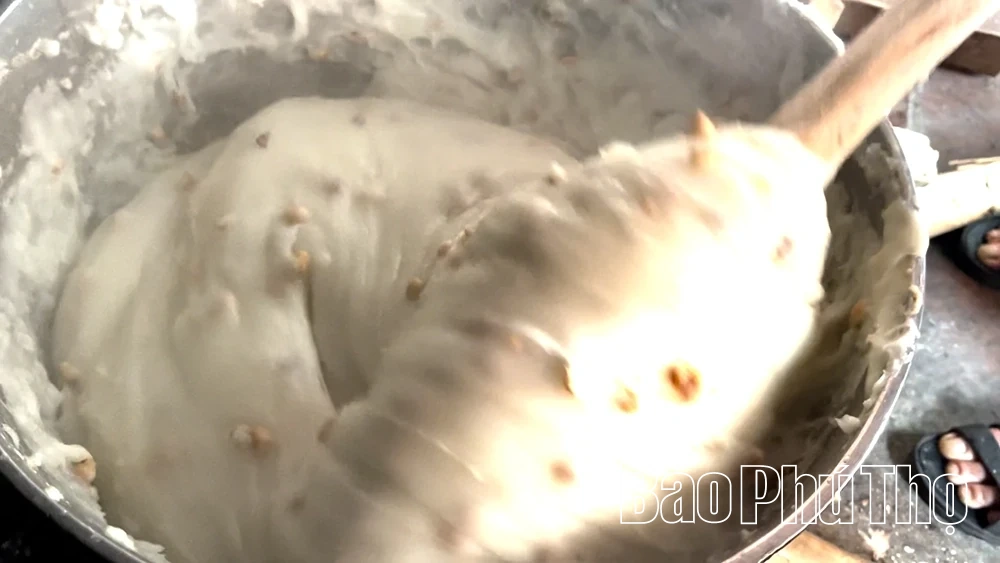
The porridge was simmered, stirred constantly, for over an hour.
The preparation is the most laborious step. According to Ms. Phuong, the rice cake must be cooked over an open fire to be delicious. The batter is simmered, stirred continuously for over an hour. Initially, the stirring is gentle, but as the batter thickens, the work becomes more difficult, requiring the cook to have considerable stamina. When the batter is cooked through, roasted peanuts (with the shells removed) are added and stirred well. Then, the baker uses straw to burn around the pot to allow the batter to cook thoroughly and dry before removing it from the heat.
The thick, chewy, and fragrant rice flour batter is poured into molds lined with banana leaves, spread evenly, and sprinkled with sesame seeds. After cooling completely (about 2-3 hours), the cake is cut into small, bite-sized pieces and packaged in boxes with labels and traceability stamps. The secret to making this rice cake lies in balancing the amount of water and the ratio of spices in the ingredients.
Establishing brand presence in the market.
By focusing on investing in machinery and selecting high-quality agricultural raw materials from the local area, Mrs. Nguyen Thi Hong Phuong's family's rice cake product has been recognized as a 3-star OCOP product.
Ms. Phuong shared that, due to its consistently preserved traditional flavor, Ke Danh rice cakes are very popular, especially with customers in Hanoi and Thai Nguyen who frequently order them as gifts. "Most of the time, my family makes them to order; we rarely sell them on a large scale," Ms. Phuong said.
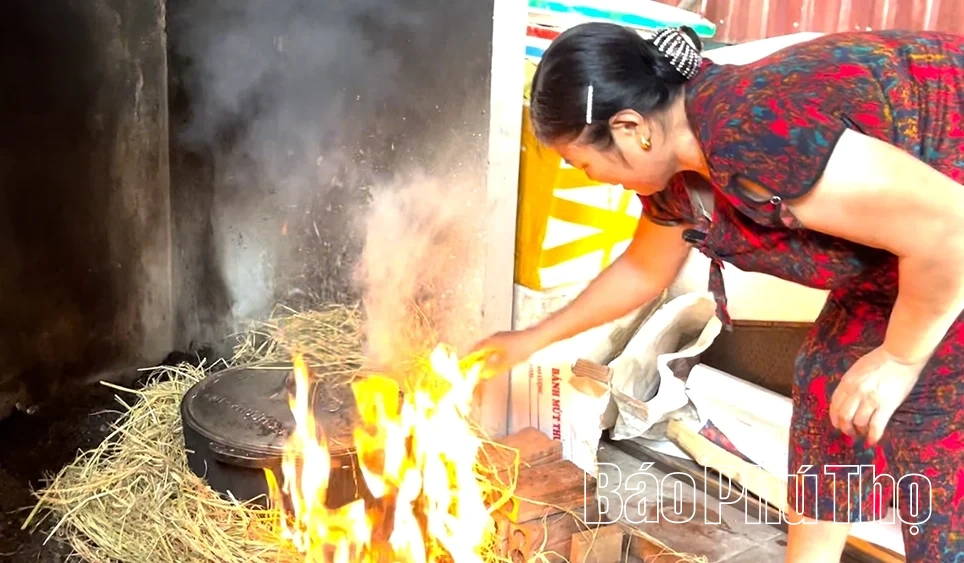
Ms. Nguyen Thi Hong Phuong used straw to burn around the pot to ensure the dough cooked thoroughly, and only removed it from the heat after the pot had dried.
Given the product's great potential, the local government is also actively involved in developing the brand. Mr. Nguyen Le Huy, Chairman of the People's Committee of Nguyet Duc commune, said: "To elevate the brand of Ke Danh rice cakes, the local government is focusing on promoting it through various media channels, providing support in terms of labels and funding for households to rebuild their processing areas; and promoting it at trade fairs...".
For the people of Nguyet Duc commune, banh duc (rice cake) is not only a local specialty with the potential to be developed into an OCOP product, but also a dish associated with the cultural traditions of the people here, contributing to improving their lives and affirming the unique culinary value of Phu Tho province.
Ngoc Thang
Source: https://baophutho.vn/nuc-tieng-banh-duc-ke-danh-241482.htm

















































































Comment (0)