

Lesson 1: Disseminating information on occupational accident and disease insurance policies: Understanding them correctly to protect workers.
The occupational accident and disease insurance scheme is one of the five mandatory social insurance schemes stipulated in the Social Insurance Law, aiming to share the burden, partially compensate, or replace the income of workers who suffer occupational accidents or diseases. This policy has created a solid support system, helping many workers overcome difficulties. Social insurance agencies always ensure the full, timely, and accurate implementation of occupational accident and disease benefits for workers, in accordance with regulations.
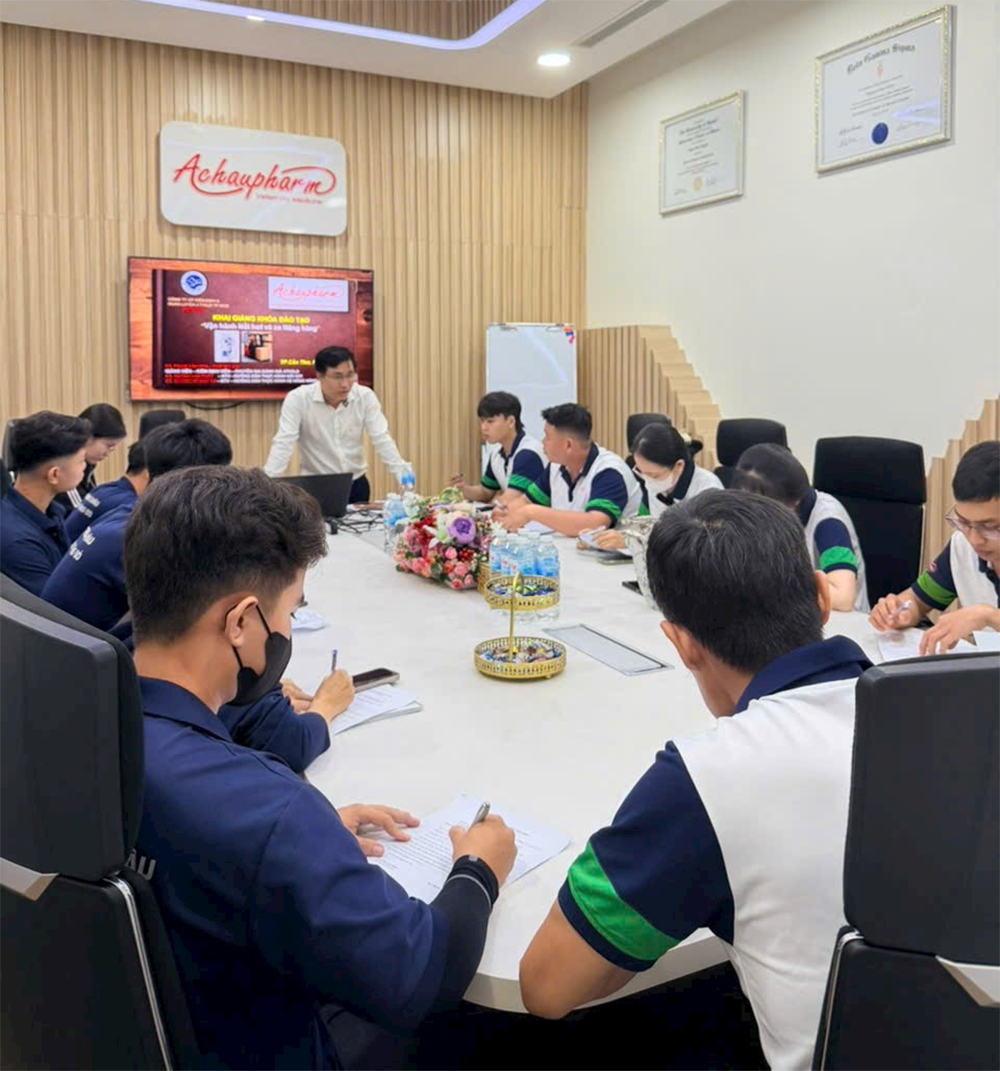
Workers of Asia Veterinary Medicine Co., Ltd. (Cai Rang Ward) participate in a workplace safety training session. Photo: Contributor.
According to Government Decree No. 88/2020/ND-CP dated July 28, 2020, the support level for occupational disease examinations is 50% of the examination cost, but not exceeding VND 800,000 per person per examination. The support level for occupational disease treatment is 50% of the treatment cost, but not exceeding VND 5 million per person.
Employers contribute 0.5% of the wage fund used as the basis for social insurance contributions to the Occupational Accident and Disease Insurance Fund. This rate also applies to employees who are cadres, civil servants, public employees, and members of the armed forces working in agencies of the Party, State, political -social organizations, the military, the police, and public service units using state budget funds.
The use of the occupational accident and disease insurance fund, as stipulated in Article 42 of the 2015 Law on Occupational Safety and Health and Decree No. 88/2020/ND-CP, includes: paying the examination and assessment fees for injuries and illnesses caused by occupational accidents and diseases for eligible cases; and paying the examination and assessment fees for cases where employees proactively seek examination and assessment of their reduced work capacity as prescribed in point b, clause 1 and clause 3 of Article 47 of this Law, and the examination and assessment results meet the conditions for adjusting and increasing the occupational accident and disease compensation level.
In addition, the following expenses are covered: one-time allowances, monthly allowances, service allowances; support for assistive devices and orthopedic equipment; convalescence and health recovery; support for prevention and risk sharing related to occupational accidents and diseases; support for career chuyển đổi for those injured in occupational accidents or diseases upon returning to work; management costs of occupational accident and disease insurance as stipulated by the Social Insurance Law; and health insurance contributions for those on leave receiving monthly occupational accident and disease insurance benefits.
Workers who suffer work-related accidents or occupational diseases resulting in a 31% or greater reduction in their working capacity may be assigned new jobs under their management that are suitable to their health and aspirations, provided that such jobs require vocational training for retraining. The maximum support is 50% of the tuition fee, but not exceeding 15 times the basic salary.
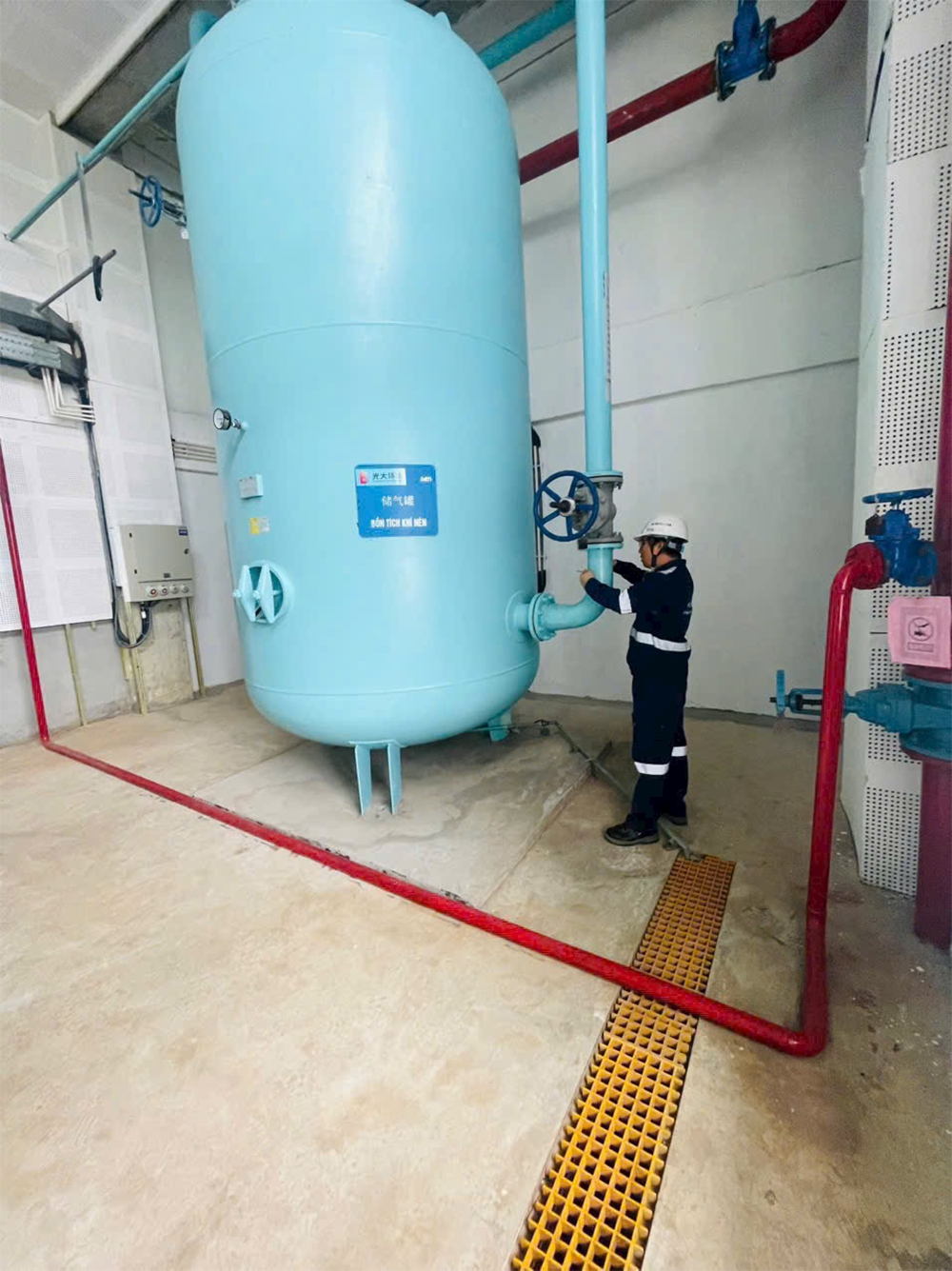
Workplace safety inspection at EB Can Tho Waste Treatment Company. Photo: Contributor.
According to the Department of Internal Affairs of Can Tho City, all employees subject to mandatory social insurance are entitled to occupational accident and disease insurance. If the employer fails to pay social insurance for their employees, and the employee suffers an accident or develops an occupational disease, the employer must fully cover all benefits, including monthly allowances, lump-sum payments, and other allowances for the employee.
Currently, the Law on Occupational Safety and Health and its guiding documents have inherited and developed many new and superior provisions compared to previous regulations. Specifically, the current regulations have added provisions allowing retired workers or those no longer working in industries or occupations with occupational disease risks to still undergo examinations and request benefits if they are found to have an occupational disease. Furthermore, the level of benefits for convalescence and recovery after occupational accidents and diseases has been standardized, aligning with the regulations on convalescence and recovery after illness and maternity leave. In addition, the procedures for processing occupational accident and disease insurance claims have been simplified, administrative procedures have been reformed, and unnecessary and cumbersome procedures have been eliminated, creating favorable conditions for individuals and businesses to participate in and benefit from these schemes. Thanks to these changes, workers' rights are better protected, and businesses can fulfill their insurance obligations more conveniently and transparently.
CHẤN HƯNG - PHƯƠNG MAI
Source: https://baocantho.com.vn/phong-tranh-tai-nan-lao-dong-benh-nghe-nghiep-a195547.html

![[Live] 2025 Community Action Awards Gala](/_next/image?url=https%3A%2F%2Fvphoto.vietnam.vn%2Fthumb%2F1200x675%2Fvietnam%2Fresource%2FIMAGE%2F2025%2F12%2F16%2F1765899631650_ndo_tr_z7334013144784-9f9fe10a6d63584c85aff40f2957c250-jpg.webp&w=3840&q=75)
![[Photo] Prime Minister Pham Minh Chinh receives the Governor of Tochigi Province (Japan)](/_next/image?url=https%3A%2F%2Fvphoto.vietnam.vn%2Fthumb%2F1200x675%2Fvietnam%2Fresource%2FIMAGE%2F2025%2F12%2F16%2F1765892133176_dsc-8082-6425-jpg.webp&w=3840&q=75)
![[Image] Leaked images ahead of the 2025 Community Action Awards gala.](/_next/image?url=https%3A%2F%2Fvphoto.vietnam.vn%2Fthumb%2F1200x675%2Fvietnam%2Fresource%2FIMAGE%2F2025%2F12%2F16%2F1765882828720_ndo_br_thiet-ke-chua-co-ten-45-png.webp&w=3840&q=75)

![[Photo] Prime Minister Pham Minh Chinh receives Lao Minister of Education and Sports Thongsalith Mangnormek](/_next/image?url=https%3A%2F%2Fvphoto.vietnam.vn%2Fthumb%2F1200x675%2Fvietnam%2Fresource%2FIMAGE%2F2025%2F12%2F16%2F1765876834721_dsc-7519-jpg.webp&w=3840&q=75)














































![[Photo] Prime Minister Pham Minh Chinh attends the Vietnam Economic Forum 2025](https://vphoto.vietnam.vn/thumb/402x226/vietnam/resource/IMAGE/2025/12/16/1765893035503_ndo_br_dsc-8043-jpg.webp)




















Comment (0)