

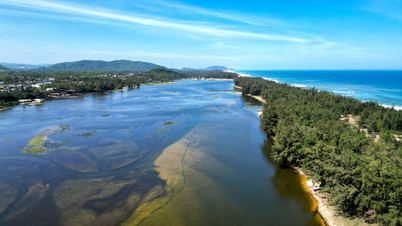
The coastal strip of land in Hai Linh ward, Nghi Son town, is a uniform expanse of white sand. For generations, only wild pineapples, cacti, and casuarina trees have survived the scorching heat of summer and the drought of winter to thrive. Yet, many new crops have sprouted, taken root, and flourished thanks to the persistent experimentation and application of advanced farming techniques by a woman passionate about agriculture .
Introducing new crops
About 500 meters from the spacious multi-story house and fruit juice processing factory of Ms. Le Thi Ngoc's family in Hong Phong residential area lies a production area that is far greener than the surrounding land. In a place where every step sinks into the muddy sea sand, tens of thousands of fruit trees, previously uncultivated in this sun-drenched, windy region, stretch their branches and provide shade.
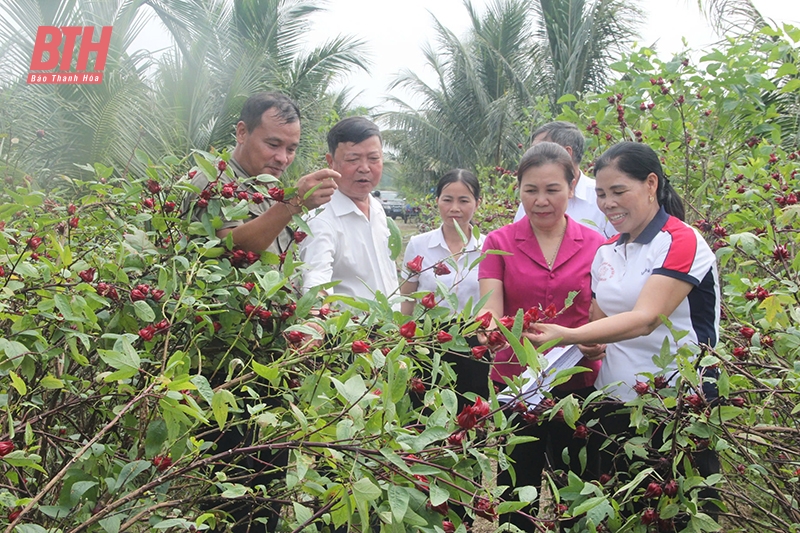
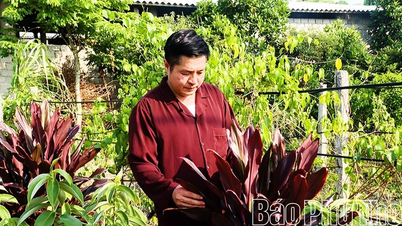
Leading the tour of the production area, the owner of the model farm introduced the artichoke plantation with its clusters of vibrant red, juicy flowers. During the dry, windy days at the end of the year, following the growth cycle, the leaves begin to turn silvery white and fall off, revealing an impressive garden ablaze with red. It's hard to imagine that on dry, sandy soil where even weeds can't grow, there are branches laden with flowers and fruit hanging down close to the ground. According to Ms. Ngoc: “After many years of trading and transporting goods in the southern provinces, I saw that the dry, sandy land of Ninh Thuan, similar to my hometown, could grow grapes, while most of the land back home is barren or only planted with casuarina trees. Thinking I had to be the first to experiment, I brought red artichoke seeds from Lam Dong to try planting them. I dug holes and lined the roots with well-rotted manure, watered them regularly, and the new plants grew vigorously and bore fruit. In 2019, I decided to buy more seeds to expand cultivation.”
The family owns Hoan Ngoc Transport and Trading Service Company Limited, which has been operating in the North-South transportation sector for many years. This provided Ms. Ngoc with the conditions to invest heavily and comprehensively in agriculture. “In 2019, I established a production area, dug ponds lined with tarpaulin to store water, and pumped it into an irrigation system that delivers water to each plant. Maintaining moisture around the base of the plants is a prerequisite for successful cultivation even on dry, barren sand. Then, I maintained approximately 16,500 artichoke plants annually, harvesting about 33 tons of flowers each year.”
At the same time, Ms. Ngoc started growing mulberry trees for fruit – a drought-resistant variety. But she heard from an acquaintance in Hung Yen about a Taiwanese mulberry variety that was exceptionally sweet, with large fruits, and each tree could yield up to 100 kilograms of fruit. So she researched it and decided to import it. “During the complicated COVID-19 pandemic with many lockdown orders, I ordered seedlings but couldn't bring them back to the country. I had to transport them by air, costing up to 100,000 dong per seedling. With thousands of new mulberry seedlings, I planted them and harvested them from the first year, with two harvests per year.” By propagating more seedlings using cuttings, in subsequent years, the production area had a total of 5,500 Taiwanese mulberry trees.
To highlight the differences from traditional mulberry trees, she picked some fruit for everyone to taste. It had a rich, sweet, and slightly bitter aftertaste, with almost no sourness in the flesh like local mulberries. Observing the trees, the leaves were larger than traditional ones, and what was particularly striking was the large, long fruit, about the size of an adult's finger, growing densely from the trunk to the branches. Grown organically and with adequate irrigation, it yields approximately 16.5 tons of fruit annually.
“I decided to adopt organic farming from the beginning to build credibility for my products. Moreover, this land is contaminated with salt, and using chemical fertilizers would only damage the soil and kill the plants. In the early seasons, I bought dozens of truckloads of well-rotted manure from dairy farms, but for the past three years, I have been raising pigs and chickens myself to obtain fertilizer for my crops,” Ms. Ngoc said.
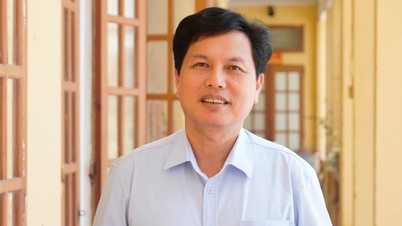
"The crops that Ms. Le Thi Ngoc brought to cultivate are all new varieties in Thanh Hoa. After many visits to inspect and learn about them, the three main types of plants – dwarf coconut, Taiwanese strawberry, and red artichoke – have all yielded high productivity and unexpected results. Notably, these fruits are also linked to deep processing to create products that are consumed through the supply chain. Ms. Ngoc's model could absolutely be developed into a provincial-level scientific research project for wider adoption." Mr. Vu Van Ha, Deputy Director Thanh Hoa Agricultural Extension Center |
Building on her initial success, Ms. Ngoc continued to buy and lease more garden land from her neighbors to develop a 5-hectare contiguous farm. At the end of 2019, the woman in her fifties bought 2,000 dwarf coconut trees from Ben Tre to plant around the production area and between the new crop rows to provide shade from the harsh sunlight. By 2024, the coconuts had produced thousands of bunches, but she cut down almost all of them to allow the trees to recover, planning for them to bear fruit from 2025 onwards. Through diligent experimentation and the application of new farming techniques, the newly introduced crops have all thrived, much to the surprise of many.
Not stopping there, recently, the owner of the production model has also successfully experimented with growing grape varieties from Ninh Thuan, fermenting the first batches of wine to gain experience. Right at the entrance to the production area, she even "showed off" to us the syrup bushes densely covered with ripe red grapes, which, according to her, are the first experimental plants, and will soon be propagated to process the fruit into syrup products.
Successfully developed 3 OCOP products.
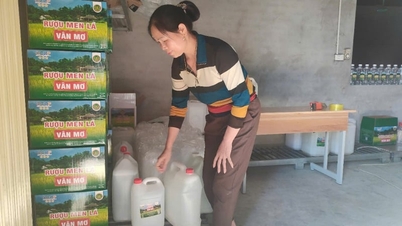
To create a sustainable market for new agricultural products from her farm, Ms. Le Thi Ngoc repeatedly traveled to the southern provinces and the Central Highlands to import processing technology. From 2021-2022, a production workshop was built right behind her house, and wine cellars, purification machines, fruit juice distillation machines, etc., were gradually constructed and installed.
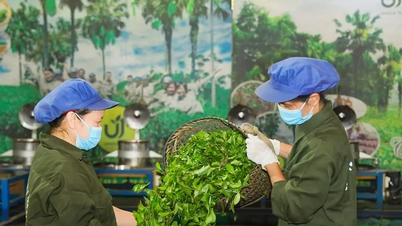
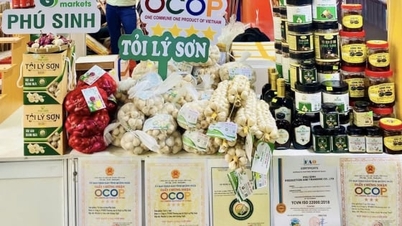
Here, Ms. Ngoc introduced a fairly well-organized and modern processing facility from the very beginning. Red hibiscus flowers and Taiwanese strawberries are fermented into wine using technology similar to Da Lat wine. The rest are traditionally fermented in hundreds of earthenware jars. Machinery for distilling hibiscus and strawberry juice for bottling continues to be purchased and technology transferred from partners. The white wine used for soaking the fruits is also homemade by the owner, with the residue used to feed chickens and pigs. Then, in 2021, encouraged by the Nghi Son town and Hai Linh ward authorities, she proposed and, after being assessed by provincial-level departments, met food safety and hygiene standards, resulting in two products being recognized as OCOP products at the provincial level: Ngoc Hoan Strawberry Wine and Ngoc Hoan Fruit Concentrate. By 2023, the Ngoc Hoan Hibiscus Flower Concentrate product from the production facility was further recognized as a 3-star OCOP product. Currently, the facility produces 7 types of products, all with designed labels and certified to meet quality standards and regulations of relevant provincial and central authorities.
Besides producing glass bottles in various attractive designs and styles for the market, the facility is also conducting trial production to register canned fruit juices, aiming to expand its market to many provinces. A single production facility has successfully developed three OCOP products and achieved ISO 22000:2018 certification – something even many district-level units struggle to achieve. However, Ms. Le Thi Ngoc's facility has accomplished this using imported crops that she produces and processes herself. All fruit pulp and leftover wine lees are used as animal feed. By-products from the crops, along with pig and chicken manure, are processed through a closed-loop biogas system and mixed into fertilizer for plants in a closed-loop system. Even in the raw material growing area, the crops, artichokes and Taiwanese strawberries, have been certified VietGAP, cultivated organically.
"Ms. Le Thi Ngoc's 5-hectare production area is currently a typical economic model in the locality. This land was previously a barren sand dune. In 2004, the province implemented a resettlement program, and the local authorities allowed some households to relocate and improve the land. However, they could only plant casuarina trees, making economic development difficult, so the households gradually returned. Later, Ms. Ngoc boldly leased and bought the land to develop her business. Even more admirable is her groundbreaking approach and the perseverance of someone deeply passionate about agriculture. Unexpectedly, the new crops yielded significant profits right on the barren sand dune, and she even managed to introduce processing technology. The Provincial Farmers' Association also provided technical support, and the local authorities created favorable conditions for her to develop the model and spread it." Mr. Bui Khac Trung, Secretary of the Party Committee of Hai Linh Ward |
In recent crop seasons, Ms. Ngoc has been providing free artichoke seeds harvested from her garden to local farmers and purchasing centers, creating a sustainable raw material supply area. While it was thought that artichokes only thrived in Da Lat and other cool climates with fertile soil, they are now yielding high economic value in the arid gardens of Nghi Son town, sparking a new economic development direction for the local people. In addition to her initial 5 hectares, Ms. Ngoc has expanded her mulberry and artichoke plantations to another 3 hectares in Phu Son commune, a semi-mountainous area within the same town. She is also collaborating on another 3 hectares in Yen Dinh district. Stevia is also being cultivated as a sugar substitute in fruit juices and canned soft drinks to meet consumer demand. With two full-time workers earning 8 million VND per month and nearly a dozen seasonal workers during harvesting seasons, this production-to-process model has shown initial success.
The dry sandy land of Hai Linh has seen the emergence of new, suitable crops, revitalizing the land and bringing benefits to many surrounding households. The production value of the facility over the past two years reached approximately 1.2 billion VND, not much compared to the initial investment, but it shows the right direction for this ambitious woman. “With a total investment of over 10 billion VND for land purchase, farm production, and processing plant, if I had used it to buy two more trucks, the profit would have been many times higher than farming alone. But for me, it's a passion, and moreover, I want to create unique, distinctive products for myself and the locality, rather than focusing solely on profit,” shared Ms. Le Thi Ngoc.
Text and photos: Le Dong
Source: https://baothanhhoa.vn/qua-ngot-tren-cat-bong-233565.htm









































































Comment (0)