

Modern approaches to student protection
In education , disaster risk reduction and management (DRRM) is considered a "soft shield" to help schools minimize damage, maintain teaching and learning, and ensure student safety when storms, floods, or natural disasters occur. DRRM is not just a response to natural disasters, but a pre-prepared process: planning facilities, educating response skills, and managing risk data. The DRRM model in education is often based on three main pillars.
Safe Learning Facilities. Schools should be designed, built, or renovated to disaster-resilient standards.
School DRRM Management. Each school must have its own DRRM plan, establish a safety committee, train teachers and students, and organize regular evacuation drills. The early warning system and standard response process include 4 steps: warning - evacuation - gathering - communication. Thanks to that, the school can operate stably even in emergency situations.
Disaster Education. Students learn and practice survival skills, understand risk maps, and know how to handle storms, floods, and landslides. This content is integrated into science , geography, and experiential activities, helping students form the habit of protecting themselves and supporting others.
These three pillars create an effective prevention system, helping schools be proactive in the face of natural disasters.
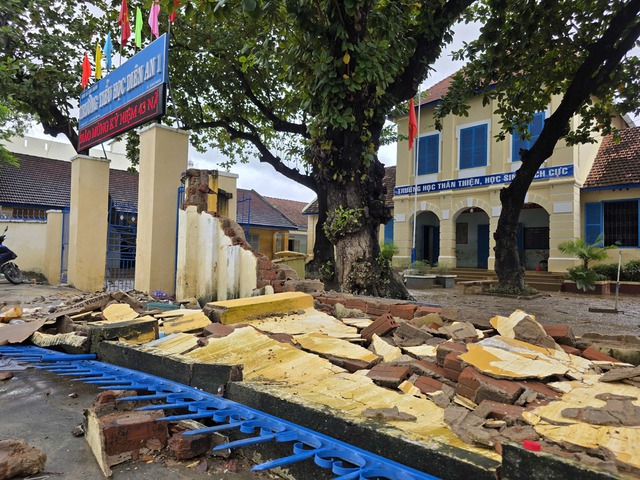
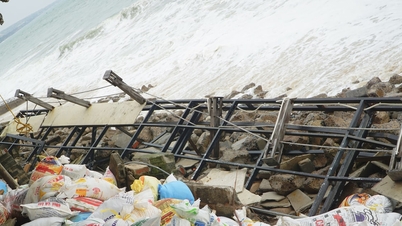
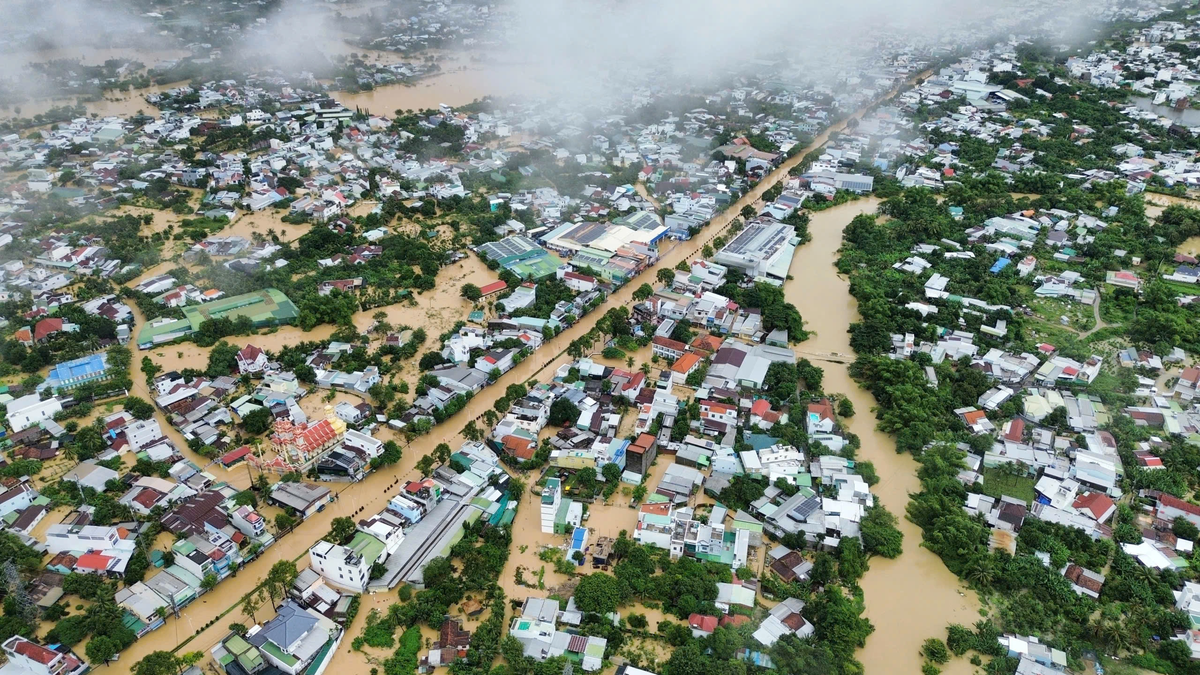
Schools in flooded areas of Khanh Hoa suffered heavy damage to facilities.
PHOTO: BA DUY
The Philippines' Model of Disaster Risk Reduction and Management
The Philippines is the country most affected by storms and floods in Southeast Asia, and is also a pioneer in the Disaster Risk Management and Mitigation Framework, which was implemented since 2010. Some notable highlights of this framework are:
The Ministry of Education has its own Department of Education (DepEd): this department manages from the central to local levels, standardizing the entire disaster response process in the education sector. Thanks to the specialized agency, decision-making, resource allocation and guidance for schools to implement disaster risk reduction and management become quick and synchronized.
The Philippines has built an education disaster data and information system (e-DRRM), which collects real-time data on school damage and connects it with meteorological, geological, and naval agencies. When typhoons hit, data is continuously updated to coordinate relief, repairs, and temporary learning arrangements.
In the Philippines, schools are community evacuation centers. Many schools are designated as shelters, with toilets, clean water, and storage for essentials. Students are protected, while the community has a reliable shelter. This is similar to Vietnam, where many schools are community evacuation centers.
Filipino students are familiar with storm, earthquake, first aid and escape drills , forming early response reflexes. This helps them not panic, and know how to coordinate with teachers and friends in emergency situations.
The Philippines has Project NOAH, a nationwide disaster assessment and warning system, launched after major storms. The platform provides real-time warning maps, helping schools identify risks and proactively suspend or evacuate students. NOAH integrates data on rain, floods, landslides and forecasts of dangerous areas, helping the Philippines "stay one step ahead", significantly reducing damage to education and communities.
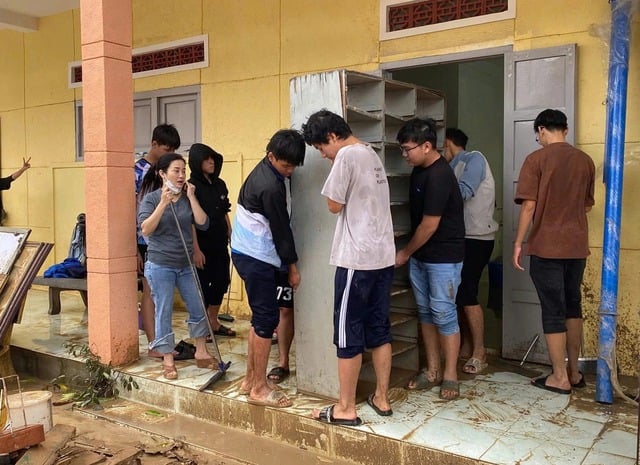
Students and teachers clean up together after the flood
Photo: TP
Current status of school disaster risk management in Vietnam
Every year, Vietnam faces storms, floods, landslides and droughts, causing schools in the Central, Central Highlands and northern mountainous regions to be frequently submerged, isolated or damaged. Teaching and learning are thus interrupted, sometimes for weeks, greatly affecting the quality of education.
In recent years, the education sector has implemented the "Safe Schools" plan, integrating disaster prevention knowledge into the curriculum, organizing evacuation drills and training for teachers. Some provinces have created risk maps, reviewed classroom locations, and upgraded facilities. However, these efforts have not yet met the increasingly severe level of natural disasters.
The biggest barrier is the lack of unified data. Each locality reports differently, making it difficult to aggregate, analyze and forecast. Next is the lack of a dedicated DRRM fund, which means emergency repairs or purchases of safety equipment are always dependent on the general budget and are often delayed.
School infrastructure remains weak. Thousands of small schools are located in landslide and flood-prone areas but have no suitable relocation plans; many old buildings do not meet storm and wind resistance standards. In addition, Vietnam lacks a plan to maintain learning when natural disasters last for a long time, causing students to miss many days of school.
Finally, the warning system is not closely connected to schools, so the decision to close or evacuate sometimes does not keep up with the developments of floods.
5 feasible solutions for Vietnam
To enhance the protection of students and teachers from natural disasters, the education sector needs a comprehensive strategy, adopting the Philippines’ experience but adapting it to Vietnam. Five key solutions are prioritized, including:
First , build a disaster database for education. The e-DRRM system collects damage in real time, helping departments and ministries grasp the situation and give timely instructions.
Second , establish a separate DRRM fund for schools. Independent funding allows for emergency repairs, equipment purchases, and immediate support for teachers and students in the event of an incident.
Third , develop a plan to maintain learning when the disaster lasts. Online learning, combined learning, relocation or schedule adjustment should be prepared in advance so that learning is not interrupted.
Fourth , standardize the "Safe School" model. School design and planning must be based on risk maps; prioritize relocating remote schools in landslide and deep flood areas.
Fifth , connect early warning systems with schools. Integrate meteorological, flood and landslide data into the education system, helping schools proactively close or evacuate at the right time.
Source: https://thanhnien.vn/quan-ly-rui-ro-thien-tai-cho-truong-hoc-la-chan-mem-bao-dam-an-toan-hoc-sinh-185251129231715756.htm








































































Comment (0)