

Quang Ninh province has issued numerous mechanisms and policies to encourage organizations and businesses to invest in research, transfer, and application of environmentally friendly scientific and technological advancements; to strengthen the application of artificial intelligence in the field of natural resources and environment; and to develop a circular economy and low-carbon economy model, linked to disaster prevention and adaptation to climate change. These are important orientations aimed at improving the quality of growth and ensuring sustainable development goals.
From 2022 to the present, Quang Ninh has allocated resources to implement hundreds of science and technology tasks, of which about 20% focus directly on the fields of environment and climate change.
Many topics have high practical value, such as models for recycling construction solid waste into building materials; the application of nano-technology organic fertilizers in agriculture ; and the use of fly ash and bottom ash in the production of building materials at the Cam Pha Thermal Power Plant… These initial results have helped the locality gradually change production habits, contributing to reducing emissions and saving resources.
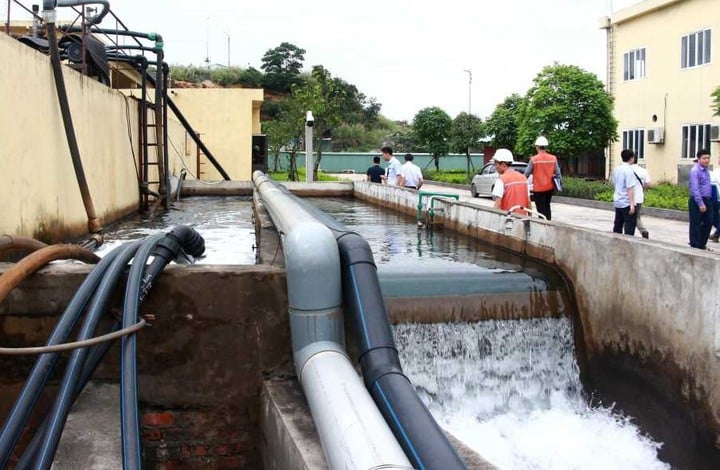
Solid waste and household waste treatment technologies have been invested in more comprehensively and modernly. Incinerators, regional treatment facilities, and waste-to-energy projects in some localities have addressed the increasing amount of waste generated, especially in urban and tourist areas. Waste sorting models at source continue to be widely adopted, connecting households, collection units, and recycling facilities, thereby significantly reducing the amount of waste that needs to be landfilled.
In rural areas, Quang Ninh prioritizes solutions that are easy to implement and suitable for each family's conditions. The model of using microbial preparations to treat organic waste is one example. Utilizing organic waste for composting reduces pressure on the collection system and creates a local source of fertilizer for agricultural production. These models quickly spread and are positively received by the people.
Alongside this, the transportation, urban development, and tourism sectors are promoting the application of clean technologies. The use of electric vehicles in passenger transport; the development of charging station systems; and the conversion of public lighting to solar-powered LED lights have yielded significant results in energy savings and emission reduction. To date, the province has nearly 1,200 electric taxis, hundreds of electric vehicles serving tourists, and over 65,000 urban lighting systems that have been converted.
The province places special emphasis on modernizing its environmental monitoring system. 171 automated monitoring stations across the province enable management agencies to track air and water quality and emissions in real time, improving the efficiency of inspection, supervision, and timely handling of pollution risks. This also serves as an important data source for applying artificial intelligence in forecasting and early warning systems.
Simultaneously, Quang Ninh is orienting its industrial park development towards a "green" model, strengthening the application of ESG standards, promoting the use of recycled materials and energy-saving technologies. This is a crucial factor in helping the province attract high-tech, environmentally friendly projects.
The increased application of science and technology in environmental protection has brought about significant changes in resource management, pollution control, and the improvement of people's quality of life. These systematic and decisive steps are helping Quang Ninh continue to affirm its position as a dynamic and pioneering locality in green and sustainable development, preserving natural values and creating a foundation for future generations.
Source: https://mst.gov.vn/quang-ninh-ung-dung-khoa-hoc-va-cong-nghe-phat-trien-kinh-te-xanh-ben-vung-197251211134010638.htm


![[Photo] Prime Minister Pham Minh Chinh receives Lao Minister of Education and Sports Thongsalith Mangnormek](/_next/image?url=https%3A%2F%2Fvphoto.vietnam.vn%2Fthumb%2F1200x675%2Fvietnam%2Fresource%2FIMAGE%2F2025%2F12%2F16%2F1765876834721_dsc-7519-jpg.webp&w=3840&q=75)

![[Image] Leaked images ahead of the 2025 Community Action Awards gala.](/_next/image?url=https%3A%2F%2Fvphoto.vietnam.vn%2Fthumb%2F1200x675%2Fvietnam%2Fresource%2FIMAGE%2F2025%2F12%2F16%2F1765882828720_ndo_br_thiet-ke-chua-co-ten-45-png.webp&w=3840&q=75)
![[Photo] Prime Minister Pham Minh Chinh receives the Governor of Tochigi Province (Japan)](/_next/image?url=https%3A%2F%2Fvphoto.vietnam.vn%2Fthumb%2F1200x675%2Fvietnam%2Fresource%2FIMAGE%2F2025%2F12%2F16%2F1765892133176_dsc-8082-6425-jpg.webp&w=3840&q=75)






































![[Photo] Prime Minister Pham Minh Chinh attends the Vietnam Economic Forum 2025](https://vphoto.vietnam.vn/thumb/402x226/vietnam/resource/IMAGE/2025/12/16/1765893035503_ndo_br_dsc-8043-jpg.webp)





















Comment (0)