

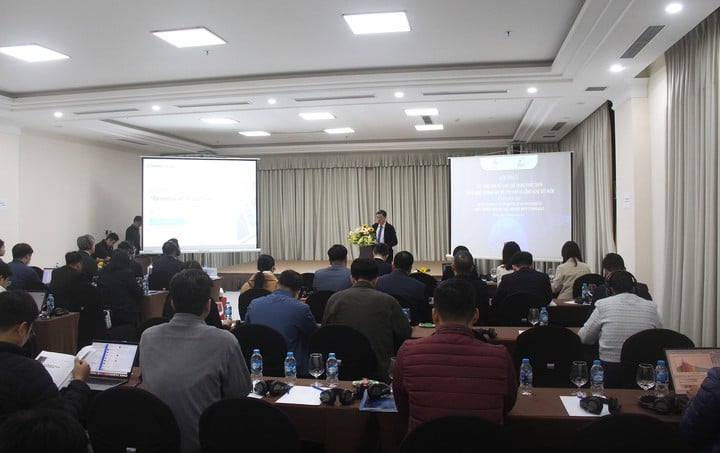
Overview of the Conference.
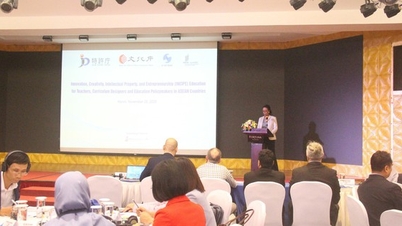
In his opening remarks at the workshop, Director General of the Intellectual Property Office Luu Hoang Long emphasized that, in the context of increasingly fierce global technological competition, mastering strategic technologies is becoming a key factor, directly linked to national security, energy security, competitiveness, and sustainable development of each country. Along with this, intellectual property and patent information are playing an increasingly important role in policy planning and guiding research and development of technology.
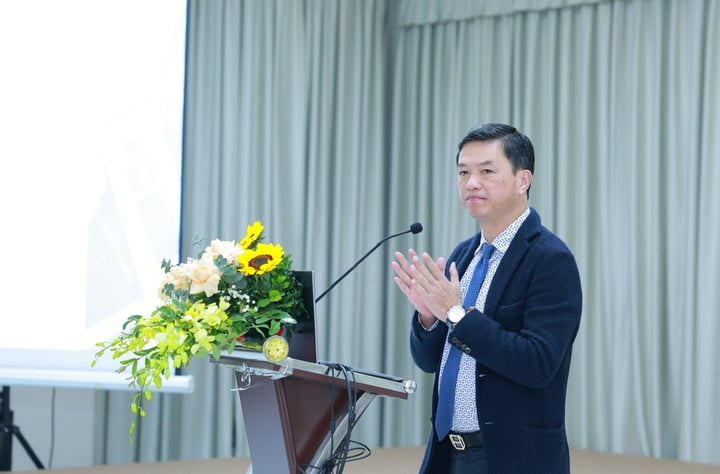
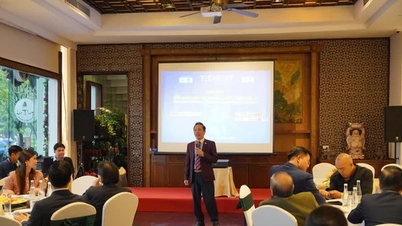
Mr. Luu Hoang Long, Director of the Intellectual Property Office, delivered the opening remarks at the workshop.
For Vietnam, small modular reactor technology and rare earth technology are not only new technological directions, but also important foundations for national energy security and technological self-reliance.
Given the increasing energy demand, the growing need for emission reduction, and the fierce competition for high-tech input resources, the efficient development of these two sectors has long-term strategic significance, contributing to enhancing Vietnam's position and sustainable participation in the global technology value chain.
Director Luu Hoang Long stated that technologies related to small modular reactors and rare earth elements have been included in the List of Strategic Technologies and Strategic Technology Products issued under Decision No. 1131/QD-TTg dated June 12, 2025, by the Prime Minister , thereby clearly affirming the priority development direction at the national level.
Building on the positive results of the patent mapping workshop held in March 2025, the Vietnam Intellectual Property Office, in collaboration with the Japan International Cooperation Agency (JICA), is organizing this workshop to equip delegates with modern patent analysis methods and tools, providing practical support for the management, research, development, and strategic technology roadmap planning of Vietnam.
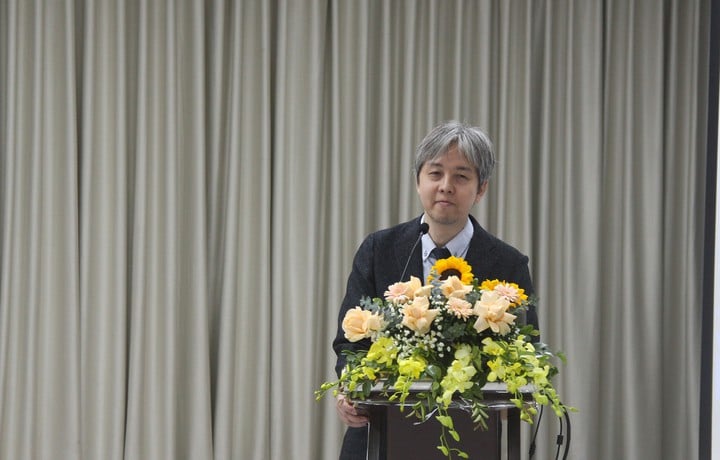
Representative of the Japan International Cooperation Agency.
Echoing the sentiments of the Director General of the Intellectual Property Office, representatives from the Japan International Cooperation Agency (JICA) highly appreciated Vietnam's inclusion of small module reactor technology and rare earth technology in the list of national strategic technologies.
According to JICA, the application of patent mapping not only provides useful knowledge insights for future technological development but also allows for the analysis of patent data from multiple perspectives, thereby enhancing the accuracy and depth of technological assessments.
The JICA representative emphasized that patent analysis should not be limited to the framework of workshops, but should be considered a "sharp weapon" and applied regularly and continuously in daily work. Maintaining and effectively utilizing this tool will support businesses, universities, and research institutes in building and refining research and development strategies, business strategies, and intellectual property strategies, thereby enhancing competitiveness and proactively integrating into the technological landscape.
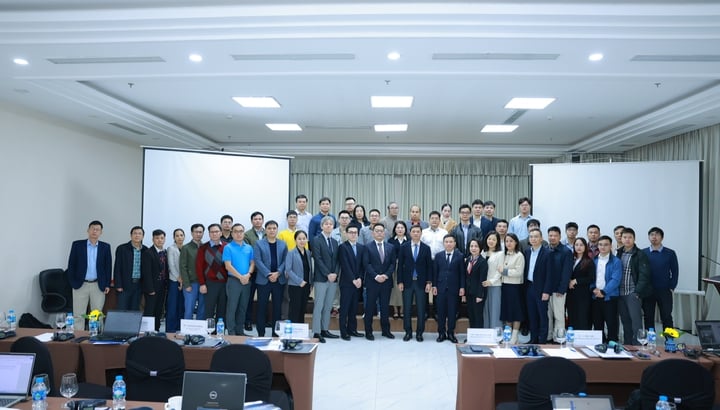
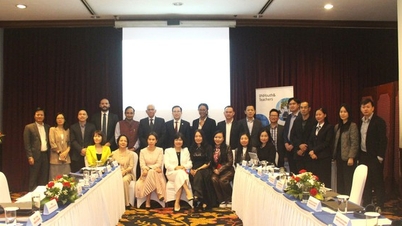
The delegates took a commemorative photo.
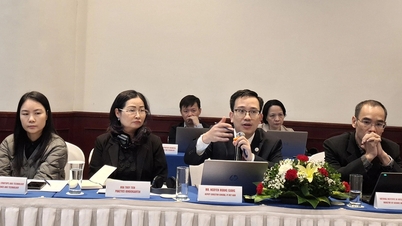
At the workshop, Nunokawa Takuro (Property Co., Ltd.) presented an overview of patent mapping – an analytical tool increasingly used in research, technology development, and policy planning. Accordingly, patent mapping is an analytical method based on the systematic collection and processing of large volumes of patent documents, arranged according to relationships and timelines to clarify the technological development process and the activities of participating entities.
Unlike simply compiling the number of patent applications, patent maps allow for in-depth insights into technological trends, competitive structures, the concentration of intellectual property rights, and untapped technological gaps. Through charts and visualizations, this tool supports the identification of technology lifecycles, the determination of key technology areas, emerging technologies, and the patent registration strategies of businesses and research organizations at national and global levels.
Representatives from Property Company stated that patent maps can be effectively applied at multiple levels. At the organizational, business, and research institute level, this tool supports R&D topic selection, infringement risk assessment, identification of potential partners, and the shaping of intellectual property strategies. At the national level, patent maps help visualize growth areas, identify gaps in the technology ecosystem, thereby providing a basis for allocating research resources, selecting priority sectors, and developing long-term industrial development policies.
Also at the workshop, delegates were presented with two case studies in the fields of small modular reactors and rare earth technology, specifically illustrating how to build and analyze patent maps for strategic technologies. Through practical examples, speakers presented the process of collecting, classifying, and cleaning patent data, along with methods for visualizing and interpreting analysis results to guide research, development, and technological cooperation.
In the afternoon practical session, delegates directly experienced popular tools and data sources such as Lens and WIPS to build patent maps in the field of small modular reactors and rare earth elements.
Source: https://mst.gov.vn/ung-dung-ban-do-sang-che-trong-phat-trien-cong-nghe-lo-phan-ung-mo-dun-nho-va-dat-hiem-197251216145114961.htm
![[Image] Leaked images ahead of the 2025 Community Action Awards gala.](/_next/image?url=https%3A%2F%2Fvphoto.vietnam.vn%2Fthumb%2F1200x675%2Fvietnam%2Fresource%2FIMAGE%2F2025%2F12%2F16%2F1765882828720_ndo_br_thiet-ke-chua-co-ten-45-png.webp&w=3840&q=75)

![[Photo] Prime Minister Pham Minh Chinh receives Lao Minister of Education and Sports Thongsalith Mangnormek](/_next/image?url=https%3A%2F%2Fvphoto.vietnam.vn%2Fthumb%2F1200x675%2Fvietnam%2Fresource%2FIMAGE%2F2025%2F12%2F16%2F1765876834721_dsc-7519-jpg.webp&w=3840&q=75)
![[Photo] Prime Minister Pham Minh Chinh receives the Governor of Tochigi Province (Japan)](/_next/image?url=https%3A%2F%2Fvphoto.vietnam.vn%2Fthumb%2F1200x675%2Fvietnam%2Fresource%2FIMAGE%2F2025%2F12%2F16%2F1765892133176_dsc-8082-6425-jpg.webp&w=3840&q=75)
![[Live] 2025 Community Action Awards Gala](/_next/image?url=https%3A%2F%2Fvphoto.vietnam.vn%2Fthumb%2F1200x675%2Fvietnam%2Fresource%2FIMAGE%2F2025%2F12%2F16%2F1765899631650_ndo_tr_z7334013144784-9f9fe10a6d63584c85aff40f2957c250-jpg.webp&w=3840&q=75)










































![[Photo] Prime Minister Pham Minh Chinh attends the Vietnam Economic Forum 2025](https://vphoto.vietnam.vn/thumb/402x226/vietnam/resource/IMAGE/2025/12/16/1765893035503_ndo_br_dsc-8043-jpg.webp)





















Comment (0)