The four extreme points of Vietnam – the northernmost point at Lung Cu (Tuyen Quang province), the westernmost point at A Pa Chai (Dien Bien province), the easternmost point at Mui Doi (Khanh Hoa province), and the southernmost point at Dat Mui (Ca Mau province) – have long been sacred landmarks, a place that anyone who loves exploration longs to visit at least once.
The breath of spring in the land of jagged rocks.
Spring in Lung Cu ( Tuyen Quang province) always displays a rugged yet captivating beauty, leaving everyone breathless upon arriving. In the crisp, cold winds of the border region, the clatter of horse hooves returns, bringing with it a new wave of vitality.
From Then Pa village to Lung Cu flagpole, the journey to explore the far north on horseback evokes a feeling that is both familiar and strange. Horses have long been the soul of this land. Names like Ma Pi Leng Pass (a steep slope like a horse's nose), Tham Ma Pass (a slope that tests the horse's strength)... are evidence of generations' close connection with horses. And now, horses are returning to this land on a new journey, a journey that takes tourists to discover the mysteries of the rocky plateau.
When Mr. Vu Gia Dai decided to choose Then Pa as the starting point for his sustainable community tourism model, the Mong village at the foot of the Lung Cu flagpole gradually changed its appearance day by day. After the long winter, the moss-covered yin-yang tiled roofs began to gleam in the new sunlight. The entrance to the village, paved with jagged stones, was smoothed by the villagers in preparation for welcoming visitors.
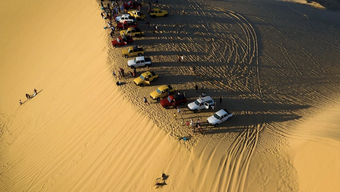
In the early morning, the mountain air was crisp and warm, mingled with the gentle smoke from the kitchen stove and the aroma of freshly steamed cornmeal. Near where the young people from Hanoi had parked their three off-road motorcycles the previous evening, the homeowner had already tied up several local horses. Their coats were polished, and their saddles neatly adjusted. Everything was ready for a new day's work.

Although a relatively new service, horseback tours of the village have made a special impression on tourists. Riding on horseback, visitors not only see the sharp, jagged rocks and hear the whistling mountain wind, but also seem to feel the pulse of the land echoing with each hoofbeat.
Viewing the rocky plateau from horseback
As the initiator of bringing horses back into local tourism, Vu Gia Dai recounts that since 2021, he and the locals have been renovating homestays, opening experiential activities, and most importantly, "reviving" the image of horses that have been closely associated with the plateau. For him, preserving traditional values and spreading the beauty of local culture is the most sustainable way for Then Pa to open its doors to friends from all over the world. Therefore, experiencing the northernmost point on horseback is not simply a discovery tour.
It's a journey to rediscover emotions, to the primal stirrings of a border region undergoing transformation yet still clinging to the soul of rocks, wind, and the rhythmic hoofbeats that carry the past into the present. The image of the Hmong people riding on horseback, taking tourists across sharp, jagged rocks to the northernmost point, remains an unforgettable experience for many visitors. On horseback, all senses are awakened; the scent of mountain wind mingles with the smell of wild grass, the clatter of hooves on the rocks, and before you lies a magnificent natural landscape.
Horseback riding tours are often combined with a tour around Then Pa - Lo Lo Chai and the road to Lung Cu flagpole. The route, lasting just over two hours, is not long but offers a rich experience, perfect for visitors to feel the local way of life at a slow and vibrant pace. Horseback tours also connect Cang Tang, Ta Gia Khau, Seo Lung, and further afield, you can follow trails towards villages near the border.
The most heartwarming aspect is that horse tourism in Then Pa not only revives a cultural tradition but also brings new life to the entire village. The villagers keep their houses clean and beautiful, plant more flowers, and offer services to tourists, while the horses become valuable assets, providing a sustainable income. The spring atmosphere here is therefore more vibrant. The elderly sit basking in the sun on their porches, their eyes following the clatter of horses' hooves through the village, feeling a rush of youthful memories...
Photographer Nguyen Viet Cuong, who has captured the beauty of Dong Van through his lens many times, couldn't hide his emotion when he first rode a horse to explore the far north. He recounted that the rocky plateau was familiar from his previous assignments, but when he mounted a horse, everything suddenly felt different: the rhythm of hooves carried him across the rocky rice paddies, and the cool wind from the deep valleys swept up, making him feel as if he were traveling back in time to a time when people had to travel all day to get from their villages to the town center for the market day. "It was like I was seeing Ha Giang (now Tuyen Quang province) from a different perspective, slower, deeper, and more emotionally resonant," he shared.

Like the photographer from Hanoi, many young people traveling to this region want to experience the far north on horseback because it's a journey to rediscover the pristine emotions of the borderland, where culture, nature, and memories intertwine in every step of the horse.
Spring in the far North is not boisterous. It arrives in its own unique way, with the cold wind, the color of wild peach blossoms, the sound of horse hooves on the rocks, and the simple warmth of the people. Exploring the far North in this rustic way brings a sense of adventure, an emotion like searching for a connection between oneself and the country. For only when standing amidst the gray rocky landscape can one truly feel the vastness of the homeland and the beauty of places that are only marked with tiny lines on a map.
Source: https://www.sggp.org.vn/rong-ruoi-cuc-bac-post838497.html