

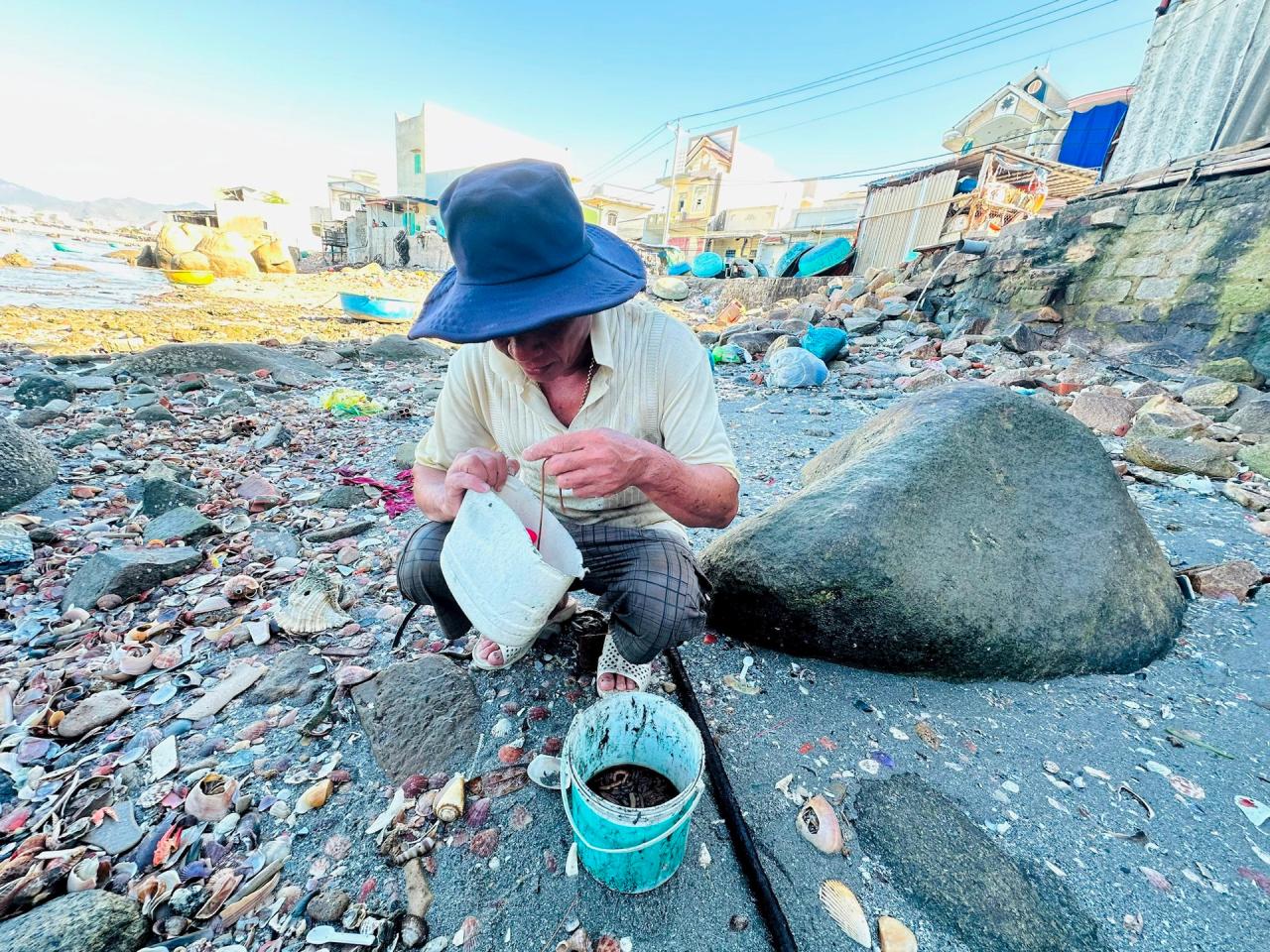
“No fish or squid would refuse this bait. Although digging is quite hard and it’s difficult to hook the bait, this is the number one food source for anglers…” – Mr. Huynh Tam (Ha Thuy 2 village, Chi Cong commune, Tuy Phong district) shared while taking advantage of the low tide to dig for bait.
Hard work
Early in the mornings of the last days of the Year of the Rabbit 2023 – the time when the tide recedes – the weather in the coastal area of Chi Cong commune, Tuy Phong district, as well as many other coastal areas of Binh Thuan, was affected by rough seas. It was the feeling of strong northerly winds blowing, bringing a chill, even though the sun was shining brightly.

For the locals, the changing weather and the ebb and flow of the tides at the beginning and middle of the month are probably all too familiar. But for someone from elsewhere like me, it's certainly not something everyone can immediately adapt to. They also find it difficult to fully understand the arduous daily work of people whose entire lives depend on the sea for their livelihood…
It was still early morning, but the beach near the old Chi Cong market was already bustling and lively. Partly because it was close to the market, and partly because it was the last day of the lunar month and the tide was low. A considerable distance from the shore, fishermen, those involved in the fishing industry's logistics such as middlemen and porters, and even local residents lined up to unload their catch at the fishing boat's mooring point. As the tide receded further, another group of fishermen, closer to the residential area, separated themselves from the bustling atmosphere of the market.
They were "immersed," sitting down on the thick, black mud, mixed with countless seashells, snails, and... trash, painstakingly digging for sea cucumbers. Their equipment included protective clothing, long boots, gloves, a small plastic cup, a container, and a crowbar.
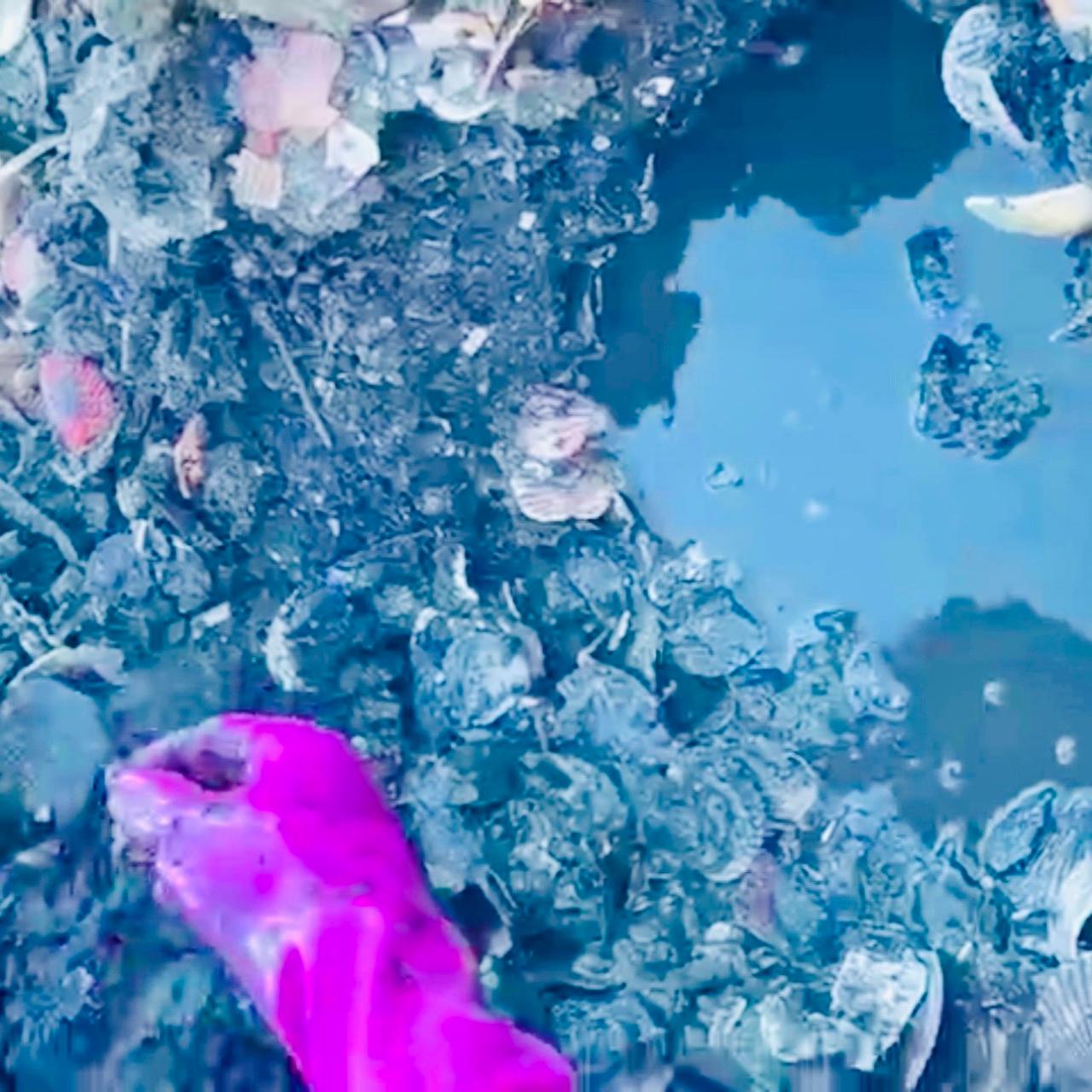
At first glance, the job seems quite simple, but in reality, doing this job requires hard work, tolerance of dirt and cold, and the ability to immerse oneself for hours in seawater and mud. Furthermore, to dig for sea cucumbers effectively, one must have the skill and dexterity to gently handle the tiny cucumbers, no bigger than a chopstick tip, avoiding cutting them, which would kill them, making them unsaleable and unsuitable for storage.
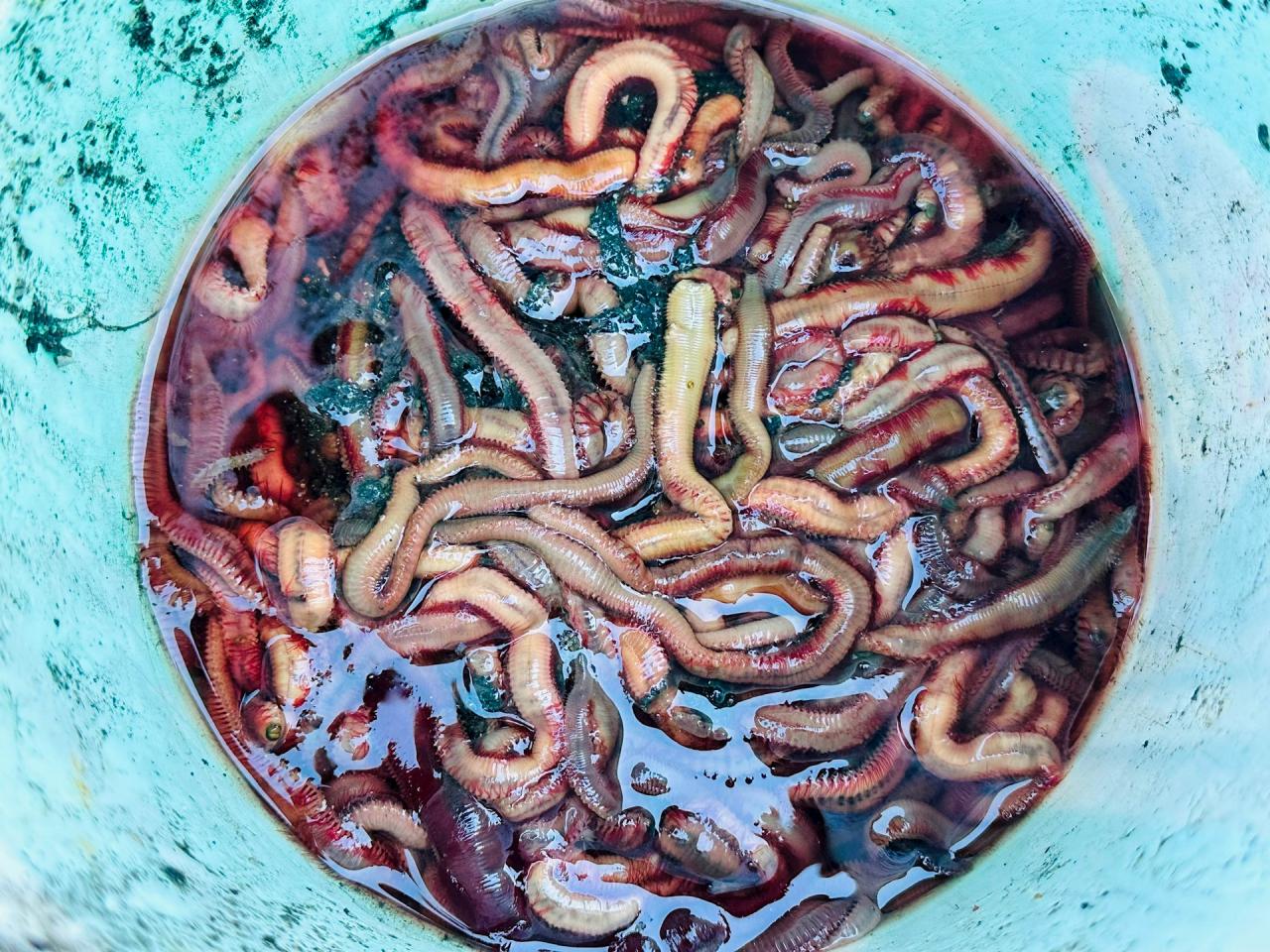
Because they started digging early, by around 7 a.m., each person present had collected about one-third of a large bucket of paint, approximately 2 kg. This finished product is currently being sold for around 150,000 VND/kg. The main consumers are shrimp hatcheries or those using it as fishing bait.
The perfect bait for seafood
Seeing the catch from these fishermen firsthand, I was slightly surprised and a little creeped out. At first glance, the sea worms looked quite similar to earthworms, but with a slimy texture and numerous tiny, protruding legs along their sides… not unlike the "sea worms" found in the rivers of North Central Vietnam.
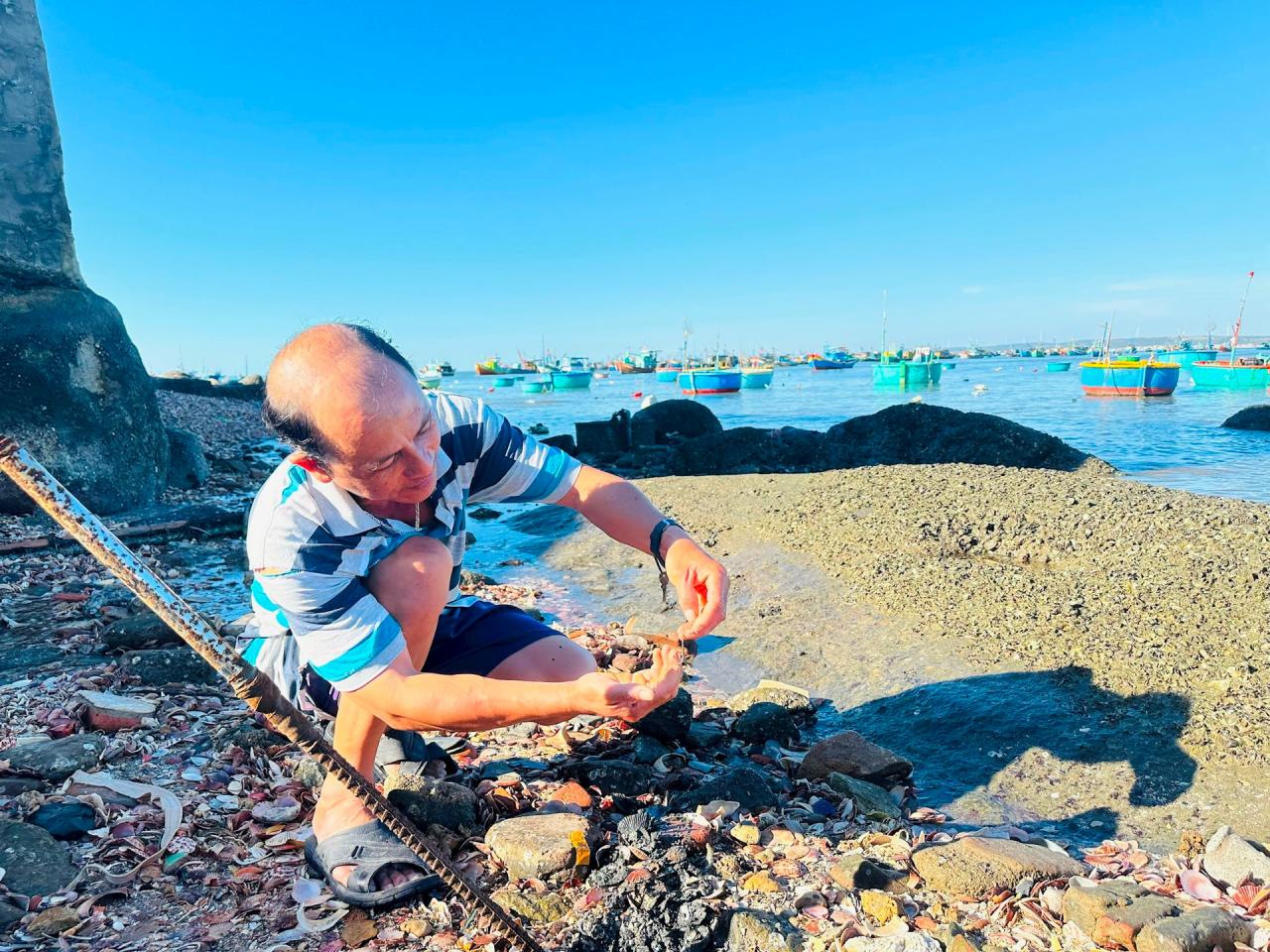
Mr. Huynh Tam (Ha Thuy 2 village, Chi Cong commune), also a fisherman specializing in squid and fish, held a small bucket in his hand and led us along the rocky steps down to the sea where the tide had receded. Large rocks on the shell beach jutted out, surrounded by thick layers of shells piled up over many years. Mr. Tam turned over a rock, pointing down and saying: "Sea worms usually live close to rocks, burrowing deep into the mud. If someone has years of experience digging for sea worms, when they turn over the rock they will see the murky water, or the tracks (movement paths) of the worms to catch them." According to Mr. Tam, sea worms have soft bodies, are highly nutritious, and are a favorite food of most types of seafood. Local people call them sea worms, but they are not poisonous or itchy as their name suggests. For a long time, they have been the number one bait for fishermen in the region in particular and the whole country in general, to bring in many catches from the sea.
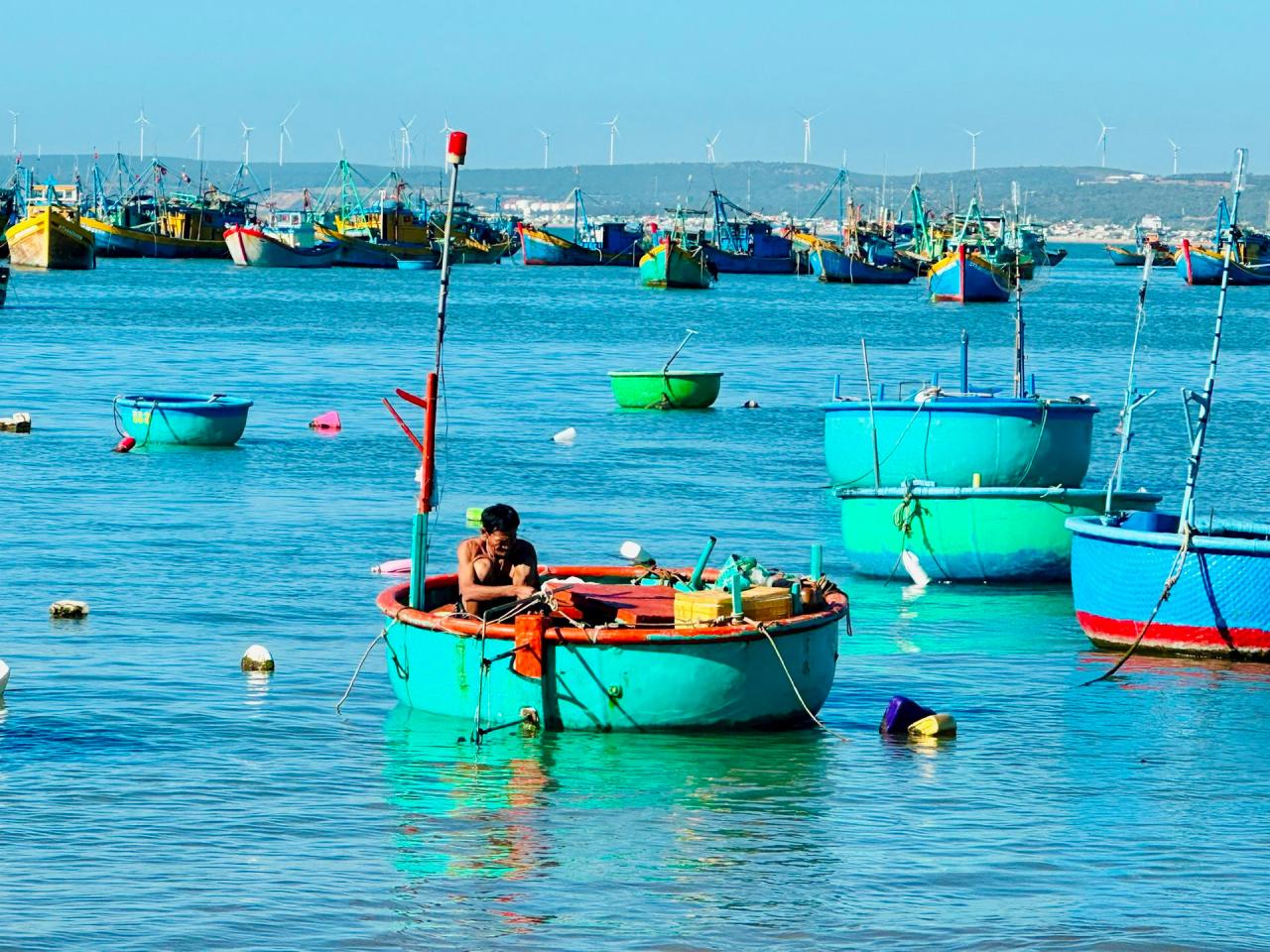
Mr. Tam said that this species used to be very abundant, but in recent years, due to strong market demand, people have been buying it to feed shrimp larvae, so people are competing to dig it up. In the coastal areas of South Central Vietnam, many laborers travel from one province to another to dig up sea cucumbers for personal use or to sell to traders to earn extra income. In Chi Cong commune alone, there are over 100 boats and rafts engaged in this fishing activity. For local fishermen, each day or night fishing trip usually involves preparing about half a kilogram of sea cucumbers, enough for fishing, and then digging up more the next day, rather than storing them, as this type of seafood only lasts for a few days. On days when the tide is high and they can't dig up sea cucumbers, the fishermen buy clams to use as bait…
Given the reality of dwindling marine resources, not only are seafood species becoming scarcer, but even sea cucumbers are becoming increasingly rare due to intense human exploitation. For fishermen in the coastal areas of Chi Cong in particular, and many other coastal communes in the province in general, despite the hardships and difficulties, they remain dedicated to the sea, even to arduous tasks like hunting sea cucumbers, for the sake of making a living.
Source
![[Photo] General Secretary and President To Lam works with the Party Committee of the Ministry of Health on the work of Vietnamese traditional medicine.](https://vphoto.vietnam.vn/thumb/1200x675/vietnam/resource/IMAGE/2026/05/20/1779294323718_a1-bnd-2978-3319-jpg.webp)
![[Image] "Journey of Hope" promotes the organ and tissue donation movement in Vietnam.](https://vphoto.vietnam.vn/thumb/1200x675/vietnam/resource/IMAGE/2026/05/20/1779294400833_1-8910-jpg.webp)
![[Photo] National Assembly Chairman Tran Thanh Man working with the Standing Committee of the National Assembly's Delegation Affairs Committee.](https://vphoto.vietnam.vn/thumb/1200x675/vietnam/resource/IMAGE/2026/05/20/1779294340023_ndo_br_1-1691-jpg.webp)






















































































Comment (0)