

At a recent National Assembly discussion, Deputy Minister of Health Nguyen Tri Thuc emphasized: "Residents are the cream of the crop in the medical profession." This view has received widespread consensus, reinforcing the direction of standardizing medical training according to international practices. Previously, Permanent Deputy Prime Minister Nguyen Hoa Binh also affirmed: "Only medical schools can train doctors."
In fact, over the years, the Residency Program has been considered an elite training program, selecting the best students for intensive training in a hospital environment. This is an honorable choice, but not a mandatory condition for doctors to be licensed to practice. However, in response to the need to improve service quality and ensure patient safety in the context of increasingly complex disease models, many experts believe that the post-graduation practice phase needs to be redesigned to be equivalent to the Residency program.
Accordingly, residency training or a standardized practice model based on residency principles should become a mandatory step before physicians can practice independently, to ensure solid clinical competence and reduce professional risks.
Although Vietnam has regulations on the post-graduation practice period (12 months of practice to obtain a practice license, 12 months of work and 24 months of CKI study with some clinical positions), according to many doctors, the current model may not yet create a "thick" enough practice period for young doctors to accumulate solid practical experience. This is considered a gap that makes the story of standardizing post-graduation training more concerned. Many opinions suggest that this standardization process should be linked to the innovation roadmap led by the Ministry of Health , both suitable for practical conditions and aiming at the goal of improving the quality of medical human resources.
Practical training must become mandatory
With many years of experience in the field of surgery in Ho Chi Minh City, sharing with reporters of Health and Life Newspaper, Dr. Nguyen Quang Thien said that the BSNT program should be seen not only as an honor but also as a mandatory practice stage so that doctors can take independent professional responsibility.
He analyzed: "In many countries with developed medicine, there is no model that allows doctors to practice independently after only 6 years of university. Residency is a mandatory training step, helping doctors practice, accumulate enough cases and perfect professional skills under close supervision."
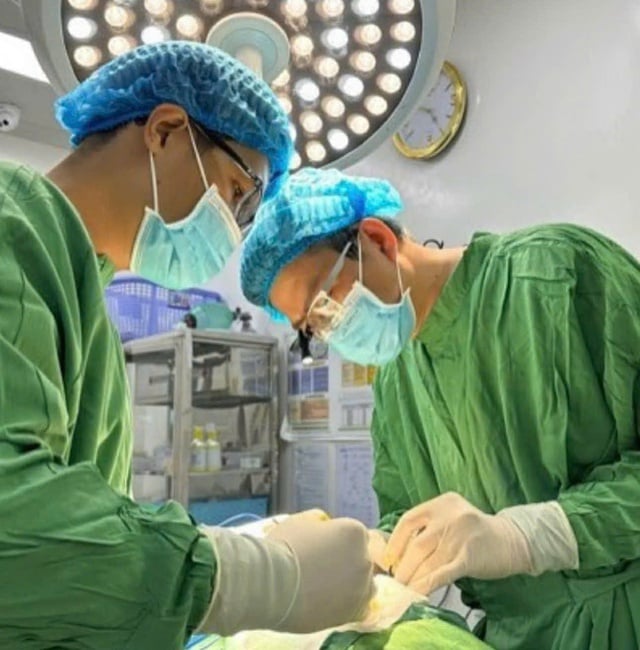
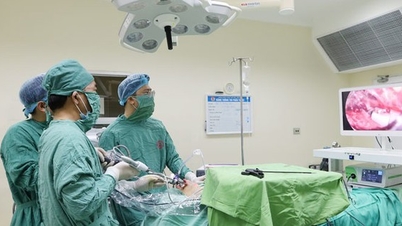
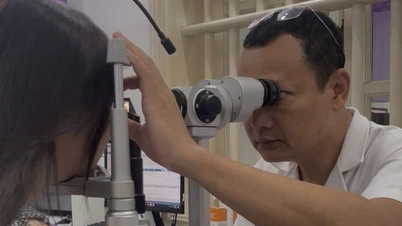
Illustration photo.
According to Dr. Nguyen Quang Thien, considering emergency or surgical care as the "privilege" of a small group will create a large quality gap in the entire system. If we want to ensure patient safety, frontline doctors need to be trained in real combat and have the ability to independently handle complex clinical situations. He emphasized that the strength of the health system does not lie in the number of postgraduate degrees, but in the team of well-trained and experienced clinicians.
To realize this goal, Dr. Nguyen Quang Thien proposed to build BSNT into the minimum standard for independent practicing physicians, especially in interventional clinical specialties. This requires standardizing the training program, clearly defining output capacity, practice time and minimum number of cases. At the same time, it is necessary to expand the scale of residency training along with quality assurance, creating opportunities for medical students after graduation to participate in in-depth training.
"When residency training becomes a unified foundation for the medical team, the quality of medical examination and treatment will be improved, contributing to strengthening people's trust and elevating Vietnamese medicine," he said.
Input quality control - an urgent condition
Sharing the same view on the standardization requirement, in an interview with the Health and Life Newspaper reporter, Dr. Le Dong Phuong, former Director of the Center for University Education Research, Vietnam Institute of Educational Sciences (Ministry of Education and Training), said that the National Assembly's discussion of the regulation that "only medical schools can train doctors" is appropriate in the current context when recently a number of universities, especially private schools, have massively opened more health science majors, mainly training general practitioners. Meanwhile, many units do not have practice hospitals, the conditions are not sufficient, the problem of facilities and lecturers is also lacking, leading to many people's concerns about the quality of training human resources in the health sector.
"The medical industry is directly related to the care and protection of people's health. If training is not guaranteed, or in other words, the quality is poor, it will lead to many consequences. Therefore, this issue needs to be carefully considered and considered," said Dr. Le Dong Phuong.
However, he also acknowledged that it is necessary to clearly define the concept of "what is a medical school". He analyzed that independent medical schools like the traditional model have a huge advantage in terms of expertise when focusing on training in health sciences. But in the era of digital technology, technology 4.0, and artificial intelligence like today, if a medical university or medical faculty is located in a multidisciplinary university, it will have more advantages in absorbing scientific and technological advances. This is also something to consider, especially in the technological era, when scientific and technological fields have penetrated all other fields.
On the other hand, it is also necessary to question whether the ability to meet the ratio of medical staff to population can be guaranteed if it is limited to independent medical schools. "To implement effectively, there must be a policy to increase the scale of medical training and have solutions to link training with other scientific and technical fields," Dr. Le Dong Phuong stated his opinion.
Source: https://suckhoedoisong.vn/siet-chat-luong-dao-tao-nganh-y-chuan-hoa-thuc-hanh-va-kiem-soat-dieu-kien-mo-nganh-169251130231619254.htm


![[Photo] Prime Minister Pham Minh Chinh receives President of Cuba's Latin American News Agency](/_next/image?url=https%3A%2F%2Fvphoto.vietnam.vn%2Fthumb%2F1200x675%2Fvietnam%2Fresource%2FIMAGE%2F2025%2F12%2F01%2F1764569497815_dsc-2890-jpg.webp&w=3840&q=75)












































































Comment (0)