

To ensure the meaningful and effective implementation of technological solutions to serve citizens and businesses, and to promote digital transformation in the application of population data, identification, and electronic authentication, the Prime Minister has issued a directive assigning tasks to relevant ministries and agencies. Regarding the People's Committees of provinces and cities, the Prime Minister has directed as follows:
- Regarding the "Digital Literacy Platform," localities need to actively promote and encourage the public, especially young people, students, and workers, to participate in learning and improving their digital literacy and skills, as well as traffic safety, on the platform. Specifically, 100% of students in the area should participate in traffic safety and online safety courses through the "Digital Literacy Platform."
- Regarding the 25 full-process online public services outlined in Plan No. 02-KH/BCĐTW dated June 19, 2025, of the Central Steering Committee on Science , Technology, Innovation, and Digital Transformation, the Ministries of Public Security, Finance, Justice, and Industry and Trade shall ensure the maintenance and effective provision of the 25 full-process online public services assigned in Plan No. 02-KH/BCĐTW. From October 1, 2025, the Public Administrative Service Centers at all levels will no longer collect paper documents for the 25 essential full-process online public services, replacing them with data exploitation. The People's Committees of provinces and cities shall direct the allocation of sufficient means, machinery, equipment, and human resources of officials, civil servants, public employees, and youth union members to guide and support citizens in need at the Public Administrative Service Centers at all levels.
- Regarding the implementation of document integration on the VneID application, ministries, sectors, and People's Committees of provinces and cities, in coordination with the Ministry of Public Security , should urgently review, evaluate, and restructure business processes, reducing the number of required documents for 324 administrative procedures already integrated on VNeID to replace physical documents, and 196 administrative procedures with data sources currently being exploited from ministries and sectors, in order to reduce and simplify administrative procedures.
Amend, supplement, issue, or advise competent authorities to amend, supplement, or issue legal documents specifying the issuance of 31 essential personal documents and 8 essential organizational/business documents through the VNeID application, only issuing physical documents upon citizen request, and eliminating fees related to the production, printing, and issuance of physical documents. Based on the Ministry of Public Security's proposed list of 578 types of documents to be integrated into VNeID (including 188 for individuals and 390 for organizations), ministries, sectors, and localities should study the integration plan and roadmap, completing it by November 2025. Simultaneously, instruct and direct officials and civil servants to absolutely not require citizens to submit or present documents whose information is already integrated into the VNeID application or in connected and shared databases when carrying out administrative procedures; Organize awareness campaigns to encourage individuals and organizations to proactively check, synchronize, and integrate documents under their management into their VNeID accounts for use in transactions. Coordinate with the Ministry of Public Security to implement a solution for integrating and sharing data on the results of electronic administrative procedures for organizations and individuals on the VNeID application.
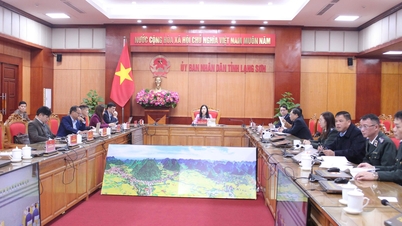
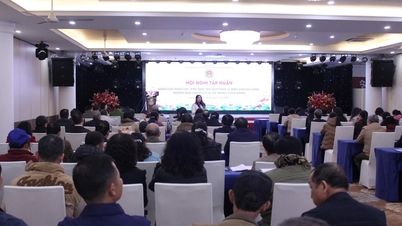
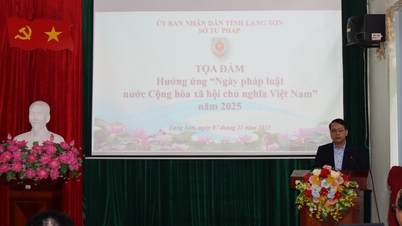
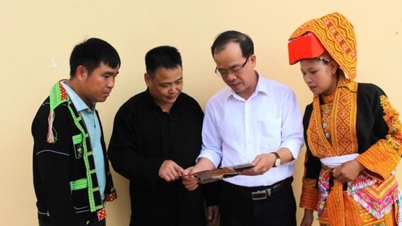
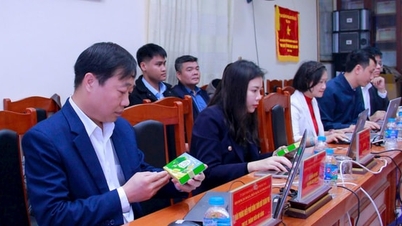
To implement Directive No. 24/CT-TTg, the Department of Justice has proactively disseminated the contents of Directive No. 24/CT-TTg dated September 13, 2025, of the Prime Minister to civil servants, public employees, and the people. This includes focusing on the elimination of paper documents for 25 essential public services that have been fully implemented, replacing them with data-driven processes. These include administrative procedures under the jurisdiction of the Justice sector such as: integrated administrative procedures for birth registration, permanent residence registration, issuance of health insurance cards for children under 6 years old; death registration, removal of permanent residence registration, settlement of funeral expenses, death benefits, etc., which have been fully implemented. To implement the above tasks, civil registration agencies in the province need to ensure they meet the conditions regarding information technology infrastructure, equipment, and human resources at the Public Administrative Service Center. Instruct citizens to use their electronic identification accounts to submit applications and receive results online; when processing applications, civil servants receiving and handling applications should proactively search for data connected and shared between databases and the provincial-level administrative procedure processing system.
Luong Hoai
Source: https://sotp.langson.gov.vn/tin-tuc-su-kien/thuc-day-trien-khai-cac-giai-phap-cong-nghe-gan-voi-du-lieu-dan-cu-dinh-danh-va-xac-thuc-dien-tu.html

![[Image] Leaked images ahead of the 2025 Community Action Awards gala.](/_next/image?url=https%3A%2F%2Fvphoto.vietnam.vn%2Fthumb%2F1200x675%2Fvietnam%2Fresource%2FIMAGE%2F2025%2F12%2F16%2F1765882828720_ndo_br_thiet-ke-chua-co-ten-45-png.webp&w=3840&q=75)
![[Image] The tenacious fighting spirit of Vietnamese women's football](/_next/image?url=https%3A%2F%2Fvphoto.vietnam.vn%2Fthumb%2F1200x675%2Fvietnam%2Fresource%2FIMAGE%2F2025%2F12%2F17%2F1765990260956_ndo_br_4224760955870434771-copy-jpg.webp&w=3840&q=75)
![[Photo] Prime Minister Pham Minh Chinh receives the Governor of Tochigi Province (Japan)](/_next/image?url=https%3A%2F%2Fvphoto.vietnam.vn%2Fthumb%2F1200x675%2Fvietnam%2Fresource%2FIMAGE%2F2025%2F12%2F16%2F1765892133176_dsc-8082-6425-jpg.webp&w=3840&q=75)
![[Live] 2025 Community Action Awards Gala](/_next/image?url=https%3A%2F%2Fvphoto.vietnam.vn%2Fthumb%2F1200x675%2Fvietnam%2Fresource%2FIMAGE%2F2025%2F12%2F16%2F1765899631650_ndo_tr_z7334013144784-9f9fe10a6d63584c85aff40f2957c250-jpg.webp&w=3840&q=75)
![[Photo] Prime Minister Pham Minh Chinh receives Lao Minister of Education and Sports Thongsalith Mangnormek](/_next/image?url=https%3A%2F%2Fvphoto.vietnam.vn%2Fthumb%2F1200x675%2Fvietnam%2Fresource%2FIMAGE%2F2025%2F12%2F16%2F1765876834721_dsc-7519-jpg.webp&w=3840&q=75)















































![[Live] Closing Ceremony and Award Presentation for the "Impressive Vietnam Tourism" Video/Clip Creation Contest 2025](https://vphoto.vietnam.vn/thumb/402x226/vietnam/resource/IMAGE/2025/12/17/1765974650260_z7273498850699-00d2fd6b0972cb39494cfa2559bf85ac-1765959338756946072104-627-0-1338-1138-crop-1765959347256801551121.jpeg)

















Comment (0)