

 |
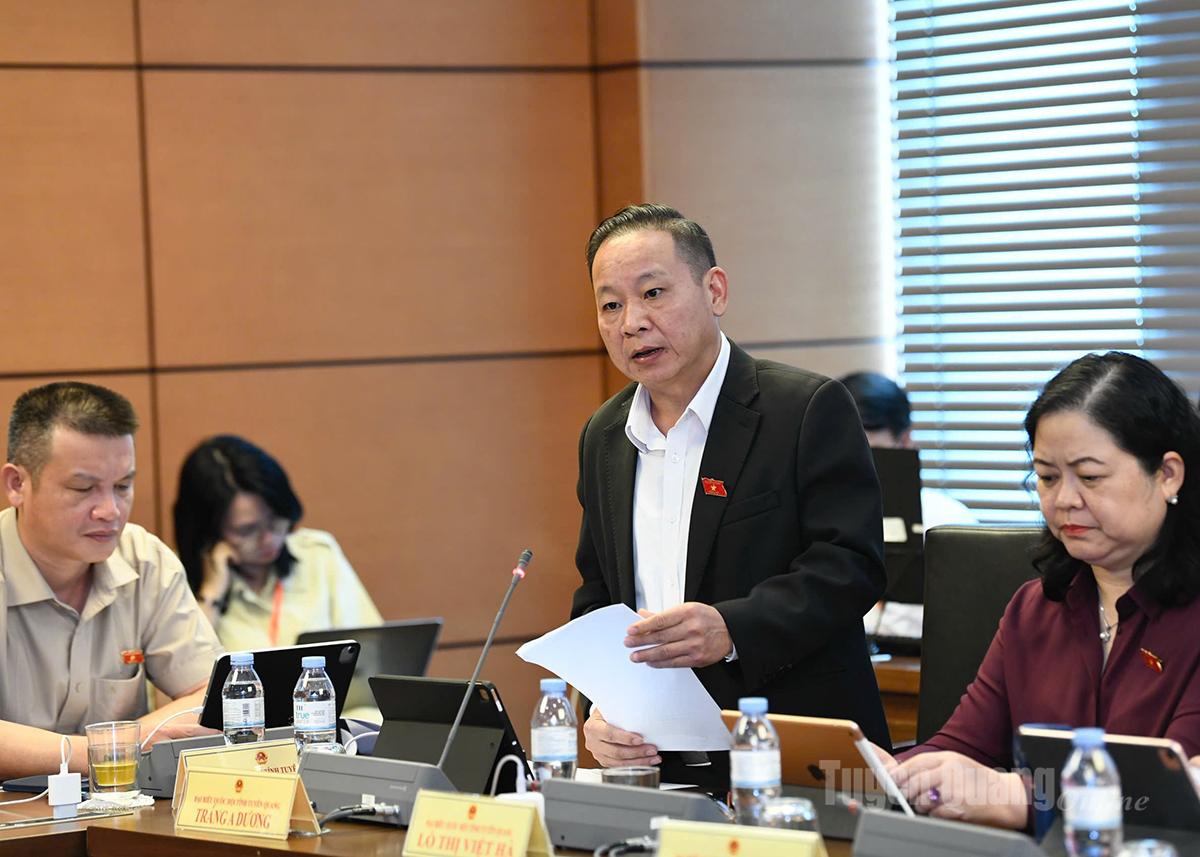
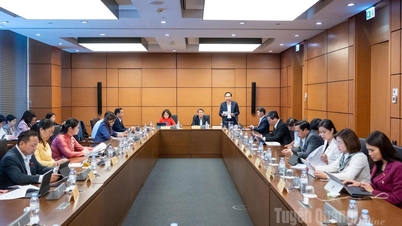
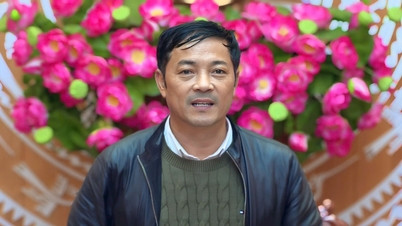
| Delegate Trang A Duong gave his comments at the group meeting. |
Commenting on the draft Law on Higher Education (amended), delegate Trang A Duong proposed adding a special mechanism for student recruitment through a scholarship program to create a pool of ethnic minority cadres to serve in particularly difficult areas, institutionalizing the Party's policy. He requested the drafting agency to review and ensure the consistency and uniformity of the provisions in the draft Law with the Law on Science, Technology and Innovation 2025, while also reflecting the specific characteristics of the higher education sector. Regarding the draft Law on Vocational Education (amended), delegate Trang A Duong requested the drafting agency to review and ensure compatibility and consistency with other related laws currently being amended, such as the Law on Education, the Law on Teachers, and the Law on Land…
At the same time, it is suggested that businesses and learners be clearly included as subjects of application of the Law. Regarding institutions participating in vocational education and training activities (Article 7): The regulation on "centers participating in other vocational education and training activities" is too general; it is suggested that this center be specified as implementing basic training programs. Regarding the finances of public vocational education and training institutions (Article 35): While agreeing with granting institutions the authority to decide on the mobilization and use of capital, it is suggested that regulations be added to strengthen the monitoring mechanism and ensure transparency in the mobilization and use of capital (such as requiring annual financial reports) to limit negative practices and improve efficiency.
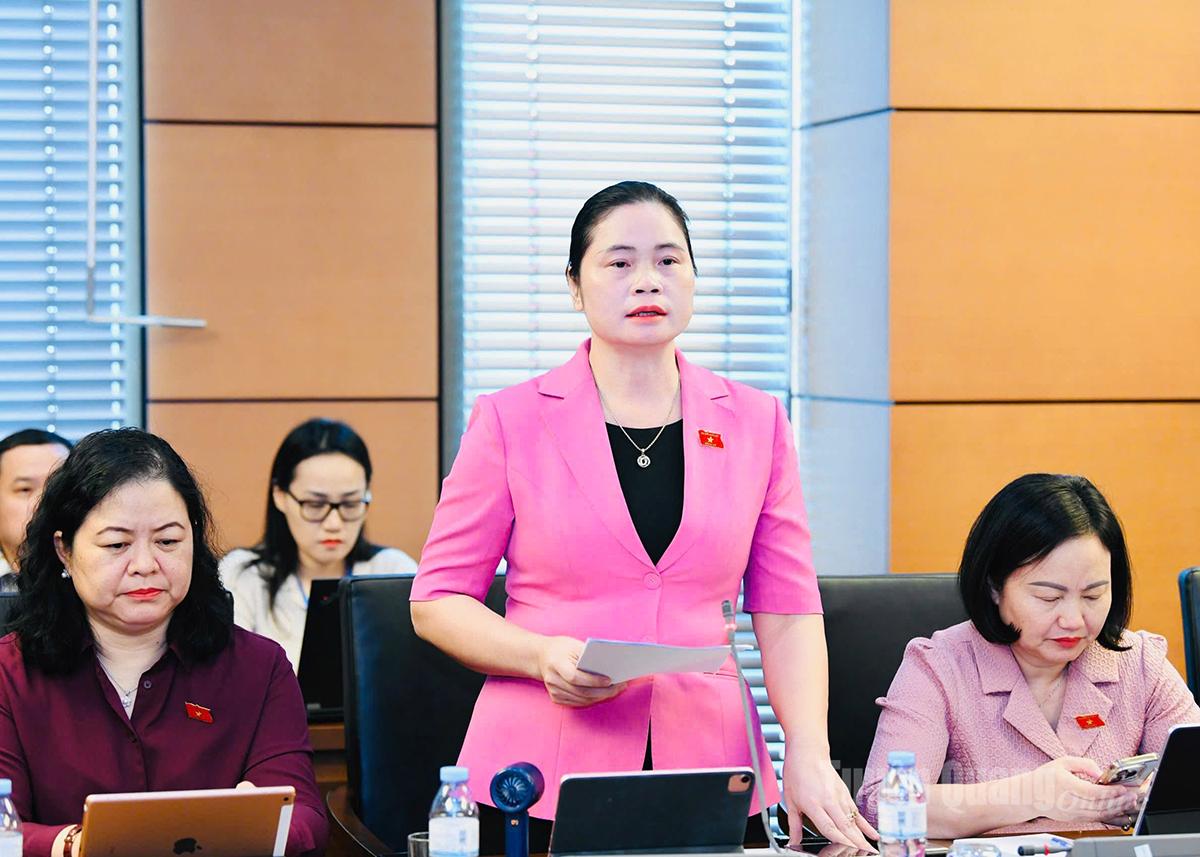 |
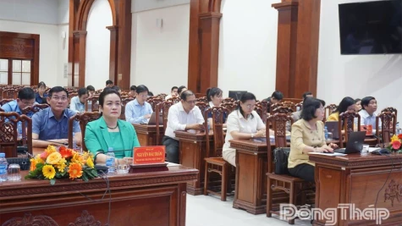
| Comrade Ma Thi Thuy contributed her comments to the discussion. |
Comrade Ma Thi Thuy, Deputy Head of the National Assembly Delegation working full-time in the province, commented: Voters agree with the State's policy of providing a unified set of textbooks nationwide to ensure educational equity, especially in disadvantaged areas. However, it needs to be clarified whether this set of textbooks is mandatory or a free standard, while other sets are still optional. The Government is requested to provide specific guidance on the mechanism for selecting and using textbooks to avoid disruption. The policy of free textbooks is humane, but the mechanism for providing, managing, and encouraging shared textbook libraries needs to be clarified to avoid waste.
Regarding the compilation and evaluation of textbooks, it is necessary to ensure the independence and transparency of the National Textbook Evaluation Council, with clear standards for members (prioritizing experts and experienced educators with no vested interests in the publishing house), and to publicly disclose evaluation results and widely solicit feedback from the grassroots. Granting provincial People's Committees the authority to approve local educational materials is reasonable, but it requires: clear regulations on content limits (only specific to the locality, not duplicating national textbooks), the Ministry of Education and Training issuing a unified framework for structural guidance, and increased periodic inspections to avoid historical and cultural inaccuracies. Textbooks and local educational materials should be presented in various forms (printed, Braille, electronic), and a mechanism to support digital equipment for disadvantaged areas should be proposed.
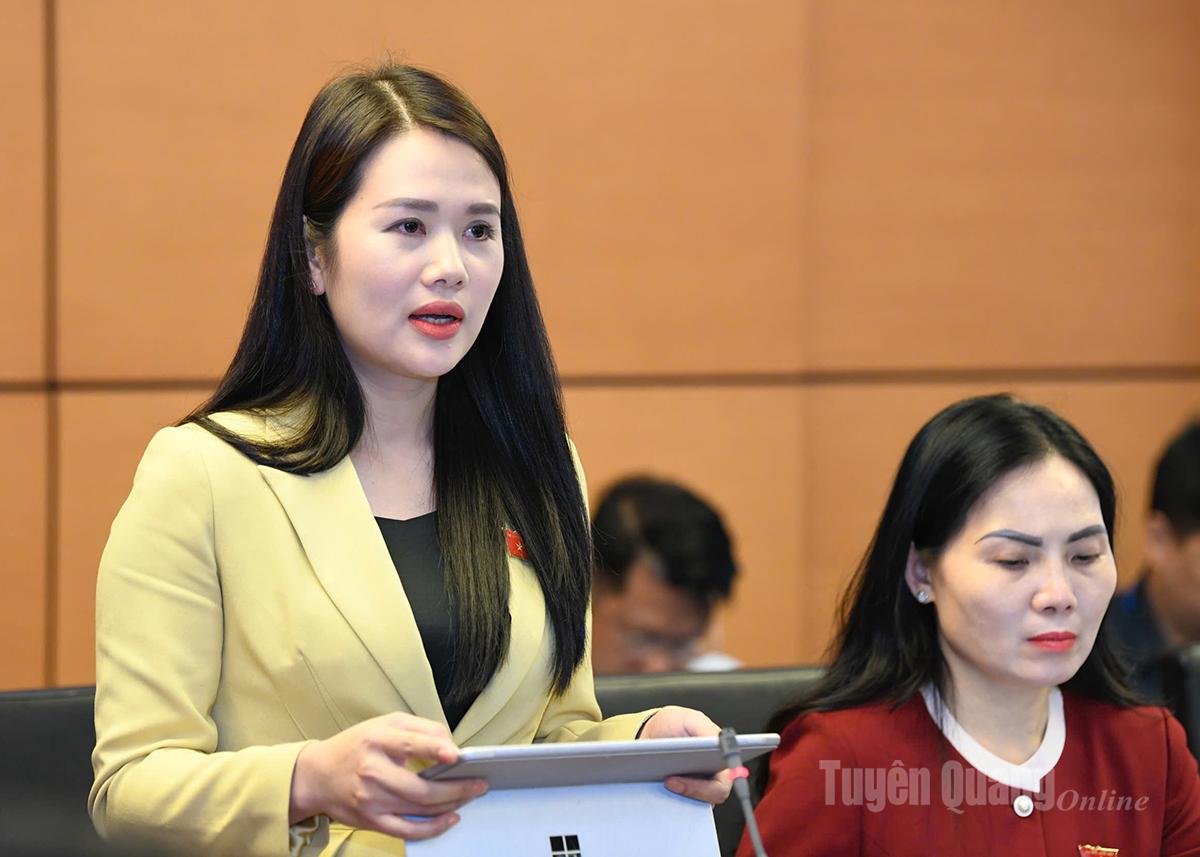 |
| Delegate Vuong Thi Huong participated in the discussion. |
According to Deputy Head of the National Assembly Delegation of Ma Thi Thuy province, there are concerns that issuing certificates of completion to those who did not take the exam or failed could cause social misunderstanding and lack a clear legal basis for admissions/employment. The role, form, and authority of organizing the national high school graduation exam have not been clearly defined. The legal value of the "certificate of completion of the high school program" needs to be clarified (can it be used for vocational training or intermediate-level education?).
Accordingly, Comrade Ma Thi Thuy proposed that the legal validity of the certificate (used for vocational training, but not a substitute for a diploma) should be clearly defined; detailed guidelines on organizing the graduation exam should be added; and transparency in issuing diplomas/certificates using identification numbers and electronic records should be enhanced.
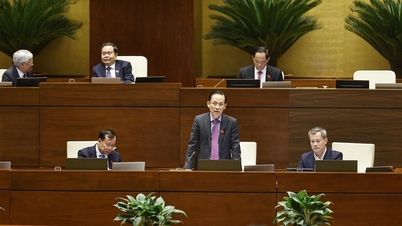
Representative Vuong Thi Huong commented on the draft Law on Higher Education (amended), suggesting that it should focus on institutionalizing Resolution No. 72-NQ/TW on some breakthrough solutions to strengthen the protection, care, and improvement of people's health, and proposing a clear delineation of management authority for specialized training in the health sector to the Ministry of Health.
Delegates proposed amendments to the provisions assigning the Ministry of Health the following responsibilities: state management authority over specialized postgraduate training in the health sector (Article 6); promulgation of standards for specialized training programs, guidance on the development, review, evaluation, and monitoring of standards implementation (Article 22); promulgation of a statistical list of specialized training fields; regulations on the process of developing, appraising, and promulgating specialized training programs; and the process of approving, suspending, and terminating the implementation of specialized training programs (Article 23); approval of training programs for specialized training fields in the health sector (Article 24); promulgation of regulations on admission to specialized training (Article 25); and promulgation of regulations on specialized training (Article 26).
Delegates proposed amending Clause 3, Article 1 of the Draft Law amending and supplementing a number of articles of the Law on Education to: “The Government shall specify regulations on the management of diplomas and certificates of the national education system; diplomas of equivalent level of some specialized training fields” instead of assigning the Ministry of Education and Training to regulate as in the draft Law, in order to ensure uniformity and consistency in the management of diplomas and certificates nationwide.
PV
Source: https://baotuyenquang.com.vn/tin-moi/202510/tiep-tuc-gop-y-cac-du-thao-luat-trinh-quoc-hoi-ba45f9c/

![[Live] 2025 Community Action Awards Gala](/_next/image?url=https%3A%2F%2Fvphoto.vietnam.vn%2Fthumb%2F1200x675%2Fvietnam%2Fresource%2FIMAGE%2F2025%2F12%2F16%2F1765899631650_ndo_tr_z7334013144784-9f9fe10a6d63584c85aff40f2957c250-jpg.webp&w=3840&q=75)
![[Photo] Prime Minister Pham Minh Chinh receives the Governor of Tochigi Province (Japan)](/_next/image?url=https%3A%2F%2Fvphoto.vietnam.vn%2Fthumb%2F1200x675%2Fvietnam%2Fresource%2FIMAGE%2F2025%2F12%2F16%2F1765892133176_dsc-8082-6425-jpg.webp&w=3840&q=75)

![[Image] Leaked images ahead of the 2025 Community Action Awards gala.](/_next/image?url=https%3A%2F%2Fvphoto.vietnam.vn%2Fthumb%2F1200x675%2Fvietnam%2Fresource%2FIMAGE%2F2025%2F12%2F16%2F1765882828720_ndo_br_thiet-ke-chua-co-ten-45-png.webp&w=3840&q=75)
![[Photo] Prime Minister Pham Minh Chinh receives Lao Minister of Education and Sports Thongsalith Mangnormek](/_next/image?url=https%3A%2F%2Fvphoto.vietnam.vn%2Fthumb%2F1200x675%2Fvietnam%2Fresource%2FIMAGE%2F2025%2F12%2F16%2F1765876834721_dsc-7519-jpg.webp&w=3840&q=75)











































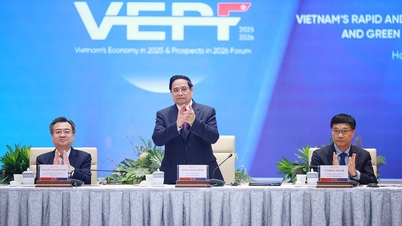
![[Photo] Prime Minister Pham Minh Chinh attends the Vietnam Economic Forum 2025](https://vphoto.vietnam.vn/thumb/402x226/vietnam/resource/IMAGE/2025/12/16/1765893035503_ndo_br_dsc-8043-jpg.webp)




















Comment (0)