

 |
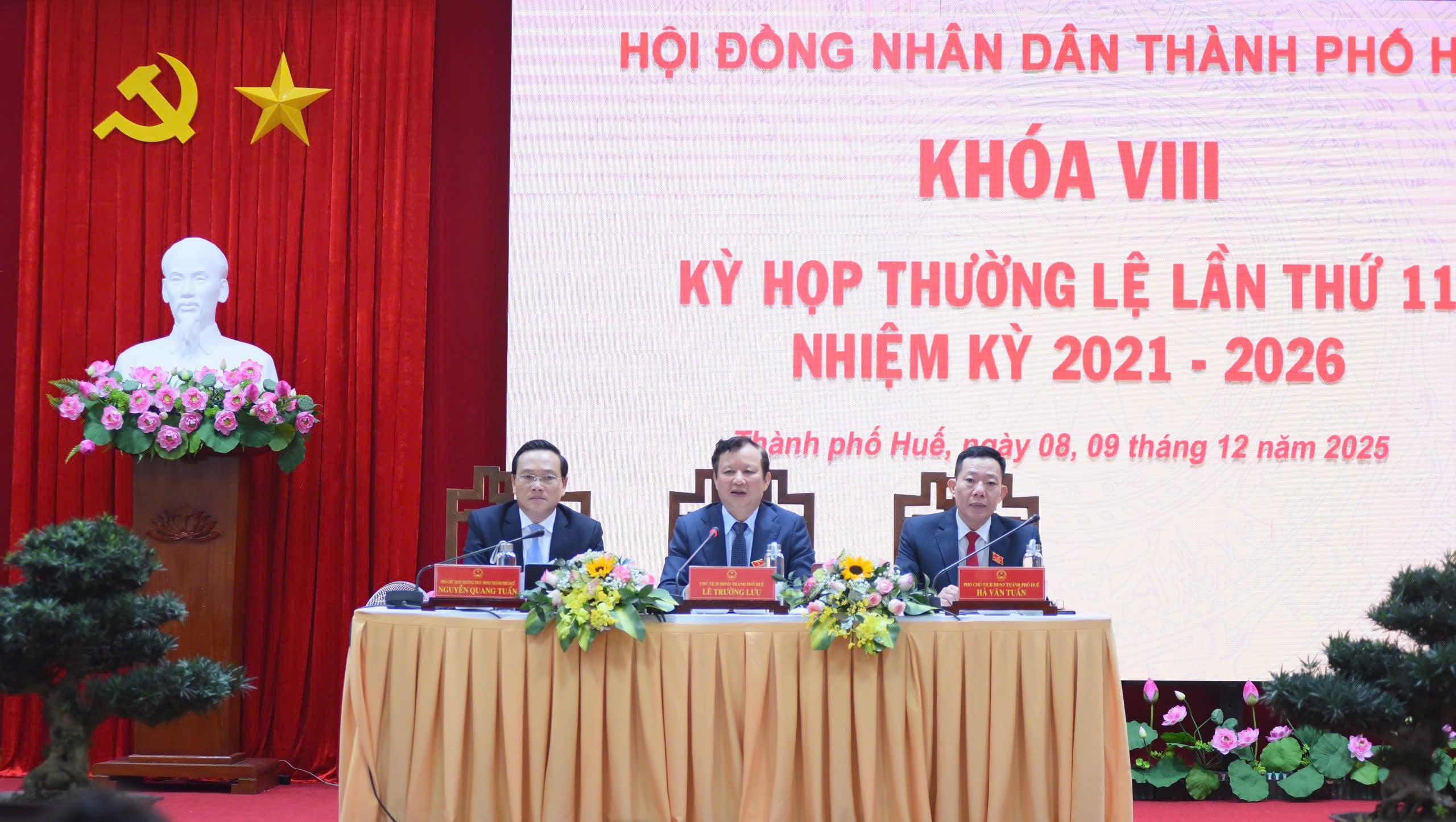
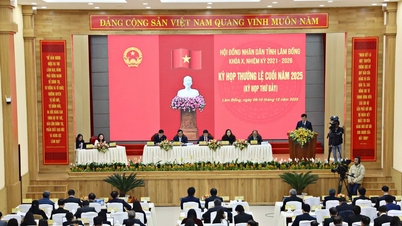
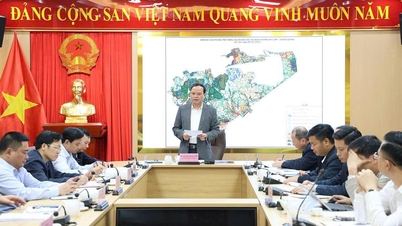
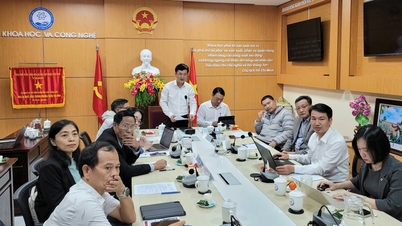
| Standing Committee of the City People's Council chaired the meeting |
Many big problems are raised from practice.
Opening the discussion session, Chairman of the City People's Council Le Truong Luu emphasized: After Hue became a centrally-governed city and operated a two-level local government model, many positive changes were recorded, but the growth rate was still low, the average income per capita was not high, tourism products were still monotonous, and heavily dependent on heritage. "How can we achieve double-digit growth in 2026? Where are the resources? How can the two-level local government model operate effectively?", Mr. Le Truong Luu raised the question.
Director of the Department of Finance La Phuc Thanh said that in 2025, the city will achieve 13/14 targets; the targets have not been achieved mainly due to the low efficiency of some projects. The merger of communes also requires the conversion of the clean water model from rural to urban areas while the infrastructure has not met the requirements. To achieve double-digit growth in 2026, Mr. Thanh proposed: Review and synchronize planning to attract investment, the key resource for growth; propose a special mechanism for Hue; boldly apply effective policies from the Central Government; speed up industrial infrastructure; put new projects into operation in 2026; disburse public investment, clear land, support businesses; develop heritage economy associated with tourism; expand festivals to increase visitors.
Delegate Phan Thanh Hai assessed that in 2025, despite prolonged natural disasters, many results will still be achieved, especially in terms of budget revenue, tourism, culture and sports . However, the growth potential is still narrow; purchasing power is weak; tourism is still monotonous; public investment and site clearance are still "bottlenecks"; socialization of culture and heritage is not strong; the rate of using clean water in rural areas is still low. Mr. Hai proposed 5 groups of solutions including: Removing legal bottlenecks for investment; creating a boost for tourism through night-time economy, cultural economy, increasing regional connectivity; promoting socialization of culture and heritage; developing high-quality human resources, especially in the tourism industry; building Hue into a "livable city - green city".
Delegate Nguyen Dinh Duc acknowledged that agriculture is stable but aquaculture still has great potential if concentrated farming areas are formed after the merger. The industry will advise on the 2026-2030 aquaculture development plan, linking resource improvement, combating destructive exploitation, and investing in infrastructure for farming areas.
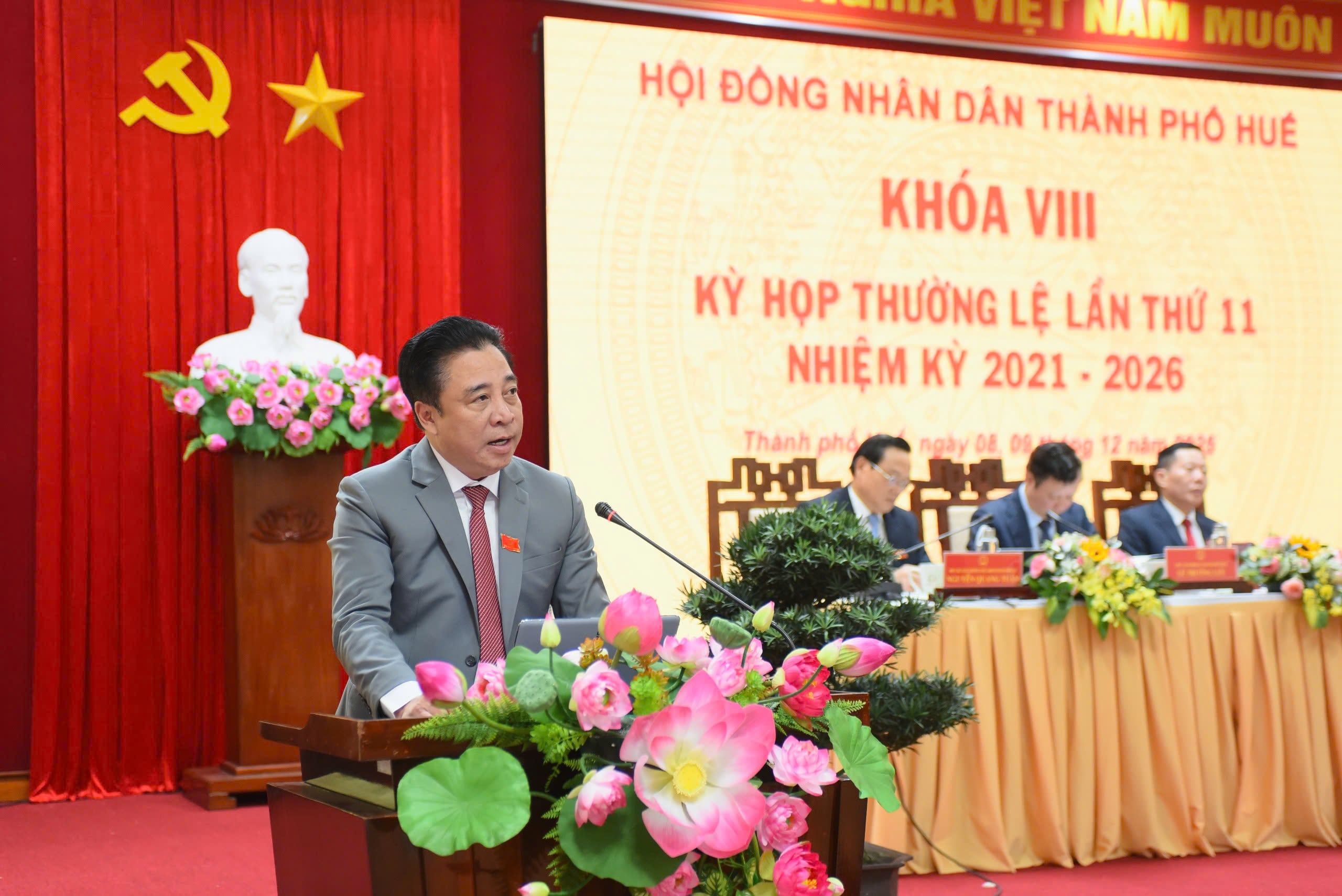 |
| Chairman of the City People's Committee Nguyen Khac Toan received opinions from delegates. |
Streamlining the apparatus and operating two-level local government
Participating in the discussion, Director of the Department of Home Affairs Nguyen Van Manh informed that up to now, the city has reduced 30% of specialized agencies, 20% of departments, 30% of staff and 102 public service units; at the same time, proactively arranged key officials at the commune level from the city and district levels; unified the use of personnel between the Party and the State; and ensured the regime for subjects under Decree 178.
According to Mr. Manh, there are still problems in the operation of the 2-level local government model such as network problems in some localities; low rate of digitalization of records; overlap in educational decentralization. Mr. Manh proposed: localities decide to mobilize teachers in the commune, cities mobilize inter-commune; improve information technology infrastructure; supplement mechanisms to attract specialized human resources; invest in commune health stations according to the "miniature hospital" model.
Director of the Department of Construction Le Anh Tuan said that the industry grew by over 10%, a series of large projects are being implemented: the bridge through Thuan An gate opens a chain of urban - marine economy; Nguyen Hoang bridge and Ring Road 3 open new urban space; Phu My - Thuan An, To Huu extended routes, North - South expressway expanded to 4 lanes... The volume of infrastructure deployed during the term is "unprecedentedly large", creating a framework for urban development and increasing competitiveness. Mr. Tuan asked the People's Council to continue to supervise so that key projects are completed on schedule.
Delegate Tran Gia Cong asked about the effectiveness of resolutions issued by the City People's Council. Mr. Cong noted that policies must be put into practice, and local authorities must be more decisive so that people and businesses can access them.
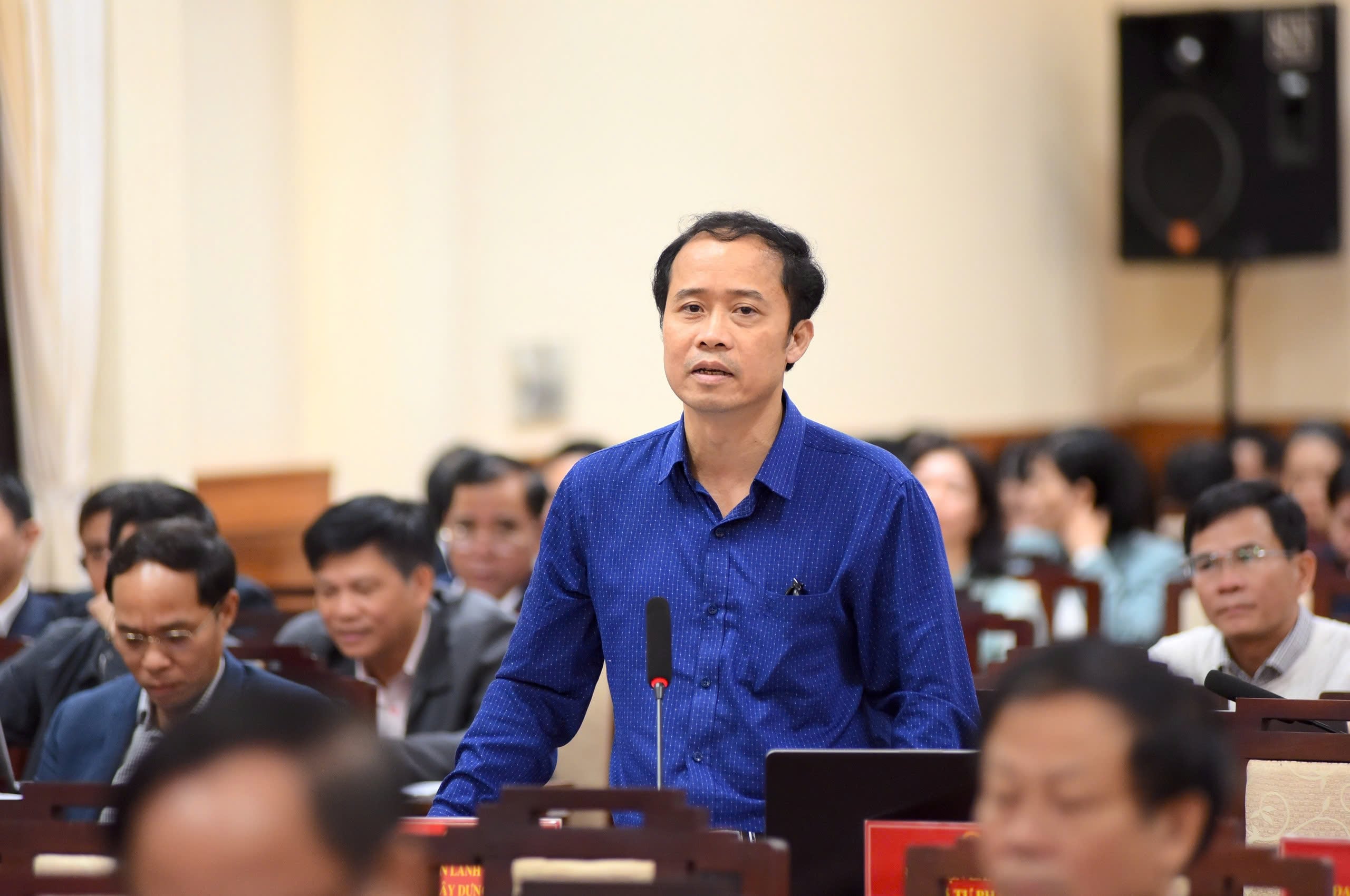 |
| Director of the Department of Construction Le Anh Tuan participated in the discussion. |
8 key task groups of 2026
Speaking at the reception, Deputy Secretary of the City Party Committee, Chairman of the Hue City People's Committee Nguyen Khac Toan affirmed: 2026 is a particularly important time, the first year of implementing the Resolution of the 17th City Party Congress and the 2026 - 2030 development plan, and also a major turning point when Hue officially operates the model of a centrally-run city. In the context of competition, rapid urbanization and increasing demands for heritage conservation, Mr. Nguyen Khac Toan emphasized: "Hue must act decisively and innovate strongly, especially in policy implementation, the decisive factor to turn policies into concrete results."
From the comments, the City People's Committee identified 8 key tasks including:
Implementing the goals of the Resolution of the 17th City Party Congress, proposing to supplement a strong - outstanding - breakthrough mechanism for Hue.
Adjust the planning for the 2021 - 2030 period, cover the detailed zoning plan, mobilize resources for infrastructure development and prepare the public investment plan for 2026 - 2030 in a focused direction.
Restructuring the economy, developing tourism into a spearhead with new products, promoting air routes, attracting high-end accommodation; developing clean technology industry; agriculture associated with OCOP and sustainable aquaculture.
Complete the budget revenue estimate, tighten the management of public finance and assets, especially real estate funds and surplus assets.
Promote administrative reform - digital transformation, increase the rate of online records; recover slow-progressing projects; support innovative start-up businesses.
Cultural and social development, prioritizing heritage restoration, cultural industry, education, healthcare, and sustainable employment.
Strengthening national defense and security, foreign affairs development, environmental protection and disaster prevention capacity.
Building a streamlined and effective apparatus, tightening public discipline, preventing corruption, thoroughly resolving complaints; closely monitoring the operation of two-level local government.
“There are still many difficulties, but with the determination of the entire political system and the consensus of the people and businesses, Hue will enter a new phase of rapid and sustainable development,” emphasized Chairman of the City People's Committee Nguyen Khac Toan, and at the same time hoped to continue receiving supervision and comments from the City Party Committee, People's Council, Fatherland Front and voters to complete the socio-economic goals in 2026.
Source: https://huengaynay.vn/chinh-tri-xa-hoi/theo-dong-thoi-su/quyet-tam-tang-truong-hai-con-so-van-hanh-hieu-qua-chinh-quyen-dia-phuong-2-cap-160752.html






















![[Photo] Urgently help people soon have a place to live and stabilize their lives](/_next/image?url=https%3A%2F%2Fvphoto.vietnam.vn%2Fthumb%2F1200x675%2Fvietnam%2Fresource%2FIMAGE%2F2025%2F12%2F09%2F1765248230297_c-jpg.webp&w=3840&q=75)










































Comment (0)